Goyal, Tajani set €20 bn trade target at 23rd India-Italy Commission
Synopsis
Commerce Minister Piyush Goyal and Italian Deputy PM Antonio Tajani announced a €20 billion bilateral trade target by 2029 at the 23rd India-Italy Joint Commission, covering space, semiconductors, clean energy, critical minerals, and opportunities for MSMEs and startups.
Key Takeaways
€20 billion bilateral trade target by 2029 set jointly by India and Italy at the 23rd Joint Commission for Economic Cooperation.
Sectors covered include space, semiconductors, manufacturing, modern technology, clean energy, and critical minerals .
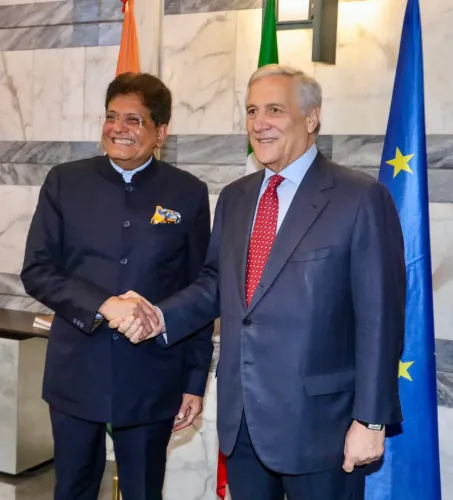
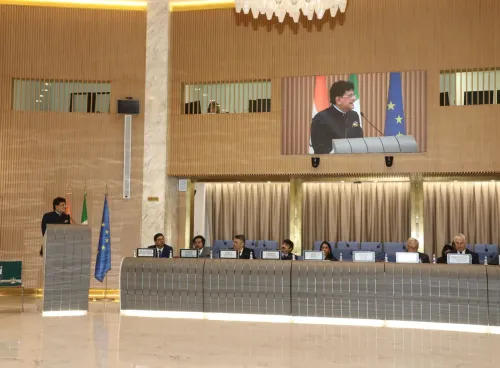
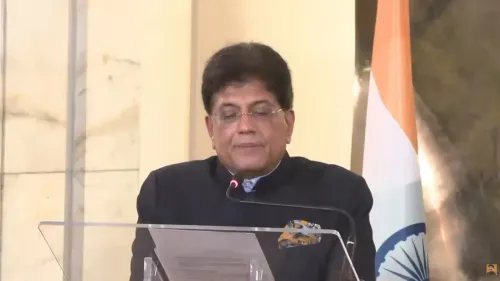
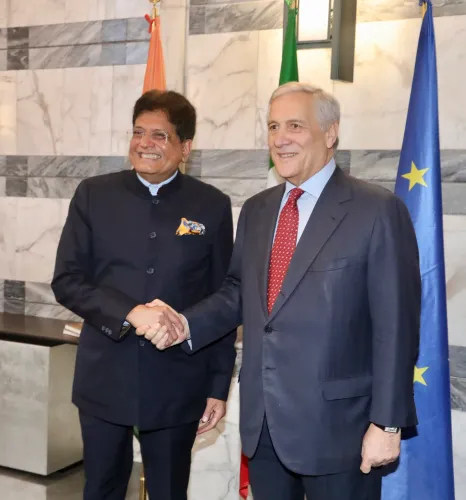
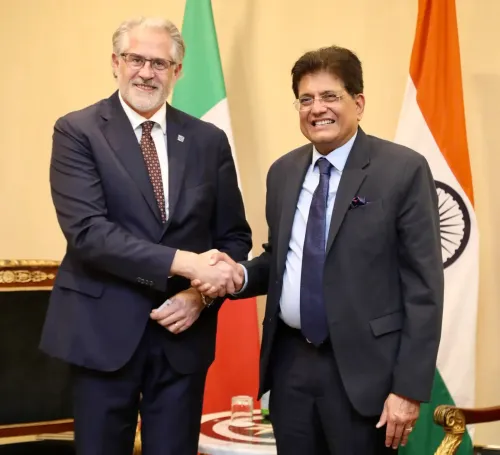
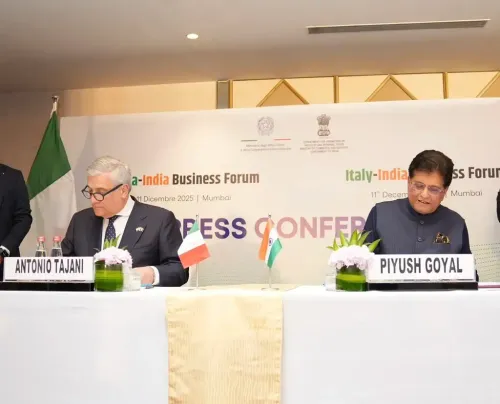
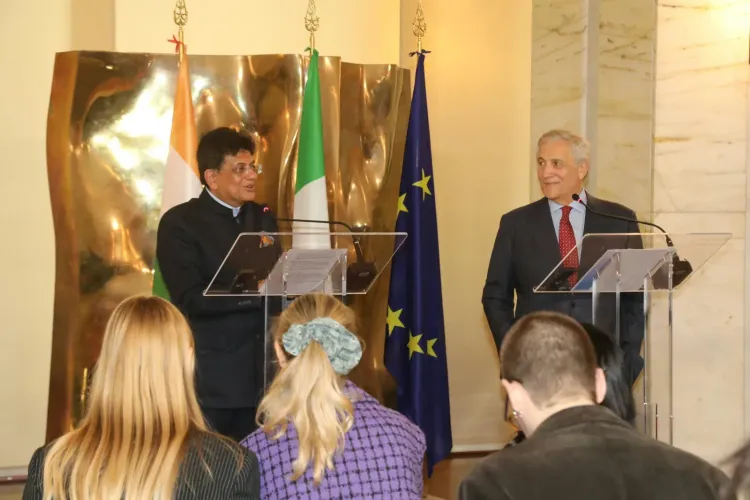
Commerce Minister Piyush Goyal and Italian Deputy PM and Foreign Minister Antonio Tajani addressed a joint press conference in Rome on 18 November 2026 .
The Commission specifically flagged expanded opportunities for MSMEs and startups on both sides.
The bilateral push complements ongoing EU-India trade negotiations and India's wider effort to diversify supply chains across Europe.
The 23rd edition of the Commission marks a broadening of the agenda well beyond traditional trade into strategic and high-technology sectors.
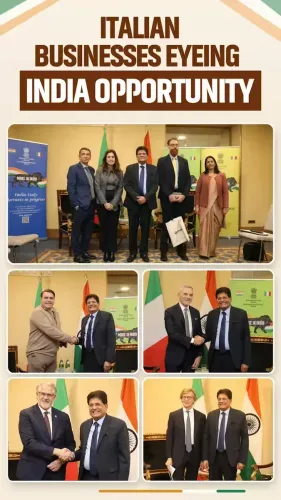
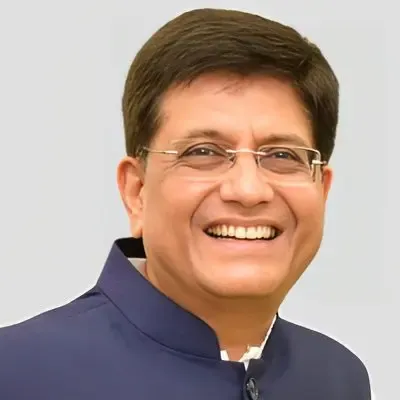
A €20 billion bilateral trade target by 2029 is now on the table — and Union Commerce and Industry Minister Piyush Goyal and Italian Deputy Prime Minister and Foreign Minister Antonio Tajani announced it together at a joint press conference in Rome on Wednesday, 18 November 2026, following the 23rd India-Italy Joint Commission for Economic Cooperation.
What the 23rd Commission put on the map
The Joint Commission is the two countries' standing bilateral mechanism for trade and investment dialogue, and its 23rd edition brought an unusually wide agenda: space, semiconductors, manufacturing, modern technology, clean energy, and critical minerals. Goyal described Italy's Deputy Prime Minister Tajani as a 'good friend' and said the two sides are 'exploring new frontiers for collaboration' — language that signals the relationship has moved well past ceremonial exchange into sector-specific deal-making.
The ambition is concrete: a €20 billion trade target anchored to a 2029 deadline gives businesses, regulators, and working groups a hard number to plan against. Goyal specifically flagged opportunities for MSMEs and startups on both sides — a deliberate signal that the gains are not meant to flow only to large industrial conglomerates.
Why semiconductors and critical minerals matter here
Italy, a G7 member with deep industrial and design strengths, and India, a major economy racing to build domestic semiconductor and clean-energy supply chains, have complementary gaps. India needs fabrication know-how and capital; Italy needs reliable sourcing partners and new Asian markets. Critical minerals — the lithium, cobalt, and rare earths underpinning electric vehicles and green tech — represent precisely the kind of strategic resource that European nations can no longer afford to source from a single geography.
This bilateral push also runs in parallel with the broader EU-India trade negotiation track, where supply-chain diversification — especially in semiconductors and clean energy — is a recurring priority. The 23rd Commission's wide sectoral scope is a micro-expression of that macro-realignment.
India's European economic diplomacy, deal by deal
The Rome press conference fits a recognisable pattern: India has held similar bilateral economic commissions with Germany, France, the Netherlands, and Spain as it works to deepen ties across Europe. Each commission targets specific sectors, sets measurable trade goals, and creates follow-up working groups. The cumulative effect is a web of structured engagements designed to diversify India's supply chains and open export channels for its manufacturing and tech sectors simultaneously.
For Italian firms — particularly in precision engineering, design, and green-energy infrastructure — a growing Indian middle class and an expanding industrial base represent a market that is simply too large to approach only through the EU umbrella.
The next test will be whether the working groups and follow-up agreements that typically emerge from these commissions materialise on schedule — and whether the €20 billion milestone registers measurable progress before the decade closes.
Point of View
Making accountability harder to dodge. Goyal's deliberate inclusion of MSMEs and startups alongside semiconductors and space signals that New Delhi wants industrial-scale outcomes without leaving small exporters behind. This commission sits squarely within India's strategic logic of building parallel bilateral tracks with individual European nations rather than waiting for the EU-India free trade agreement to close. If the working groups that follow produce actionable frameworks, the 23rd Commission could mark a genuine inflection point in a relationship that has historically punched below its weight.
NationPress
18 Nov 2026
Frequently Asked Questions
What is the India-Italy Joint Commission for Economic Cooperation?
It is the standing bilateral mechanism through which India and Italy conduct structured trade and investment dialogue; the 23rd edition was held in Rome in November 2026.
What is the €20 billion India-Italy trade target?
India and Italy have set a goal of reaching €20 billion in bilateral trade by 2029 , announced by Commerce Minister Piyush Goyal and Italian Deputy PM Antonio Tajani at their joint press conference.
Which sectors did India and Italy agree to focus on at the 23rd Commission?
The two sides identified space, semiconductors, manufacturing, modern technology, clean energy, and critical minerals as priority areas for deeper collaboration.
Who is Antonio Tajani?
Antonio Tajani is Italy's Deputy Prime Minister and Minister of Foreign Affairs and International Cooperation, and the Italian counterpart to Piyush Goyal at the 23rd Joint Commission.
How does the India-Italy commission fit India's broader European strategy?
India has held similar bilateral economic commissions with multiple European nations to diversify supply chains and open export channels, complementing the ongoing EU-India trade negotiations.