CM Bhajan Lal: PM KUSUM Powers 26 Rajasthan Districts
Synopsis
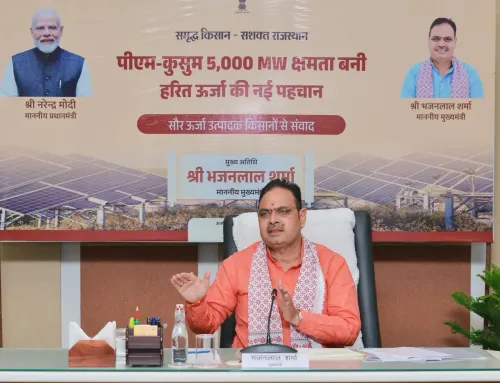
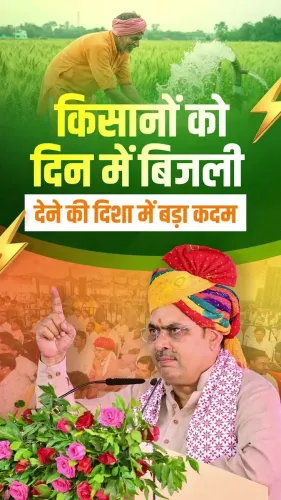
The Chief Minister's Office of Rajasthan says PM KUSUM Yojana is now supplying daytime solar electricity to farmers in 26 districts of the state, drawing on more than 4 GW of installed solar capacity — marking a significant milestone in the state's renewable energy push for agriculture.
Key Takeaways
The Chief Minister's Office of Rajasthan announced on 9 July 2026 that PM KUSUM Yojana is operational in 26 districts of the state.
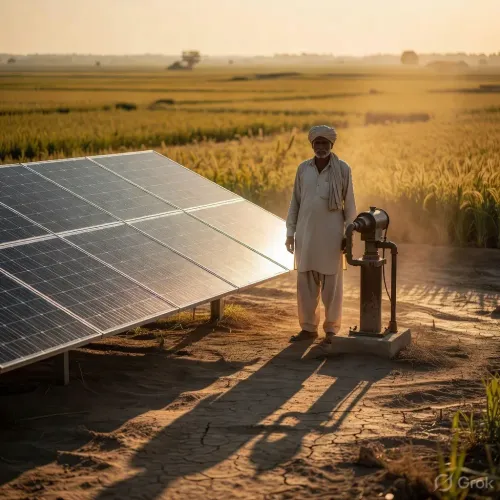
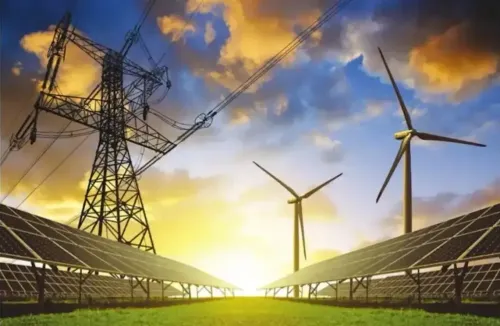
More than 4 gigawatts of solar capacity is being used to supply daytime electricity to farmers for irrigation.
PM KUSUM (Pradhan Mantri Kisan Urja Suraksha evam Utthaan Mahabhiyan) was launched by the Government of India in 2019 to promote solar-powered irrigation.
Chief Minister Bhajan Lal Sharma was tagged in the announcement, signalling direct political ownership of the scheme's progress.
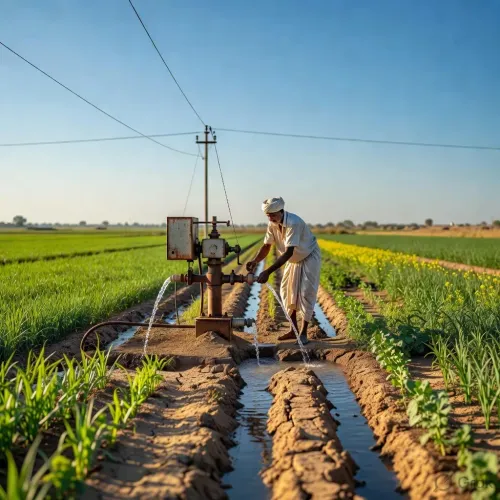
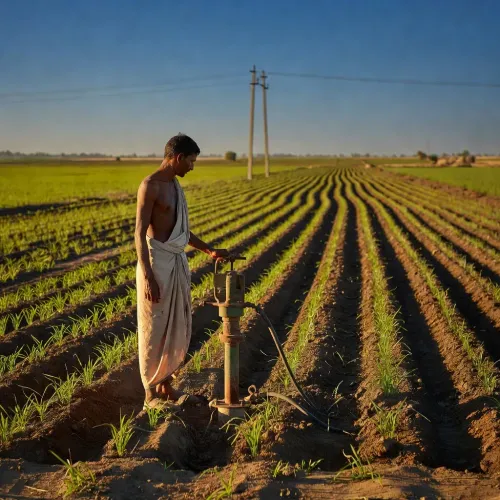
The initiative addresses the longstanding problem of erratic or night-only electricity supply for agricultural pumps in Rajasthan .
Coverage of 26 of Rajasthan's 33 districts suggests further expansion to remaining districts is anticipated.
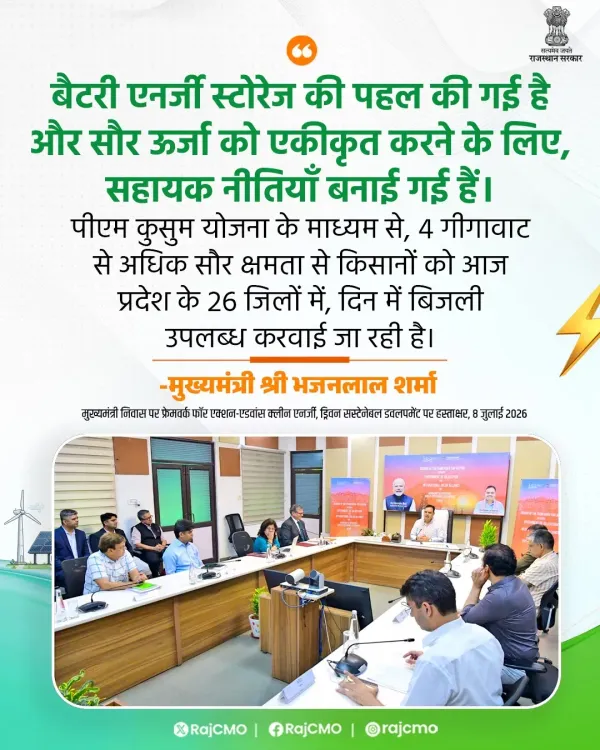
The Chief Minister's Office of Rajasthan announced on Thursday, 9 July 2026 that the PM KUSUM Yojana is now delivering daytime electricity to farmers across 26 districts of the state, backed by more than 4 gigawatts of installed solar capacity.
Context
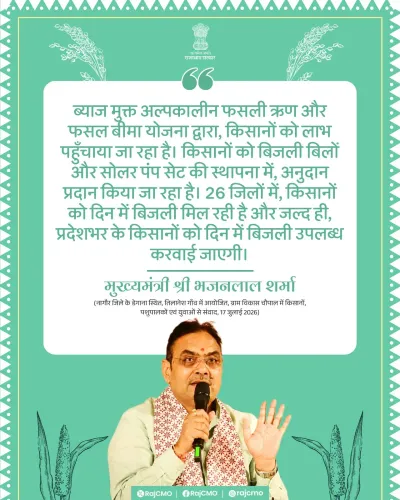
The post, shared by the official handle of the Chief Minister's Office and tagging Chief Minister Bhajan Lal Sharma, states: 'PM KUSUM Yojana ke madhyam se, 4 gigawatt se adhik saur kshamta se kisanon ko aaj pradesh ke 26 zilon mein, din mein bijli uplabdh karvayi ja rahi hai' — meaning, 'Through the PM KUSUM Yojana, more than 4 GW of solar capacity is today providing daytime electricity to farmers in 26 districts of the state.' The announcement is accompanied by the hashtag #AapnoAgraniRajasthan (Our Leading Rajasthan), a recurring campaign tag used by the state government to highlight development milestones.Policy Backdrop
The Pradhan Mantri Kisan Urja Suraksha evam Utthaan Mahabhiyan (PM KUSUM) was launched by the Government of India in 2019 to reduce farmers' dependence on diesel-powered and grid-tied pumps by installing decentralised solar generation units. The scheme operates across three components: standalone solar pumps, solarisation of existing grid-connected pumps, and small solar power plants on barren or agricultural land. Rajasthan, with among the highest solar irradiance levels in the country, was identified early as a priority state for implementation. The state government under Chief Minister Bhajan Lal Sharma has positioned PM KUSUM as a flagship rural welfare initiative, aligning it with both national renewable energy targets and the agricultural sector's need for reliable, affordable irrigation power.Stakeholders and Impact
The primary beneficiaries are farming communities across the 26 districts now covered under the scheme. Daytime solar power directly addresses one of agriculture's most persistent pain points in Rajasthan: erratic or night-only electricity supply for irrigation, which forces farmers to operate pumps in unsafe conditions and disrupts crop cycles. By shifting irrigation power to daylight hours through solar generation, the scheme also reduces the state's peak-hour grid load. Rural households in these districts stand to benefit indirectly from reduced pressure on the distribution network. The scale of more than 4 GW of solar capacity represents a substantial commitment of both central and state resources toward decentralised renewable energy in the agricultural sector.What's Next
The government's framing of this announcement — emphasising current coverage of 26 out of Rajasthan's 33 districts — implies that expansion to the remaining districts remains a near-term objective. Progress on additional solar pump installations, the pace of district-wise coverage, and the state's overall targets under PM KUSUM will be closely tracked by both agricultural and energy policy observers. The scheme's performance in Rajasthan is also being watched as a model for other high-irradiance states seeking to replicate decentralised solar irrigation at scale.Point of View
The announcement positions Rajasthan as a front-runner in agricultural solar adoption — a metric that carries both developmental and electoral weight in a predominantly agrarian state. The tagging of Chief Minister Bhajan Lal Sharma personalises the achievement, reinforcing his government's identity as a delivery-focused administration. Whether the remaining districts are brought under coverage before the next state budget will be a telling indicator of the scheme's actual momentum.
NationPress
8 Oct 2026
Frequently Asked Questions
What is PM KUSUM Yojana and how does it help farmers?
PM KUSUM (Pradhan Mantri Kisan Urja Suraksha evam Utthaan Mahabhiyan) is a Government of India scheme launched in 2019 that installs solar pumps and decentralised solar plants to give farmers reliable, affordable power for irrigation, reducing dependence on diesel and erratic grid supply.
How many districts in Rajasthan are covered under PM KUSUM Yojana?
According to the Chief Minister's Office of Rajasthan, as of 9 July 2026, PM KUSUM Yojana is providing daytime electricity to farmers in 26 districts of the state.
What is the solar capacity installed under PM KUSUM in Rajasthan?
The Chief Minister's Office stated that more than 4 gigawatts of solar capacity is being used to deliver daytime power to farmers across 26 districts of Rajasthan under the PM KUSUM scheme.
Who is the Chief Minister of Rajasthan overseeing PM KUSUM implementation?
Chief Minister Bhajan Lal Sharma of the BJP leads the Rajasthan government and has been associated with the state's implementation of PM KUSUM as a flagship agricultural welfare initiative.
Why is daytime solar electricity important for farmers in Rajasthan?
Rajasthan farmers have historically received grid electricity for irrigation only at night, forcing unsafe pump operation and disrupting crop schedules. Solar-powered daytime supply resolves this by providing predictable, daylight-hour power directly linked to irrigation needs.