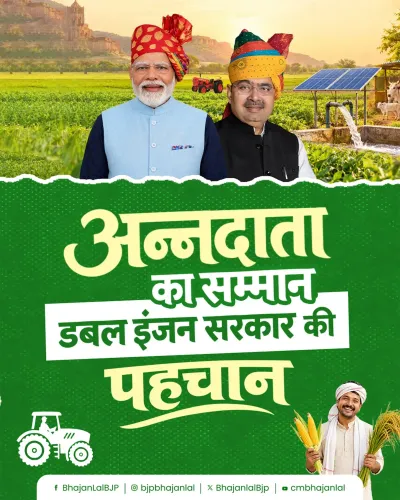
Rajasthan CM Bhajanlal Pushes to Turn Farmers into Energy Entrepreneurs
Synopsis
The Rajasthan CMO announced on 11 June 2026 that CM Bhajan Lal Sharma's government is working to transform farmers from food providers into energy producers and entrepreneurs, building on national solar agriculture schemes and Rajasthan's high solar potential.
Key Takeaways
The Chief Minister's Office of Rajasthan posted on 11 June 2026 that the state is working to turn farmers into energy producers and entrepreneurs.
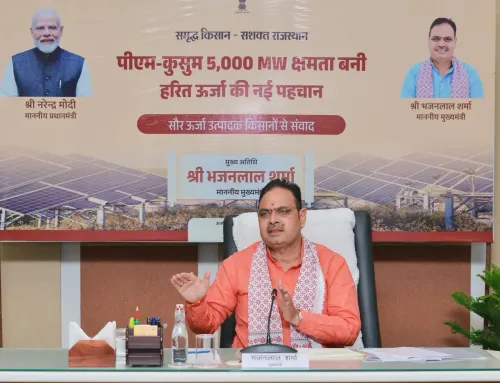
CM Bhajan Lal Sharma , in office since December 2023 , is the BJP leader driving this policy direction.
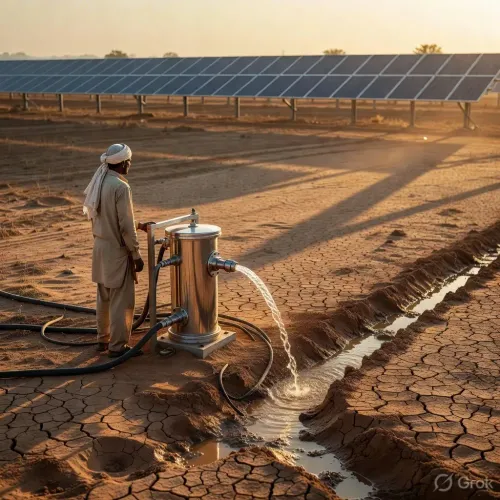
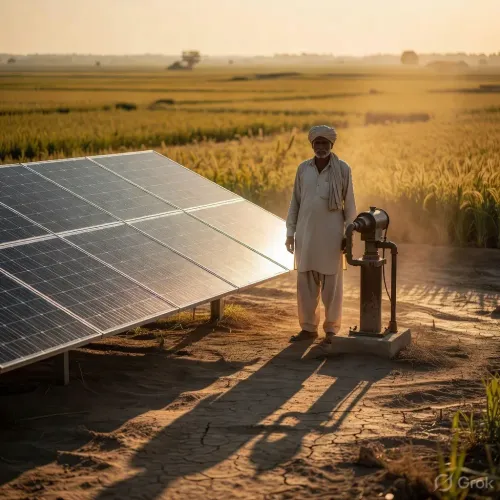
The vision builds on the central government's PM-KUSUM scheme (2019) , which solarises agricultural pumps and enables farmers to sell surplus power to the grid.
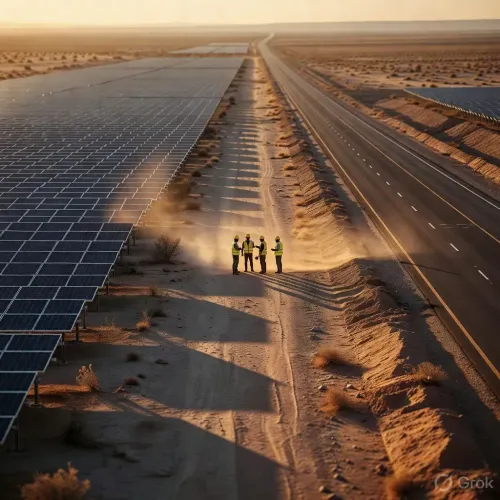
Rajasthan has among the highest solar irradiance in India, giving it a structural advantage in implementing dual-use solar-agriculture models.
The policy targets small farmers and rural entrepreneurs , aiming to supplement crop income with clean-energy earnings.
Progress will be tracked through solar pump installation targets, feeder solarisation projects, and grid buy-back terms in upcoming state budget or energy notifications.
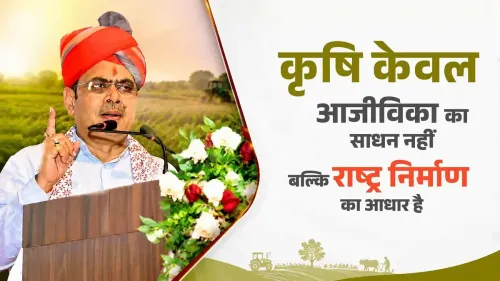
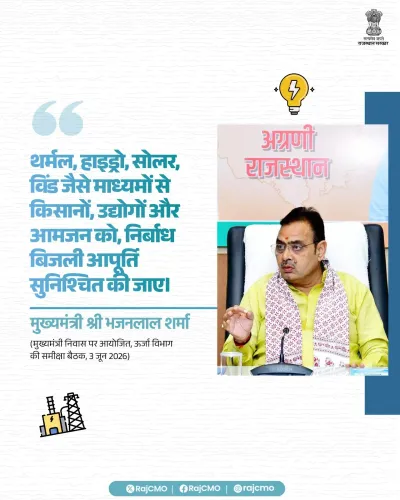
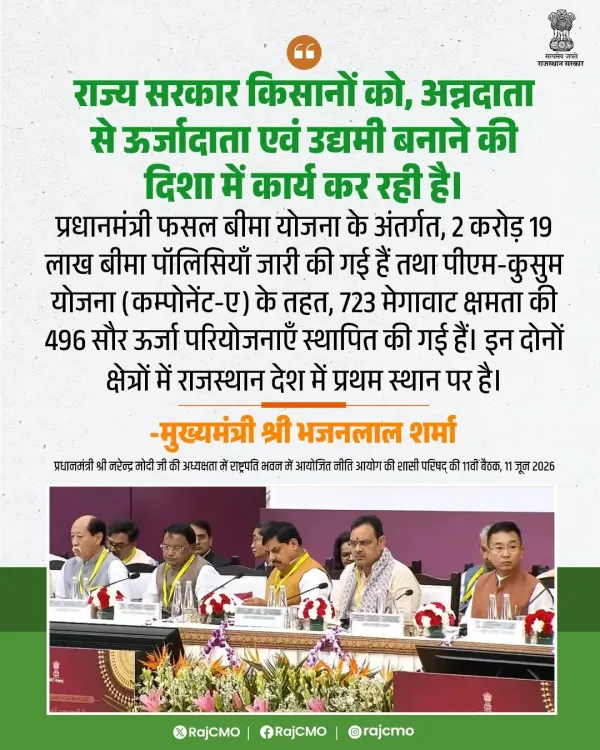
The Chief Minister's Office of Rajasthan announced on Thursday, 11 June 2026 that the state government is actively working to transform farmers from being mere food providers into energy producers and entrepreneurs, citing a policy direction championed by Chief Minister Bhajan Lal Sharma.
The post, shared under the hashtag #आपणो_अग्रणी_राजस्थान ('Our Leading Rajasthan'), stated: 'राज्य सरकार किसानों को अन्नदाता से ऊर्जादाता एवं उद्यमी बनाने की दिशा में कार्य कर रही है' — meaning 'The state government is working towards making farmers, from being providers of food (annadata), providers of energy (urjadata) and entrepreneurs.'
Context
The phrase 'annadata to urjadata' — food-giver to energy-giver — has become a defining slogan in India's effort to integrate solar power generation with agricultural livelihoods. Rajasthan, which receives some of the highest solar irradiance of any Indian state, is particularly well-positioned to lead this transition. The state government under CM Bhajan Lal Sharma, who took office in December 2023, has aligned its rural policy with both central energy mandates and the goal of supplementing farm incomes beyond traditional crop sales.
Policy Backdrop
The central government's Pradhan Mantri Kisan Urja Suraksha evam Utthaan Mahabhiyan (PM-KUSUM) scheme, launched in 2019, forms the backbone of this approach nationally. It enables solarisation of agricultural pump sets and allows farmers to sell surplus electricity back to the grid, creating an additional income stream alongside cultivation. Rajasthan has been among the states implementing such dual-use solar models under both the central framework and its own state-level energy programmes.
The entrepreneurial dimension of the government's stated direction goes beyond pump solarisation — it signals an intent to position small and marginal farmers as active participants in the clean-energy economy, not just beneficiaries of subsidy schemes.
Stakeholders and Impact
Small farmers and rural entrepreneurs stand to gain the most from this policy orientation. Access to solar-powered irrigation reduces dependence on erratic grid supply and cuts diesel costs, while grid buy-back arrangements can generate a secondary income. For Rajasthan's predominantly agrarian districts, this dual benefit — lower input costs and new revenue — could meaningfully improve household incomes in the short to medium term.
The shift also aligns with India's net-zero 2070 commitment, which requires deep decarbonisation of the agriculture sector, one of the country's largest energy consumers. Rajasthan's high solar potential makes it a natural laboratory for demonstrating this model at scale.
What's Next
Observers will watch for concrete announcements from Rajasthan's energy department or the upcoming state budget — specifically around solar pump installation targets, feeder-level solarisation projects, and the terms of any grid buy-back arrangements for farmer-generated power. The government's ability to move from stated direction to on-ground implementation will determine whether the 'urjadata' vision translates into measurable income gains for rural households across the state.
Point of View
But Rajasthan's geographic advantage in solar irradiance gives the Bhajan Lal Sharma government a credible structural case for pursuing it at scale. The post signals that the BJP administration is keen to position agricultural solar policy as a flagship rural welfare plank ahead of any future electoral cycle. Crucially, the success of this direction depends on implementation specifics — grid buy-back rates, subsidy timelines, and access for marginal farmers — none of which have been detailed in this announcement. Until those details emerge, the statement reads as a policy intent marker rather than a programme milestone.
NationPress
26 Oct 2026
Frequently Asked Questions
What does 'annadata to urjadata' mean in Rajasthan's farm policy?
'Annadata' means food-giver and 'urjadata' means energy-giver. The Rajasthan government is using this phrase to describe its goal of enabling farmers to generate and sell solar power in addition to growing crops, creating a new income stream.
What is the PM-KUSUM scheme and how does it relate to Rajasthan farmers?
PM-KUSUM (Pradhan Mantri Kisan Urja Suraksha evam Utthaan Mahabhiyan) is a central government scheme launched in 2019 that helps solarise agricultural pump sets and allows farmers to sell surplus electricity to the grid. Rajasthan is one of the key states implementing this scheme.
Who is Bhajan Lal Sharma and what is his role in this policy?
Bhajan Lal Sharma is the Chief Minister of Rajasthan from the BJP, sworn in during December 2023. The Rajasthan CMO post credits his government with working to transform farmers into energy producers and entrepreneurs.
Why is Rajasthan well-suited for solar farming initiatives?
Rajasthan receives some of the highest solar irradiance of any Indian state, making it naturally suited for large-scale solar agriculture projects. This gives the state a geographic advantage in implementing dual-use models where farmland supports both cultivation and solar energy generation.
What should I watch for next on Rajasthan's farm-energy policy?
Watch for announcements from Rajasthan's energy department or the state budget on solar pump installation targets, feeder-level solarisation projects, and grid buy-back rates for farmer-generated power — these will indicate whether the stated direction translates into concrete programmes.