France protests: Nearly 1,000 arrested as 40,000 march in fresh unrest
Synopsis
For the second straight weekend, France is in turmoil — nearly 1,000 arrested, 40,000 on the streets, and clashes in at least six cities. With the Yellow Vests calling another march for 31 October and 70,000 security personnel already deployed, the government faces a deepening test of its ability to contain public anger over inflation.
Key Takeaways
Nearly 1,000 people were arrested across France on Saturday, 25 October .
Over 40,000 residents participated in demonstrations against rising inflation.
Clashes erupted in Marseille , Paris , Lyon , Rennes , Bordeaux , and Toulouse ; police used tear gas and water cannons.
French authorities deployed around 70,000 security personnel ahead of the protests.
Interior Minister Laurent Nunez blamed 'ultra-left and radical far-left' groups for the violence and condemned attacks on security forces.
The Yellow Vests movement has called for another protest on 31 October .
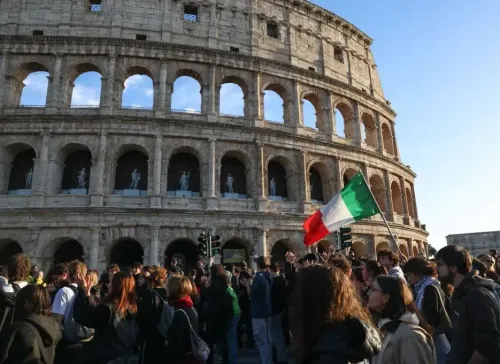
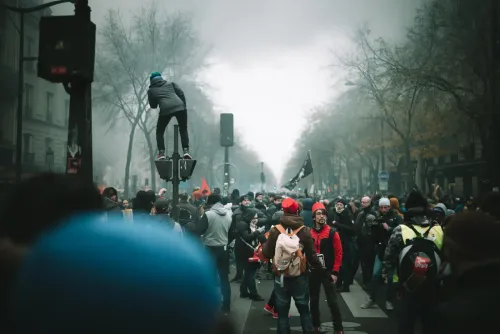
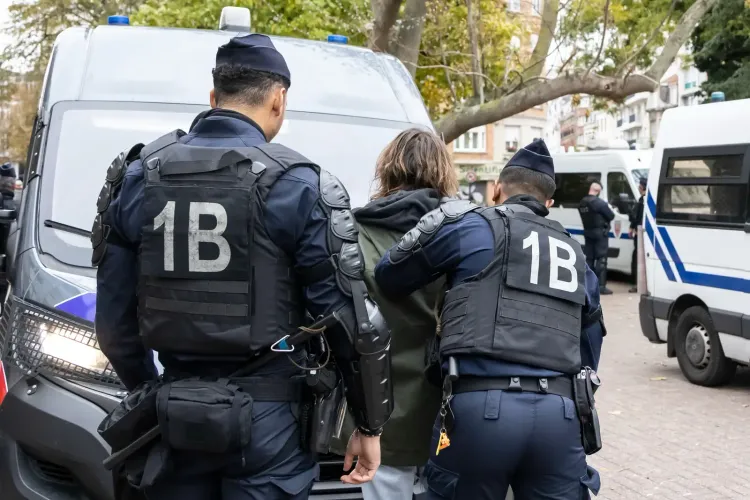
Nearly 1,000 people were arrested across France on Saturday, 25 October as a fresh wave of protests swept the country, with over 40,000 residents taking part in demonstrations against rising inflation. The latest unrest follows a chaotic weekend the week before, when protests turned violent across multiple French cities.
Where Clashes Broke Out
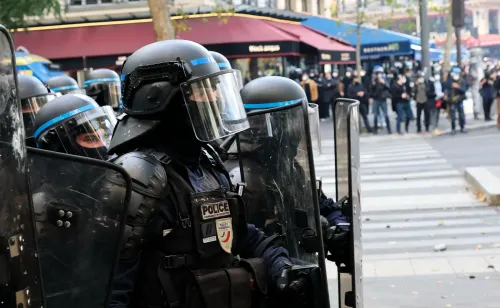
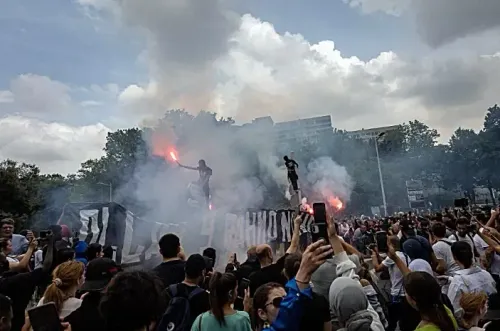
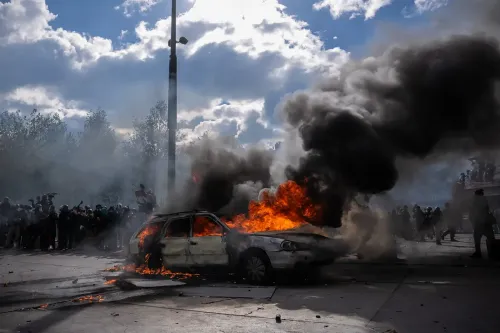
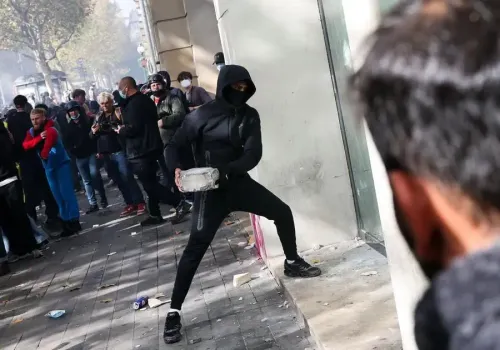
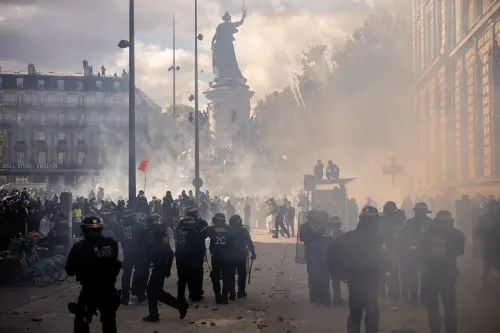
While the majority of demonstrations proceeded peacefully, violent clashes erupted between protesters and security forces in several cities, including Marseille, Rennes, Paris, Lyon, Bordeaux, and Toulouse. Police deployed tear gas and charged crowds around Porte de Vincennes in Paris, while some protesters launched fireworks at security personnel. A water cannon was also used to disperse crowds, and spot checks were conducted on people moving through Nation Square.
Security Response and Preparations
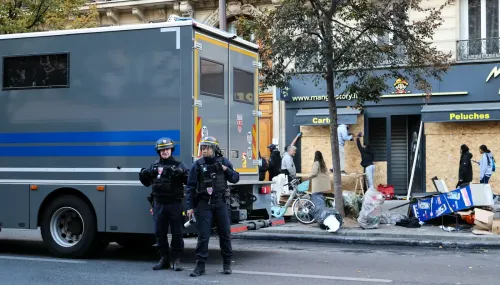
French authorities had anticipated a repeat of the previous weekend's chaos, when protests against rising inflation led to widespread arson and looting across dozens of shops. In response, the government mobilised around 70,000 security personnel ahead of Saturday's planned demonstrations — a significant ramping up of state presence. The scale of the deployment reflects how seriously authorities are treating the ongoing unrest.
What the Interior Minister Said
On Sunday, French Interior Minister Laurent Nunez thanked regional prefects, police officers, gendarmes, and firefighters for their role in managing the protests. In a post on X, Nunez said: 'I want to salute the exceptional commitment and professionalism of all the regional prefects, prefects, police officers, gendarmes, and firefighters mobilised across France to ensure the safety of our fellow citizens and allow the processions to proceed smoothly.'
He also identified those responsible for the disorder, stating that 'individuals from the ultra-left and radical far-left have once again sought to sow disorder, particularly during the dispersal of the processions. These acts are unacceptable.' Nunez added: 'The violence inflicted on the internal security forces, once again, is intolerable. They are deliberately targeted because of their uniforms and, above all, because they are the bulwarks of our Republic that these radical militants seek to bring down.'
Yellow Vests Call for Further Protests
The Yellow Vests movement — which originally emerged in 2018 in opposition to fuel taxes before expanding into a broader anti-government, anti-inflation movement — has announced that another protest is planned for 31 October. This suggests the unrest is far from over, with French authorities likely to maintain heightened security postures through the coming week.
Background and Broader Context
The protests reflect deepening public frustration over the cost-of-living crisis gripping much of Europe. France has seen periodic waves of Yellow Vest-linked demonstrations since 2018, but critics argue the latest resurgence signals that economic grievances remain unresolved. This is the second consecutive weekend of significant unrest, with the prior week's violence involving arson and large-scale looting. How the government responds to the 31 October march will be closely watched by both domestic audiences and European partners monitoring France's political stability.
Point of View
000 marching and the Yellow Vests already scheduling a follow-up for 31 October, the underlying inflation grievance is clearly not being addressed by deployment numbers alone. France has been here before — the 2018-19 Yellow Vest cycle also began with cost-of-living protests and escalated sharply when the state leaned on enforcement rather than concession. Whether the Élysée has a substantive economic response ready, or only a security one, will determine whether this is a two-weekend spike or the beginning of a prolonged crisis.
NationPress
25 Oct 2026
Frequently Asked Questions
Why are people protesting in France in October 2026?
The protests are driven primarily by public anger over rising inflation, which has eroded household purchasing power. The demonstrations are the second consecutive weekend of major unrest, following a chaotic previous Saturday that saw arson and widespread looting.
How many people were arrested in the France protests on 25 October?
Nearly 1,000 people were arrested across France on Saturday, 25 October. More than 40,000 people participated in the demonstrations, with clashes occurring in at least six cities.
Who are the Yellow Vests and what are they demanding?
The Yellow Vests (Gilets Jaunes) are a French protest movement that originally emerged in 2018 over fuel taxes before evolving into a broader anti-government, cost-of-living movement. They have called for another nationwide protest on 31 October 2026.
What did French Interior Minister Laurent Nunez say about the protests?
Interior Minister Laurent Nunez thanked security forces for their professionalism and condemned the violence, attributing it to 'individuals from the ultra-left and radical far-left.' He described attacks on police and gendarmes as 'intolerable' in a post on X.
Which cities in France saw the worst clashes during the 25 October protests?
Violent clashes between protesters and police were reported in Marseille, Paris, Lyon, Rennes, Bordeaux, and Toulouse. In Paris, police deployed tear gas and a water cannon near Porte de Vincennes and conducted checks at Nation Square.