CM Rekha Gupta: Chinook's bow to Ganga is India's soul
Synopsis
Delhi CM Rekha Gupta praised the sight of an Indian Air Force Chinook helicopter flying over the Ganges at the Kashi Air Show, calling it a symbol of India's soul — where modern military strength bows in reverence to its ancient Sanatan heritage.
Key Takeaways
Delhi CM Rekha Gupta posted from the Kashi Air Show in Varanasi on 25 October 2026 .
She described the Chinook heavy-lift helicopter flying over the Ganges as India's valour paying homage to its Sanatan heritage.
The event was linked to #PMModiInKashi , tying it to Prime Minister Narendra Modi's Varanasi constituency.
The CH-47 Chinook was inducted into the Indian Air Force in 2019 and is one of India's most powerful military helicopters.
The post reflects a recurring government narrative of presenting military modernity and ancient cultural identity as complementary rather than contradictory.
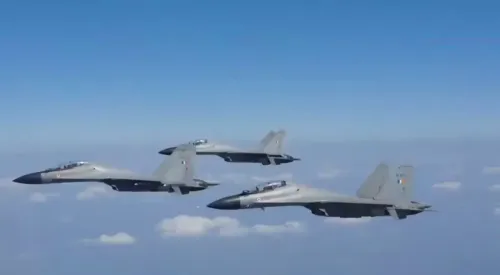
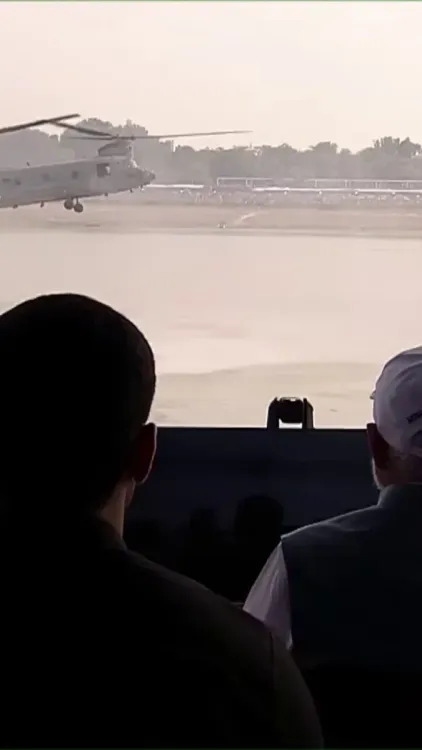
A military giant bowing before a sacred river — Delhi Chief Minister Rekha Gupta captured that arresting image from the Kashi Air Show on Sunday, 25 October 2026, and turned it into a meditation on what she calls the essence of India: strength tempered by devotion, modernity rooted in Sanatan heritage.
Posting from the airshow held in Varanasi, Rekha Gupta wrote in Hindi: 'जब शक्तिशाली चिनूक माँ गंगा के समक्ष झुका, तो मानो भारत के शौर्य ने अपनी सनातन विरासत को प्रणाम किया।' — 'When the mighty Chinook bowed before Mother Ganga, it was as if India's valour paid homage to its eternal heritage. This is India's soul — where strength holds humility, where courage carries reverence, and where modernity carries the values of Sanatan.'
The Chinook over the Ganges
The CH-47 Chinook is one of the Indian Air Force's most powerful heavy-lift helicopters, inducted into service in 2019 and capable of carrying troops, artillery, and supplies across high-altitude terrain. To see it banking over the ghats of Varanasi — one of the oldest continuously inhabited cities on earth, the spiritual heartland of Hindu civilisation — was a visual that needed no caption. Rekha Gupta provided one anyway, and it landed.
The event was tagged #PMModiInKashi, placing it squarely in the orbit of Prime Minister Narendra Modi, who represents the Varanasi Lok Sabha constituency and has made the city a recurring stage for events that weave together infrastructure, culture, and national pride.
Kashi as a canvas for tradition-meets-technology messaging
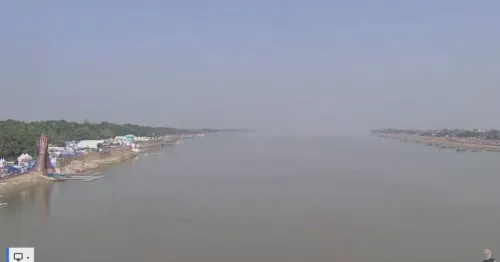
Varanasi — known through the ages as Kashi — sits on the western bank of the Ganges and draws millions of pilgrims annually for rituals at its ghats. Under the current government, the city has also become a showcase for development: a rebuilt waterfront, a new airport terminal, and now an air show that put Indian Air Force hardware directly above the sacred river.
That deliberate juxtaposition — a rotor-winged machine of war performing beside temples that predate recorded history — is not incidental. Indian leaders have periodically staged military displays in historic religious sites to signal a single, politically resonant idea: that the India of missiles and mountain warfare and the India of aarti lamps and ancient scripture are not in tension. They are, in this framing, the same India.
Rekha Gupta's post distils that argument to three tight phrases: 'शक्ति में विनम्रता, पराक्रम में श्रद्धा, आधुनिकता में सनातन के संस्कार' — 'humility within strength, reverence within valour, Sanatan values within modernity.' In three lines, she mapped an entire cultural-political worldview onto a single helicopter manoeuvre over a river.
Whether one reads it as poetry or politics, the image it conjures is hard to shake: the rotor wash of a 15-tonne aircraft rippling the surface of a river that has flowed past these ghats for millennia — and a nation watching both, deciding what it means.
Point of View
Staged where jet-wash meets ghat rituals, are curated moments designed to do exactly that — and the Chief Minister's verse-like caption suggests the messaging is now polished enough to travel without explanation.
NationPress
25 Oct 2026
Frequently Asked Questions
What is the Kashi Air Show 2026?
The Kashi Air Show is an Indian Air Force aerial display event held in Varanasi, featuring military aircraft performing over the Ganges river. Delhi CM Rekha Gupta attended and posted about the event on 25 October 2026.
Why did the Chinook helicopter fly over the Ganges in Varanasi?
The CH-47 Chinook was part of an air show held in Kashi (Varanasi), where Indian Air Force aircraft performed manoeuvres. CM Rekha Gupta described the sight as a symbol of India's military strength bowing to its ancient Sanatan heritage.
What is the CH-47 Chinook helicopter used for in India?
The CH-47 Chinook is a heavy-lift helicopter inducted into the Indian Air Force in 2019. It is used to transport troops, heavy artillery, and supplies, particularly in high-altitude and difficult terrain operations.
What did Rekha Gupta say about the Kashi Air Show?
Rekha Gupta wrote that when the mighty Chinook bowed before Mother Ganga, it felt as if India's valour paid homage to its eternal Sanatan heritage — describing it as the soul of India, where strength holds humility and modernity carries ancient values.
Why is Varanasi significant for PM Modi?
Varanasi, also known as Kashi, is the Lok Sabha constituency represented by Prime Minister Narendra Modi. The city is one of the oldest Hindu pilgrimage sites and has been the location of numerous high-profile government events under the current administration.