CM Rekha Gupta Extends Ganga Dussehra Greetings, Urges River Conservation
Synopsis
Delhi Chief Minister Rekha Gupta marked Ganga Dussehra on 26 May 2026 by extending greetings to residents and calling for a collective pledge to preserve the Ganga's uninterrupted flow and cleanliness, aligning the cultural occasion with the conservation goals of the Namami Gange programme.
Key Takeaways
Delhi CM Rekha Gupta posted Ganga Dussehra greetings on 26 May 2026 , addressing all residents of the capital.
She described the Ganga as the 'living, eternal consciousness of life, purity and unshakeable faith' in Sanatan tradition.
She called on citizens to collectively pledge to maintain the river's aviral (free-flowing) and nirmal (clean) character.
The message echoes the language and goals of the Union government's Namami Gange programme, launched in 2015 .
BJP leaders routinely combine Hindu festival greetings with river-conservation pledges, integrating cultural and environmental governance messaging.
Delhi 's position on the Yamuna , a principal Ganga tributary, gives the capital a direct stake in basin-wide conservation efforts.
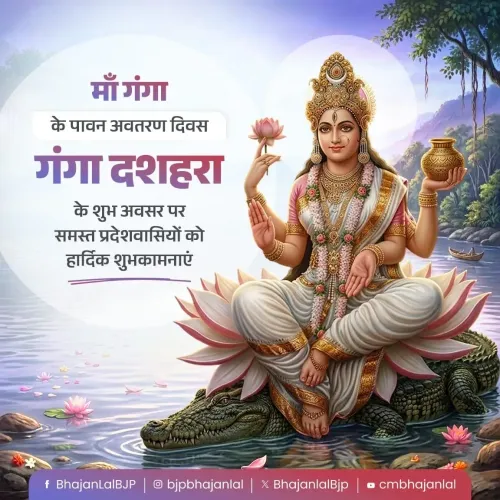
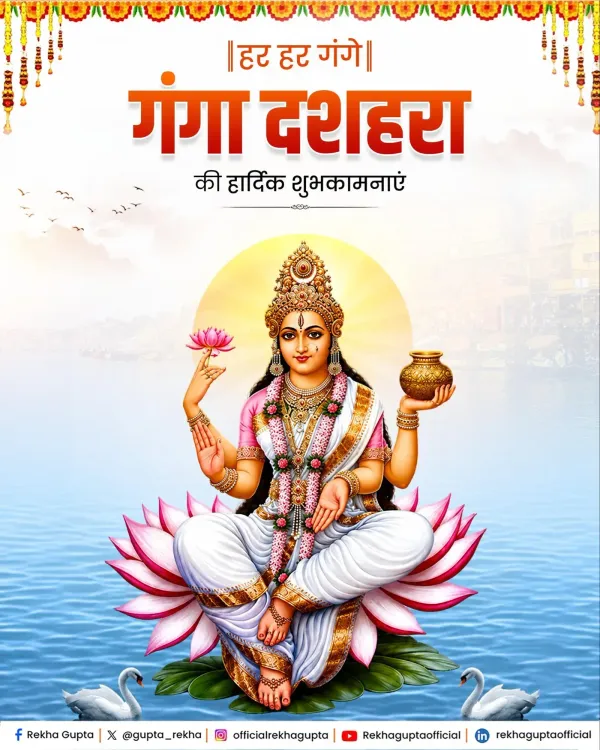
Delhi Chief Minister Rekha Gupta on Monday, 26 May 2026, extended warm wishes to residents on the occasion of Ganga Dussehra, the Hindu festival marking the celestial descent of the river Ganga, and called on citizens to collectively pledge to preserve the river's uninterrupted flow and purity.
Context
In her post on X, CM Gupta described the Ganga as 'jeevan, pavitrata aur atoot aastha ki saakshaat shashwat chetna' — 'the living, eternal consciousness of life, purity and unshakeable faith' in Sanatan tradition. She urged all residents to join in a collective resolve to keep Patit Pavani Maa Ganga — the 'purifier of the fallen' — both free-flowing and clean. She concluded with the invocation 'Jai Maa Gange' (Victory to Mother Ganga).
Ganga Dussehra falls on the tenth day of the bright fortnight in the Hindu month of Jyeshtha and is observed with ritual bathing at ghats, prayers, and acts of charity. The festival commemorates the mythological moment when the Ganga descended from the heavens to earth, an event considered among the most sacred in the Hindu calendar.
Policy Backdrop
The call to preserve the Ganga's aviral (uninterrupted) and nirmal (clean) flow echoes the language of the Union government's flagship Namami Gange programme, launched in 2015 with a mandate for pollution abatement and ecological restoration across the Ganga basin. The scheme has directed resources toward sewage treatment, riverfront development, and biodiversity conservation along the river's course through multiple states.
BJP leaders across states have consistently used Ganga-related festival occasions to align cultural and religious messaging with the conservation framework promoted under Namami Gange, framing river cleanliness as both a civic duty and a spiritual obligation. Delhi, situated on the Yamuna — a principal tributary of the Ganga — has a direct stake in the health of the broader Ganga-Yamuna basin.
Stakeholders and Impact
The message is addressed to all residents of Delhi, a city of over 2 crore people, a significant share of whom observe Ganga Dussehra with prayers and community gatherings. Hindu devotees across the national capital region mark the day at Yamuna ghats and local temples, making it a culturally resonant occasion for the city's administration to communicate on.
The pledge to maintain the river's purity carries practical weight for communities dependent on the Ganga-Yamuna river system for drinking water, agriculture, and livelihoods across the basin states of Uttarakhand, Uttar Pradesh, Bihar, Jharkhand, and West Bengal.
What's Next
Observers will watch for any follow-through at the state level, including coordination meetings or budget-linked announcements connecting Delhi's water bodies with central Ganga-Yamuna basin projects. Ganga Dussehra statements by senior BJP leaders have in past years preceded or accompanied administrative reviews of river-cleaning progress, though no specific event has been announced in connection with this post.
As the festival season progresses, CM Gupta's message sets a tone that blends cultural affirmation with an environmental commitment — a combination that will likely be watched for concrete policy signals in the weeks ahead.
Point of View
Consciously borrowing the 'aviral and nirmal' vocabulary of the Namami Gange programme. By invoking this language on a high-visibility festival day, she reinforces the party's decade-long positioning of Ganga conservation as both a cultural duty and a state priority. For Delhi, a city wrestling with Yamuna pollution, the statement carries a layer of political accountability — it invites scrutiny of how the capital's own water-body management aligns with the broader Ganga basin agenda. The message is low on specifics but high on symbolic alignment, consistent with the pattern of festival-season communications from senior BJP figures across states.
NationPress
11 Oct 2026
Frequently Asked Questions
What is Ganga Dussehra and why is it celebrated?
Ganga Dussehra is a Hindu festival observed on the tenth day of the bright fortnight in the month of Jyeshtha, commemorating the mythological descent of the river Ganga from the heavens to earth. Devotees mark the day with ritual bathing at ghats, prayers, and acts of charity, believing a dip in the Ganga on this day washes away sins.
What did Delhi CM Rekha Gupta say on Ganga Dussehra 2026?
Delhi Chief Minister Rekha Gupta extended greetings to all residents on Ganga Dussehra and called on citizens to collectively pledge to preserve the Ganga's uninterrupted flow and purity, describing the river as the living, eternal consciousness of life and faith in Sanatan tradition.
What is the Namami Gange programme?
Namami Gange is a flagship Union government programme launched in 2015 for the pollution abatement and ecological restoration of the Ganga river basin. It focuses on sewage treatment, riverfront development, and biodiversity conservation along the river's course through multiple states.
Why does Delhi matter for Ganga conservation?
Delhi is situated on the Yamuna river, which is one of the principal tributaries of the Ganga. Pollution levels in the Yamuna directly affect the health of the broader Ganga-Yamuna basin, making Delhi's water-body management a key factor in national river-conservation efforts.
Why do BJP leaders often mention Ganga conservation on Hindu festivals?
BJP leaders have consistently combined Hindu festival greetings with pledges on river conservation since 2014, aligning cultural and religious messaging with the Namami Gange framework. This reflects the party's emphasis on integrating religious sentiment with environmental governance themes.