Amit Shah Hits Back at Kharge Over Remarks on PM Modi's Father
Synopsis
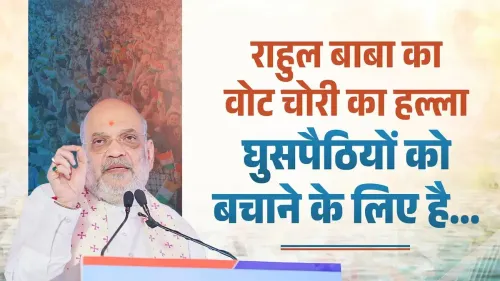
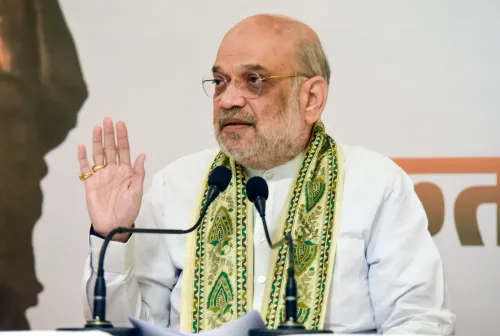
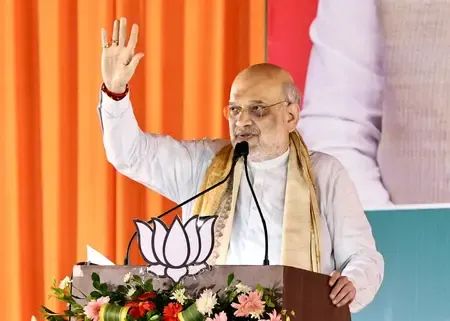
Union Home Minister Amit Shah accused Congress president Mallikarjun Kharge of making an indecent remark about PM Modi's father in Patna, calling it part of a 12-year pattern of personal attacks driven by electoral desperation under Rahul Gandhi's leadership.
Key Takeaways
Union Home Minister Amit Shah posted on X on October 25, 2026 , condemning an alleged remark by Congress president Mallikarjun Kharge about PM Modi's father at a rally in Patna .
Shah cited past insults including the 'maut ka saudagar' and 'chāywālā' taunts as evidence of a recurring Congress pattern of personal attacks on Modi and his family.
He attributed Congress's conduct to 'continuous electoral defeats over 12 years ,' arguing the party has no policy or issues left.
Shah specifically blamed Rahul Gandhi 's leadership for what he called daily erosion of political decorum within Congress.
He warned that voters have historically 'given Congress a fitting reply' every time it makes personal attacks on Modi — framing public backlash as inevitable.
A political firestorm erupted on Sunday, October 25, 2026, after Union Home Minister Amit Shah accused Congress president Mallikarjun Kharge of making an 'indecent remark' about Prime Minister Narendra Modi's late father at a rally in Patna — a charge Shah called emblematic of a party that has run out of ideas, issues, and dignity.
Kharge's Patna remark and what Shah called a pattern of insults
Shah's post, written in Hindi, did not quote Kharge's remark verbatim but described it as crossing 'every limit of decorum' (sari maryādāẽ tār-tār kar dī haiṃ). He went on to list what he characterised as a history of personal attacks on Modi — calling him a 'merchant of death' (maut ka saudagar), mocking his humble background by referring to him as a 'tea-seller' (chāywālā), and making derogatory comments about his mother. The research background confirms such rhetorical exchanges between the BJP and Congress are a recurring feature of Indian electoral politics, intensifying sharply after Congress's defeats in 2014 and 2019.
The maut ka saudagar phrase dates to the heat of Gujarat politics in the mid-2000s. The chāywālā taunt became a flashpoint during the 2014 Lok Sabha campaign, when BJP turned it into a counter-narrative of pride around Modi's origins. Shah's post frames Sunday's remark as the latest episode in a long-running series — not an isolated slip.
Shah's diagnosis: 12 years of defeats, and nothing left but abuse
The core of Shah's argument is political: he attributes what he calls Congress's 'frustration and despair' directly to 'continuous electoral defeats over 12 years.' The implication is a party stripped of policy credibility and popular mandate, left with only personal attacks as a tool. Shah declared that Congress has lost both its public base and, increasingly, its own cadre — a pointed reference to defections and organisational decay that have dogged the party across multiple states.
He also aimed squarely at Rahul Gandhi, stating that under Gandhi's leadership Congress 'crosses the limits of indecency every day.' The framing is deliberate — tying the organisation's conduct to its top leader rather than treating the Patna remark as a one-off from Kharge.
The Bihar backdrop and what Congress will likely say next
The fact that the remark was made in Patna adds electoral texture. Bihar is a politically consequential state, and any comment that can be weaponised into a sympathy or outrage narrative carries amplified stakes there. The BJP has historically been effective at converting personal-attack controversies into electoral mobilisation — 2014 is the clearest precedent. Whether that playbook still moves voters in 2026 is a genuine open question; Congress spokespersons are expected to push back forcefully, likely contesting the characterisation of Kharge's words.
Shah closed with a warning-cum-prediction: 'Whenever they have made hateful comments about Modi ji or his family, the people have given Congress a fitting reply.' It is less a diplomatic note and more a campaign promise — framing the electorate itself as the final arbiter of political conduct.
Point of View
Links it to a leadership figure (Rahul Gandhi), and invokes an electoral warning backed by historical precedent. The Bihar location of Kharge's alleged remark is unlikely to be coincidental — the state remains a critical battlefield, and the BJP has long demonstrated an ability to turn 'insult Modi' controversies into sympathy votes. The deeper pattern here is an entrenched cycle: Congress struggles to land substantive attacks on the incumbent's governance record, while the BJP converts personal-attack moments into narrative dominance. Until one side breaks that cycle with a policy pivot that lands with voters, the exchange will keep repeating.
NationPress
25 Oct 2026
Frequently Asked Questions
What did Mallikarjun Kharge say about PM Modi's father?
Union Home Minister Amit Shah alleged that Kharge made an 'indecent remark' about PM Modi's father at a rally in Patna on October 25, 2026. The specific content of the remark has not been independently verified and Congress is expected to contest the characterisation.
Why did Amit Shah bring up 'maut ka saudagar' and 'chāywālā'?
Shah cited these past insults — 'merchant of death' and 'tea-seller' — to argue that targeting Modi and his family background is a long-standing Congress tactic, not an isolated incident. He used them to build a pattern-of-conduct argument against the party.
What is Amit Shah's criticism of Rahul Gandhi specifically?
Shah stated that under Rahul Gandhi's leadership, Congress 'crosses the limits of indecency every day,' holding him directly responsible for the party's rhetorical conduct rather than treating individual remarks as aberrations.
Why does BJP focus on Congress personal attacks during election season?
The BJP has historically used controversies involving personal remarks about Modi — particularly those touching on his family or humble background — to generate sympathy, consolidate its base, and shift the narrative away from governance questions. The 2014 Lok Sabha campaign is the clearest precedent.
What does Amit Shah mean by Congress losing its cadre?
Shah claimed Congress is losing not just voter support but also its own workers and organisational base, a reference to the defections and internal weakening that have affected the party in multiple states over the past decade.