Over 2,000 arrested as violent protests grip France amid inflation fury
Synopsis
France's anti-inflation marches turned into one of the country's worst nights of unrest in years — over 2,000 arrested, 600-plus security personnel injured, town halls ransacked, and shops looted from Paris to Marseille. Interior Minister Nunez's warning about 'coordinated violence' suggests authorities believe the disorder was not entirely spontaneous, raising the stakes for what comes next.
Key Takeaways
More than 2,000 people were arrested during violent protests across France on 18 October .
Over 600 police officers, gendarmes, and firefighters were injured, according to provisional figures from Interior Minister Laurent Nunez .
Around 550,000 people took part in nationwide marches against rising inflation .
Attacks were reported on public buildings, police stations, and businesses, with several hundred businesses sustaining material damage.
Town halls in Marseille and Lille were vandalised; a tourist office in Lyon was set on fire; protesters attempted to reach the Champs-Élysées in Paris.
Nunez said investigations are underway to identify perpetrators of what he called 'coordinated violence.'
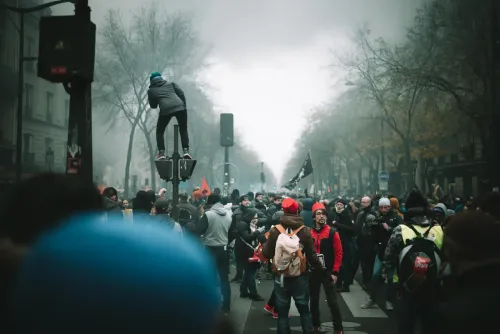
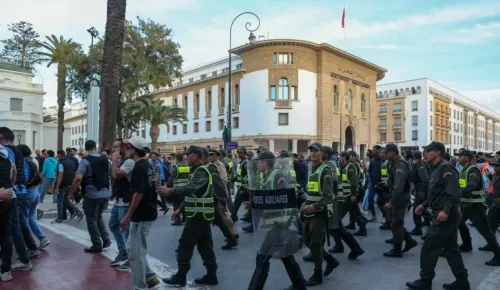
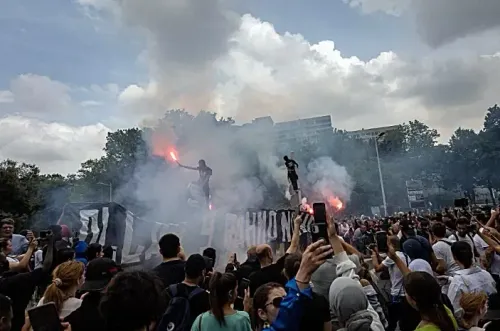
More than 2,000 people have been arrested across France following violent protests on Saturday, 18 October, French Interior Minister Laurent Nunez announced on Sunday. The unrest — the most intense in recent memory — erupted on the sidelines of nationwide marches against rising inflation, with demonstrators clashing with security forces in Paris, Lyon, Marseille, and Lille.
Scale of the Violence
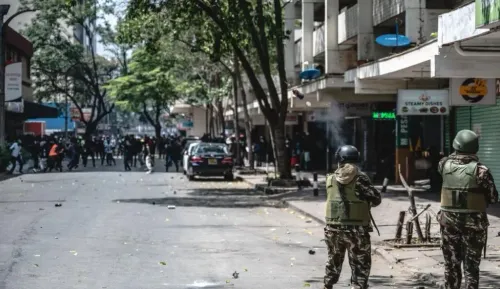
According to Nunez, more than 600 police officers, gendarmes, and firefighters have been injured so far, based on provisional figures. Material damage was described as considerable, affecting several hundred businesses across the country. Dozens of shops were reportedly looted, with particularly heavy incidents recorded in Marseille.
Around 550,000 people participated in protests nationwide on Saturday, making it one of the largest single-day mobilisations France has seen in years. Numerous attacks on public buildings, police stations, and commercial premises were reported during the demonstrations.
What Happened on the Streets
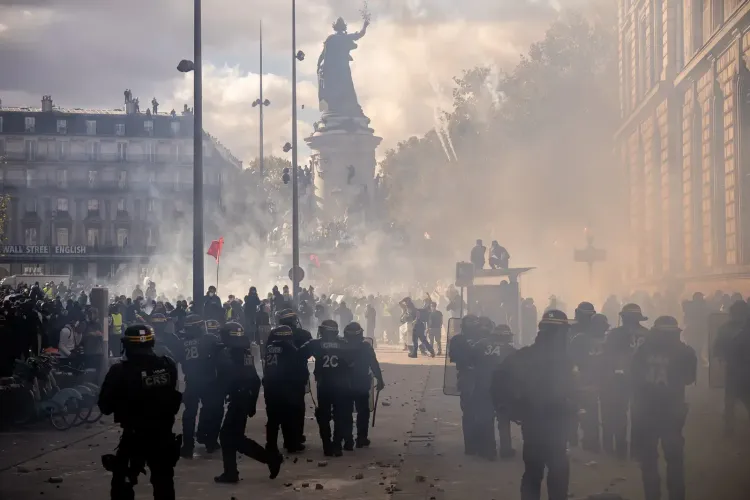
In Paris, over 300 protesters attempted to march toward the Champs-Élysées, home to several flagship luxury stores, before being blocked by police firing tear gas. Protesters shouted slogans including 'Everyone hates the police' and 'Macron, resign' as the confrontations escalated through the night.
In Lyon, demonstrators set fire to a tourist office in the city centre. Town halls in both Marseille and Lille were broken into and vandalised before protesters departed. The unrest builds on weeks of student-led demonstrations that had already been testing the government's resolve.
Government Response
Interior Minister Nunez confirmed that protests in several cities continued late into Saturday night. In a post on social media platform X, he stated that investigations were underway to identify those responsible for the violence. 'Demonstrating is a fundamental right. Causing disorder through coordinated violence is not,' Nunez said.
Notably, the minister's phrasing — 'coordinated violence' — signals that authorities believe at least part of the disorder was pre-planned rather than spontaneous, a distinction that could have implications for how charges are framed against those arrested.
Context and Broader Picture
The protests are rooted in widespread anger over rising inflation, which has squeezed household budgets across France. The Saturday marches were the latest flashpoint in weeks of student unrest that had been building steadily. This convergence of economic grievance and street militancy echoes patterns seen during the Gilets Jaunes (Yellow Vests) movement of 2018-19, though the current wave appears to draw from a broader demographic coalition.
With arrests topping 2,000 and the injury toll among security personnel mounting, the French government faces pressure to restore order while navigating legitimate public anger over the cost of living. Further demonstrations are possible in the coming days as investigations into the violence proceed.
Point of View
000-arrest figure is striking, but the more telling detail is Nunez's use of the phrase 'coordinated violence' — a deliberate signal that the government intends to prosecute this as organised disorder, not spontaneous rage. That framing matters politically: it allows the administration to separate legitimate protesters from a violent minority, but it also risks being used to delegitimise the broader grievance. France's inflation crisis is real, and the Gilets Jaunes parallel is unavoidable — the government misread that movement's depth too. With student protests already weeks old before Saturday's explosion, the question is whether President Macron's administration has a credible economic response, or whether it will default to a law-and-order narrative that addresses the symptom and ignores the cause.
NationPress
19 Oct 2026
Frequently Asked Questions
How many people were arrested during the France protests?
More than 2,000 people were arrested during violent protests across France on Saturday, 18 October, according to Interior Minister Laurent Nunez. Nunez said investigations are underway to identify and prosecute those responsible for violent acts.
Why are people protesting in France?
The protests were triggered by widespread anger over rising inflation, which has strained household finances across the country. The Saturday marches were the culmination of weeks of student-led demonstrations that had been escalating steadily.
How many security personnel were injured in the France protests?
More than 600 police officers, gendarmes, and firefighters were injured in the violence, based on provisional figures cited by Interior Minister Nunez. The figure is expected to be updated as reports from all affected cities are consolidated.
Which cities in France saw the worst violence?
Major incidents were reported in Paris, Lyon, Marseille, and Lille. In Lyon, a tourist office was set on fire; town halls in Marseille and Lille were broken into and vandalised; and in Paris, protesters attempted to march on the Champs-Élysées before being repelled by police using tear gas.
What did French Interior Minister Laurent Nunez say about the protests?
In a post on social media platform X, Nunez confirmed the arrests and injuries, stating that protests in some cities continued late into Saturday night. He defended the right to demonstrate but drew a sharp distinction, saying: 'Demonstrating is a fundamental right. Causing disorder through coordinated violence is not.'