1,800 arrested in France as protests over inflation turn violent
Synopsis
France's Interior Minister Laurent Nunez confirmed 1,800 arrests after a single day of coordinated violence — the worst episode in a weeks-long wave of inflation protests — left over 500 security personnel injured, a 143-year-old town hall in Limoges gutted by fire, and hundreds of businesses looted from Paris to Marseille.
Key Takeaways
French Interior Minister Laurent Nunez confirmed 1,800 arrests following violent protests on 17 October .
More than 500 police officers, gendarmes, and firefighters were injured — a toll described as 'only provisional.' The historic 143-year-old Limoges town hall was deliberately set on fire; its roof largely collapsed.
Looting and vandalism hit cities including Paris, Marseille, Lyon, Bordeaux, Rennes, Strasbourg, Grenoble, Nice, and Limoges .
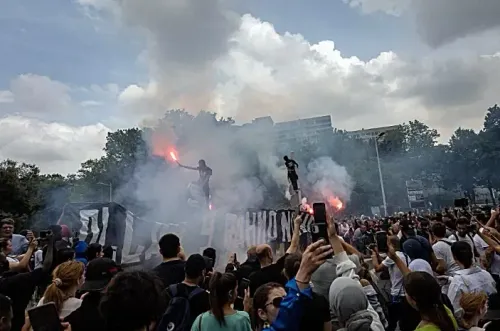
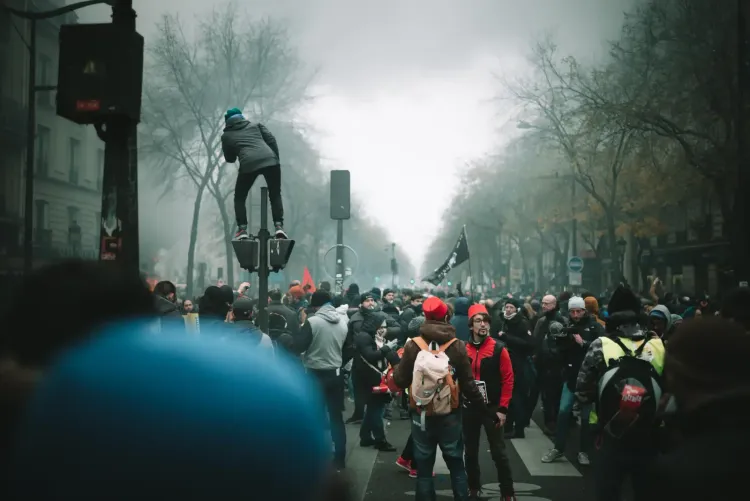
The violence erupted on the sidelines of nationwide marches against rising inflation , following weeks of student protests.
Nunez said investigations are underway; further arrests are expected as authorities identify perpetrators.
French Interior Minister Laurent Nunez said on Sunday, 18 October that 1,800 people have been taken into custody following a wave of violent protests that swept across France on 17 October, causing widespread destruction, looting, and injuries to over 500 security personnel. Investigations are underway to identify and prosecute those responsible.
What Nunez Said
In a post on X, Nunez drew a firm line between lawful protest and criminal violence. 'Manifesting is a fundamental right. Sowing disorder with violence and in a concerted manner is not,' he wrote, before enumerating the acts he condemned: attacking law enforcement, targeting institutions, degrading public buildings, breaking into prefectures or town halls, and looting businesses.
He attributed the initial violence to 'several thousand far-left individuals' who, from midday onwards — and from the morning in Marseille — deliberately targeted public buildings and confronted security forces. He said these groups were later joined by delinquents who looted and ransacked businesses across multiple cities including Paris, Lyon, Bordeaux, Rennes, Strasbourg, Grenoble, Nice, and Limoges.
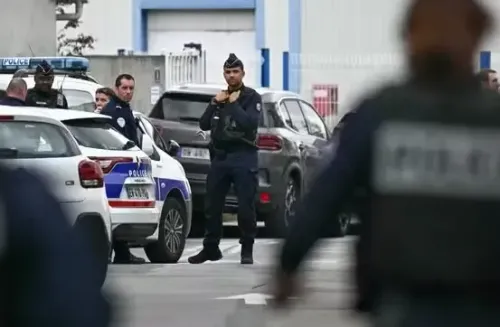
Nunez offered his 'full support' to the police officers, gendarmes, and firefighters who, according to him, intervened 'under extreme conditions.'
Scale of Damage and Injuries
The human and material toll is significant. More than 500 police officers, gendarmes, and firefighters were injured during the clashes — a figure the minister described as 'unfortunately only provisional.' Several hundred merchants suffered material damage as looters broke into dozens of shops, including many in Marseille.
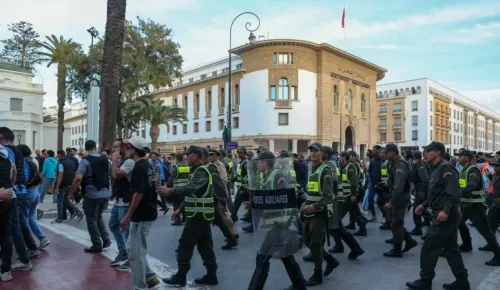
In Lyon, protesters set fire to a tourist office in the city centre. Town halls in Marseille and Lille were broken into and vandalised. In Paris, over 300 protesters attempted to advance toward the Champs-Élysées, home to several flagship luxury stores, before police deployed tear gas to block their path. Protesters were heard chanting slogans including 'Macron, resign.'
Limoges Town Hall Fire
Among the most dramatic scenes was the fire that gutted the historic town hall in Limoges, a 143-year-old building whose roof largely collapsed during the unrest. The police prefect of the Haute-Vienne department, Maurice Barate, said a 'wild horde' had 'deliberately' set the building ablaze. The fire was subsequently brought under control, according to reports.
Background: Weeks of Unrest Over Inflation
The violence erupted on the sidelines of nationwide marches against rising inflation, which had drawn tens of thousands of participants across the east and north of Paris alone. The protests follow weeks of student demonstrations that have steadily escalated in intensity. This is the most violent episode yet in a prolonged cycle of civil unrest, with critics arguing the government's response to the cost-of-living crisis has been inadequate. Notably, the unrest bears echoes of the Gilets Jaunes movement, which similarly combined economic grievance with street violence nearly a decade ago.
What Comes Next
French authorities have signalled zero tolerance, with Nunez stating that 'The Republic will yield nothing to those who seek to impose disorder and violence.' Investigations are ongoing to identify perpetrators, and further arrests are expected. Whether the government will announce emergency economic measures in response to the underlying inflation concerns remains to be seen.
Point of View
800 arrests, 500-plus injured security personnel, a burning town hall — suggests France's inflation-driven unrest has crossed a threshold from mass mobilisation into organised confrontation. Nunez's framing of the instigators as 'several thousand far-left individuals' is politically charged and will be contested; but the looting that followed points to a broader social fracture beyond ideology. The deeper problem is that the government has yet to credibly answer the economic grievance at the root of these marches. A crackdown alone, however firm, will not extinguish a cost-of-living crisis. The ghost of the Gilets Jaunes — similarly dismissed early on — should concentrate minds in the Élysée.
NationPress
18 Oct 2026
Frequently Asked Questions
How many people were arrested during the France protests on 17 October?
French Interior Minister Laurent Nunez confirmed that 1,800 people were taken into custody following the violent protests of 17 October 2026. Investigations are ongoing to identify further perpetrators so they can face justice.
What caused the violent protests in France?
The protests were part of nationwide marches against rising inflation in France, which escalated into violence on 17 October. Weeks of prior student protests had already raised tensions before Saturday's clashes.
What happened to the Limoges town hall during the protests?
The 143-year-old town hall in Limoges was deliberately set on fire during the protests on 17 October, causing its roof to largely collapse. Police prefect Maurice Barate described the perpetrators as a 'wild horde' who acted deliberately; the fire was subsequently brought under control.
How many security personnel were injured in the France protests?
More than 500 police officers, gendarmes, and firefighters were injured during the protests, a figure the Interior Minister described as 'unfortunately only provisional,' suggesting the toll could rise.
Which cities in France were affected by the looting and violence?
Looting and violent clashes were reported across multiple French cities, including Paris, Marseille, Lyon, Bordeaux, Rennes, Strasbourg, Grenoble, Nice, and Limoges, among others.