Albania protests turn violent: 56 arrested, Tirana buildings damaged
Synopsis
What began as a student rally outside Albania's Ministry of Education on 13 October has spiralled into nationwide violent clashes, with 56 arrested, 97 under criminal investigation, and key government buildings damaged. The unrest is rooted in the broader 'Flamingo' movement — and Prime Minister Edi Rama's refusal to negotiate under pressure raises the stakes considerably.
Key Takeaways
Student protests in Tirana, Albania turned violent from 13 October , spreading to multiple cities by 17 October .
56 people were arrested and 97 others — including 16 minors — placed under criminal investigation by Albanian police.
The Ministry of Education , Ministry of Justice , and the central bank were among institutions damaged in the clashes.
Prime Minister Edi Rama refused to yield to violence and accused the opposition of exploiting the unrest to destabilise the country.
The protests are linked to the broader 'Flamingo' movement , which began in late May over a coastal tourism project reportedly tied to Jared Kushner , later expanding to cover corruption, healthcare, and education.
UN agencies in Albania called on all sides on Friday to end violence and resolve differences through dialogue.
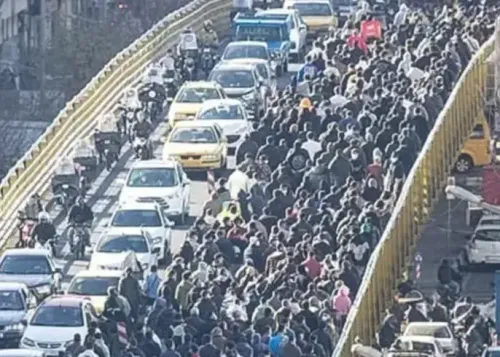
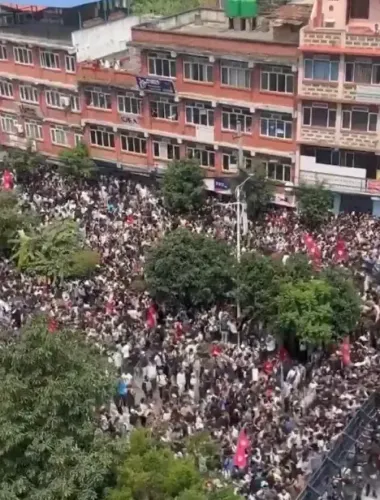
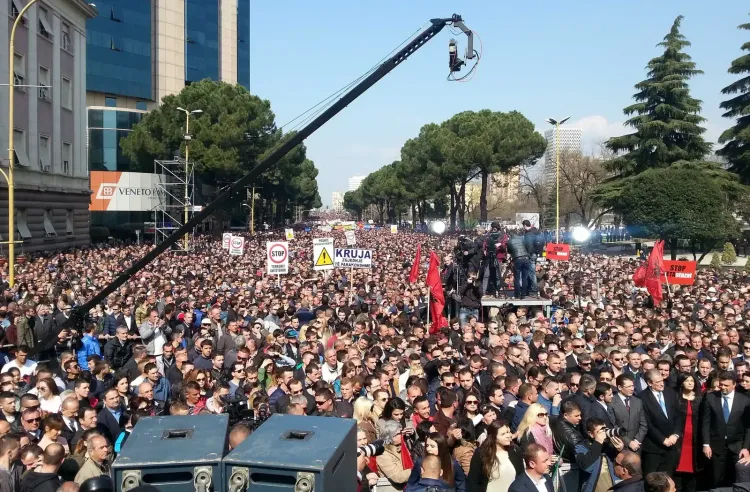
Student-led protests in Tirana, Albania escalated into violent clashes with police over the weekend of 17 October, leaving government ministries, banks, businesses, and public facilities damaged across the capital. The unrest, which began on 13 October, has since spread to several cities nationwide and deepened a widening political rift between the government and the opposition.
How the Protests Began
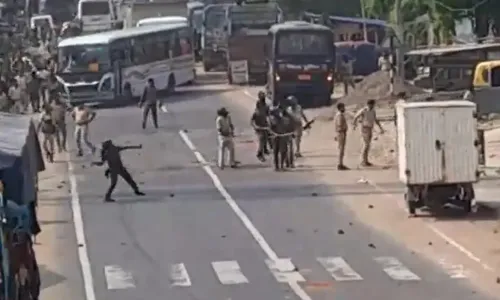
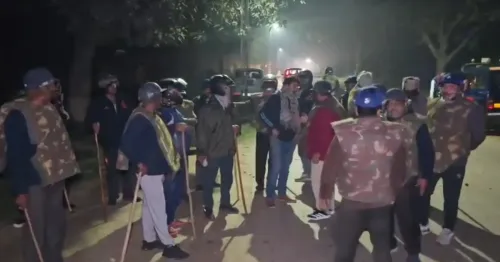
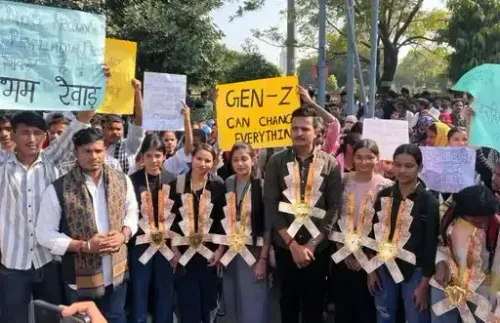
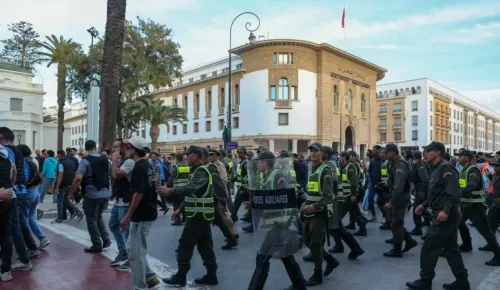
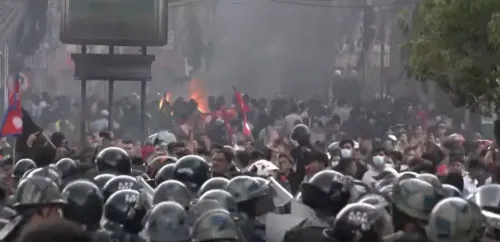
The latest wave of demonstrations was triggered on 13 October, when students gathered outside the Ministry of Education to demand better university conditions, lower education costs, and improved youth employment prospects, according to local media reports. The situation deteriorated rapidly that afternoon, when some demonstrators threw stones and other objects at police and government buildings. Authorities responded with tear gas and water cannons to disperse the crowds. Large numbers of riot police remained deployed into Friday evening as tensions persisted.
Extent of Damage and Arrests
Widespread damage was reported across Tirana, with the Ministry of Education, the Ministry of Justice, and the central bank among the institutions targeted by protesters. Albanian police confirmed on Friday that 56 people had been arrested in connection with the unrest, while a further 97 individuals — including 16 minors — had been placed under criminal investigation.
Government's Response
Prime Minister Edi Rama stated he would not yield to violence, according to Albanian media reports. Rama accused the opposition of attempting to exploit the protests to destabilise the country — a charge the opposition has not publicly accepted. The protests have further deepened political divisions between the ruling government and opposition parties over how the unrest should be handled.
The Broader 'Flamingo' Movement
The current clashes are the latest chapter in a broader wave of civil discontent. According to local media reports, the so-called 'Flamingo' movement emerged in late May, initially focused on opposition to a proposed tourism project in a protected coastal area in southern Albania reportedly linked to Jared Kushner, son-in-law of U.S. President Donald Trump. The movement subsequently expanded to encompass wider grievances over corruption, the rising cost of living, healthcare, and education — issues that resonate across Albanian society. This is the second major escalation of the movement since its inception, suggesting the underlying discontent remains unresolved.
International Calls for Dialogue
UN agencies operating in Albania called on all parties on Friday to end the violence, ease tensions, and resolve differences through dialogue. The international appeal underscores growing concern that the unrest, if uncontained, could have broader implications for Albania's political stability and its ongoing aspirations toward European Union integration. How the government responds to both the protesters' demands and international pressure in the coming days will be closely watched.
Point of View
Making a clean resolution politically costly on all sides. Rama's hardline stance may contain the immediate disorder, but it does little to address the structural grievances — on education costs, corruption, and cost of living — that fuelled the 'Flamingo' movement in the first place. The Kushner-linked coastal project angle, however unresolved, has given the protests an international dimension that complicates Tirana's EU accession narrative. If the government cannot separate legitimate student demands from opposition manoeuvring, it risks prolonging the unrest rather than defusing it.
NationPress
18 Oct 2026
Frequently Asked Questions
What triggered the Albania protests in October 2024?
The protests were triggered on 13 October when students gathered outside Albania's Ministry of Education demanding better university conditions, lower education costs, and improved youth employment prospects. The demonstrations quickly escalated into violent clashes with police, spreading to several cities across the country.
How many people have been arrested in the Albania unrest?
Albanian police confirmed that 56 people were arrested in connection with the unrest, while 97 others — including 16 minors — were placed under criminal investigation. The arrests followed clashes in which protesters threw stones at police and government buildings.
What is the 'Flamingo' movement in Albania?
The 'Flamingo' movement is a broader civil protest movement that began in late May, initially opposing a proposed tourism project in a protected coastal area in southern Albania reportedly linked to Jared Kushner, son-in-law of U.S. President Donald Trump. It later expanded to address corruption, the cost of living, healthcare, and education.
What has Prime Minister Edi Rama said about the protests?
Prime Minister Edi Rama stated he would not yield to violence and accused the opposition of seeking to exploit the protests to destabilise Albania, according to Albanian media reports. He has not indicated willingness to negotiate under conditions of ongoing unrest.
What has the international community said about the Albania clashes?
UN agencies operating in Albania called on all sides on Friday to end the violence, ease tensions, and resolve differences through dialogue. The appeal reflects growing international concern over the potential impact of the unrest on Albania's political stability and its EU integration prospects.