Mahua Moitra Questions Selective Contempt Action Against Sanjay Raut
Synopsis
TMC MP Mahua Moitra has publicly questioned why a contempt petition targets Shiv Sena's Sanjay Raut while BJP MP Dubey, who allegedly blamed CJI Sanjeev Khanna for civil wars and religious strife, faces no similar action — reigniting the debate over selective contempt enforcement in India.
Key Takeaways
TMC MP Mahua Moitra raised the question on 18 October 2026 , demanding parity in contempt proceedings.
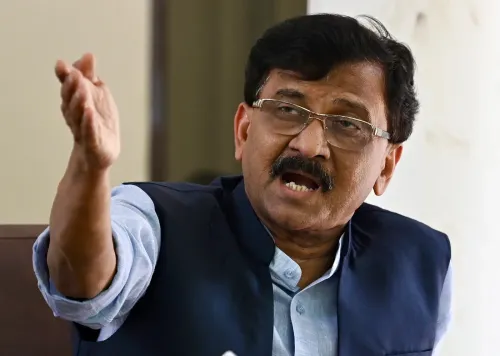
A contempt petition has been filed against Shiv Sena (UBT) Rajya Sabha MP Sanjay Raut .
BJP MP Dubey allegedly claimed sitting CJI Sanjeev Khanna was responsible for 'civil wars' and religious strife — but faces no contempt action, per Moitra's post.
Moitra invokes the judiciary's own 'courts are not fragile as flowers' standard to argue for consistent application of contempt law.
The Contempt of Courts Act, 1971 and Articles 129, 215 of the Constitution govern such proceedings, with courts historically cautioning against their overuse.
The case is expected to see further hearings, with the symmetry question now firmly in the public domain.
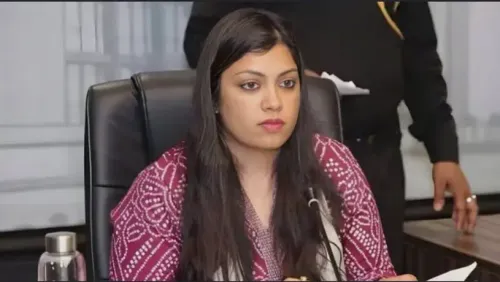
A pointed question about judicial consistency is now reverberating through India's political corridors. TMC MP Mahua Moitra on Sunday, 18 October 2026, publicly challenged why a contempt petition has been filed against Shiv Sena (UBT) Rajya Sabha MP Sanjay Raut while a BJP MP who allegedly claimed that sitting Chief Justice of India Sanjeev Khanna was responsible for 'civil wars' and religious strife in India has faced no equivalent legal scrutiny.
The Asymmetry Moitra Is Pointing To
Moitra's post is surgical in its framing. She invokes the Supreme Court's own long-held position — that courts are 'not fragile as flowers' — a phrase the judiciary has historically used to signal that robust public criticism of institutions does not automatically constitute contempt. Her argument: if that standard shielded BJP MP Dubey from proceedings after remarks linking CJI Khanna to civil strife and communal tension, the same standard must apply to Raut. The logic is straightforward. The application, she implies, is not.
The Contempt of Courts Act, 1971, defines criminal contempt as any publication that 'scandalises' or lowers the authority of any court, or prejudices judicial proceedings. The threshold has always been contested terrain — courts themselves have cautioned against over-use, noting that the power to punish for contempt must be exercised sparingly and only when the damage to judicial authority is clear and present.
A Recurring Fault Line in Indian Politics
This is not the first time opposition MPs have raised the charge of selective contempt enforcement. Indian political history carries a long thread of accusations — from both sides of the aisle — that contempt proceedings tend to follow political convenience rather than a neutral reading of the law. Article 19(1)(a) of the Constitution guarantees free speech, while Articles 129 and 215 vest contempt powers in the Supreme Court and High Courts respectively. The tension between these provisions has never been fully resolved, and each high-profile case reignites the debate.
What gives Moitra's intervention particular sharpness is the target of the alleged BJP MP's remarks: not a lower court, not a general critique of the judiciary, but the sitting Chief Justice by name — a level of specificity that would ordinarily attract close scrutiny under any consistent reading of contempt law.
What Happens Next in the Raut Petition
The contempt petition against Sanjay Raut is expected to see further hearings, and Moitra's public challenge adds political pressure to what is now a question of institutional credibility. If courts proceed against Raut while the Dubey matter remains untouched, the opposition will have a ready-made argument about uneven enforcement. If proceedings are initiated against Dubey as well, it would signal that the judiciary is alive to the symmetry question Moitra has now placed squarely on the record.
Either way, the question is on the table — and in Indian constitutional law, questions about who gets held in contempt, and who does not, rarely stay quiet for long.
Point of View
The credibility cost falls not just on the government but on the judiciary itself — which is precisely the pressure Moitra is applying.
NationPress
18 Oct 2026
Frequently Asked Questions
Why is there a contempt petition against Sanjay Raut?
A contempt petition has been filed against Shiv Sena (UBT) Rajya Sabha MP Sanjay Raut, though the specific remarks triggering it are subject to ongoing proceedings. TMC MP Mahua Moitra has questioned why this petition exists while BJP MP Dubey faces no similar action despite allegedly blaming CJI Sanjeev Khanna for civil strife.
What did BJP MP Dubey say about CJI Sanjeev Khanna?
According to Mahua Moitra's post, BJP MP Dubey claimed that sitting Chief Justice of India Sanjeev Khanna was responsible for 'civil wars' and religious strife in India. The specific details of these remarks are not independently verified in available records.
What does 'courts are not fragile as flowers' mean in contempt law?
This phrase reflects a position the Indian judiciary has historically taken — that robust public criticism of courts does not automatically constitute contempt of court. Moitra uses this standard to argue that if it protected Dubey, it should equally protect Raut.
What is the Contempt of Courts Act, 1971?
The Contempt of Courts Act, 1971, is an Indian law that defines civil and criminal contempt and empowers courts to initiate proceedings against statements that scandalise or lower judicial authority. Courts have historically cautioned that this power should be used sparingly.
What is Mahua Moitra's political background?
Mahua Moitra is a Lok Sabha MP from Krishnanagar, West Bengal, representing the All India Trinamool Congress (TMC). She is known for frequently raising judicial and parliamentary accountability issues in public discourse.