Mahua Moitra slams BJP over pandal politics, CPI(M) book ban
Synopsis
TMC MP Mahua Moitra on 18 October 2026 accused BJP of focusing on blocking CPI(M) book stalls at Durga Puja pandals rather than ensuring structural safety, calling the approach a governance failure in a pointed post directed at Bengali voters.
Key Takeaways
TMC MP Mahua Moitra posted a sharp attack on BJP on 18 October 2026 during the Durga Puja season in West Bengal .
She accused BJP of prioritising the suppression of CPI(M) book stalls at pandals over safety measures at those venues.
CPI(M) has a long tradition of running book and literature stalls at public festivals as part of grassroots outreach in Bengal.
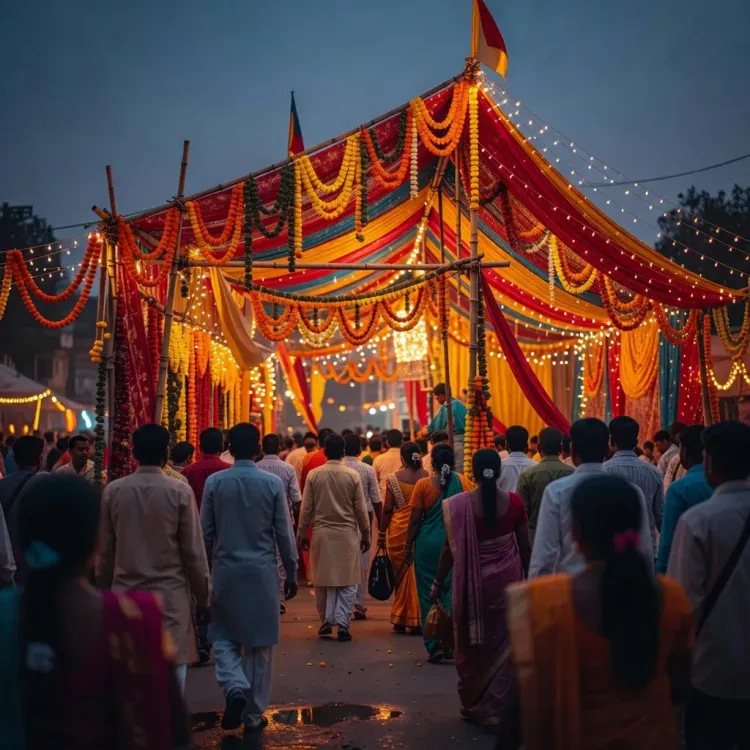
Safety of Durga Puja pandals — large temporary structures drawing massive crowds — is a recurring administrative concern each festival season.
West Bengal politics involves a fierce three-way contest among Trinamool Congress , BJP , and CPI(M) , with festival spaces often becoming political flashpoints.
Research notes that the characterisation 'BJP govt in Bengal' is unverified; Trinamool Congress currently governs the state.
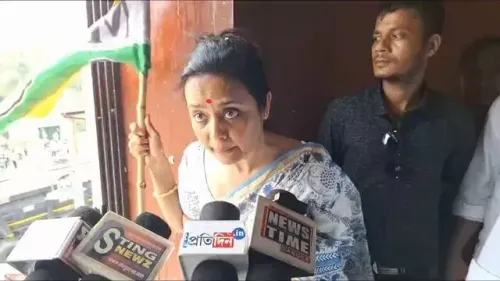
Festival season in West Bengal has once again become a political battleground — and TMC MP Mahua Moitra is not holding back. On Sunday, 18 October 2026, the Krishnanagar MP fired a sharp broadside at the Bharatiya Janata Party, accusing it of prioritising the suppression of CPI(M) book stalls at Durga Puja pandals over the actual safety of those structures and the lakhs of visitors inside them.
Moitra's post pulled no punches: 'BJP govt in Bengal more bothered about how to stop CPI(M) from selling books at pandals than about safety measures at pandals. Elect a clown, get a circus, Bengalis.' The line — blunt, colloquial, aimed squarely at Bengali voters — frames the accusation as one of grotesque misplaced priorities during one of the subcontinent's largest public festivals.
Books versus barricades: the pandal politics flashpoint
Durga Puja pandals are not merely sites of worship — they are sprawling temporary cities, drawing enormous crowds across West Bengal every October. Safety of these structures, crowd management, and fire hazards are perennial administrative concerns that state authorities must address each season. Moitra's charge is that BJP functionaries in the state are channelling enforcement energy toward blocking CPI(M) ideological outreach — in the form of book stalls, a longstanding Left tradition at public gatherings — rather than ensuring basic structural and crowd safety.
The Communist Party of India (Marxist) has historically used festival spaces for political and cultural engagement, including book fairs and literature stalls, as part of its grassroots outreach in a state where it once governed for over three decades. Attempts to restrict such stalls touch a nerve in Bengal's politically charged public culture.
A three-way rivalry with festival-season stakes
West Bengal's political landscape is defined by a fierce triangular contest among the ruling Trinamool Congress, the BJP, and the CPI(M). Accusations of misusing administrative machinery during festivals — whether to favour one party's presence or suppress another's — are a recurring motif in the state's inter-party exchanges. Moitra's framing, however, sharpens the attack by invoking a public-safety angle: the suggestion that governance failures during a high-footfall festival season carry real human risk.
It is worth noting that the research flagged as unverified the specific incidents Moitra references, and that the description 'BJP govt in Bengal' does not reflect the current state government composition — Trinamool Congress holds power in West Bengal. Whether Moitra refers to BJP-controlled local bodies or a broader characterisation of BJP's political influence in the state is not clarified in the post.
What is clear is the political intent: a TMC voice using Durga Puja season to paint the BJP as administratively reckless and ideologically petty — all in one sentence. In Bengal, where the festival is identity itself, that framing is designed to sting.
Point of View
She simultaneously positions TMC as the responsible administrator and BJP as both petty and dangerous. The dig at Bengali voters — 'elect a clown, get a circus' — is unusual in its directness, suggesting confidence that the framing will resonate more than it will alienate. The broader pattern here is significant: as BJP deepens its footprint in Bengal, controlling the narrative around Durga Puja — the state's most emotionally loaded public event — has become as contested as any election campaign.
NationPress
18 Oct 2026
Frequently Asked Questions
What did Mahua Moitra say about BJP and Durga Puja pandals?
Mahua Moitra accused BJP of being more focused on stopping CPI(M) from selling books at Durga Puja pandals than on ensuring safety measures at those festival venues, calling it a failure of governance priorities.
Why does CPI(M) sell books at Durga Puja pandals?
CPI(M) has a longstanding tradition of using public festivals and gatherings for political and cultural outreach, including setting up book and literature stalls, as part of its grassroots engagement in West Bengal.
Is BJP in power in West Bengal?
No — Trinamool Congress governs West Bengal. BJP is the principal opposition in the state, though it controls some local bodies. Moitra's reference to a 'BJP govt in Bengal' has not been independently verified in context.
What are the safety concerns around Durga Puja pandals?
Durga Puja pandals are large temporary structures that draw massive crowds. Structural integrity, fire hazards, and crowd management are recurring administrative concerns that state and local authorities are expected to address each festival season.
What is the political rivalry like in West Bengal?
West Bengal has a fierce three-way contest among Trinamool Congress, BJP, and CPI(M). Festival spaces like Durga Puja pandals frequently become flashpoints for inter-party disputes over political presence and administrative control.