Tharoor Slams Delhi Lockdown Over Election Integrity Protests
Synopsis
Congress MP Dr. Shashi Tharoor returned to Delhi past 2 am on October 10, 2026, to find 22,000 security personnel, 250 cancelled trains, 45 closed metro stations, and internet suspended — all to block citizens demanding answers on election integrity. He called it an 'undeclared Emer-GenZ' and urged the government to offer answers, not lathis.
Key Takeaways
22,000 police and paramilitary were deployed across Delhi to prevent election-integrity protests on October 10, 2026 .
250 trains were cancelled and 45 metro stations closed as part of the security lockdown.
Internet was suspended in central Delhi, which Tharoor described as the 'most regressive and repressive' measure.
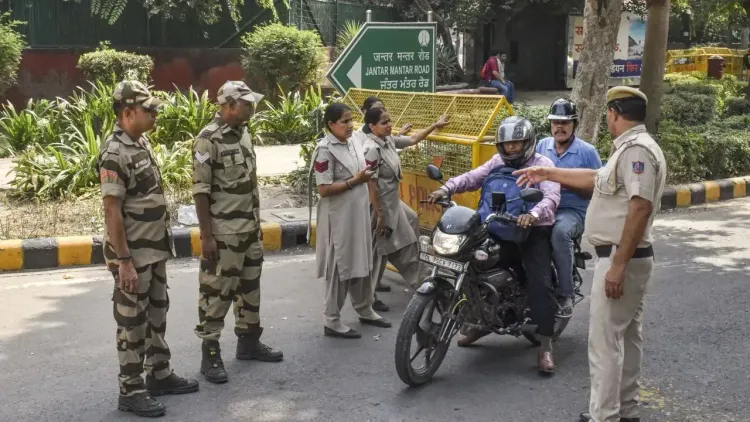
Access to Jantar Mantar — the designated public protest space — was blocked, with roads declared out of bounds.
Reports emerged of young people being detained from their homes and streets in and around the capital.
Tharoor warned that barricades cannot restore faith in the Election Commission of India and called for transparent answers over forceful suppression.
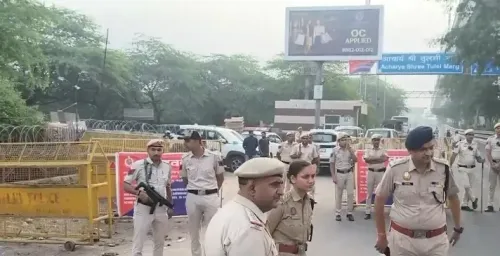
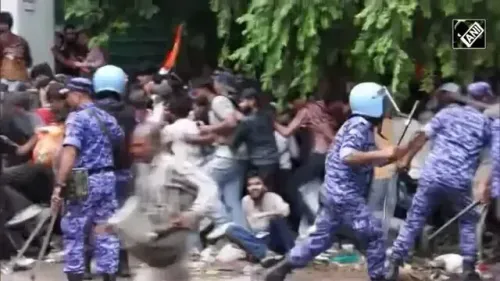
Delhi woke up on Saturday, October 10, 2026, looking less like a capital and more like a city under siege — and Congress MP Dr. Shashi Tharoor returned past 2 am to document what he found: checkpoints every few hundred metres, concrete barriers, spike strips across roads, and a deployment of 22,000 police and paramilitary personnel across the national capital, all aimed at preventing citizens from marching to demand answers about the integrity of India's elections.
What Tharoor Saw Returning to Delhi After Midnight
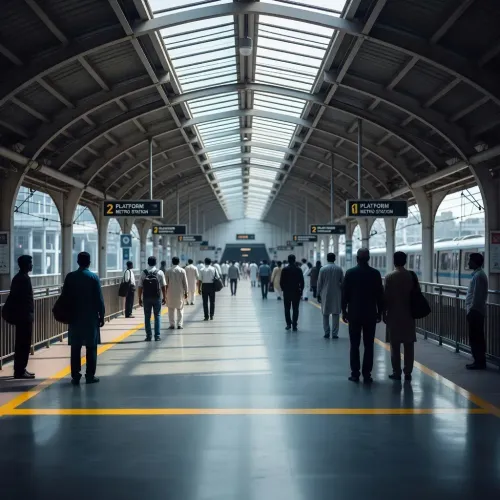
In a detailed post on X, Tharoor catalogued the scale of the security apparatus: 250 trains cancelled, 45 metro stations shut, internet suspended in central Delhi, and reports of young people being detained from their own homes and the surrounding streets. 'Freedom of movement stands completely shackled,' he wrote, calling the internet suspension 'most regressive as well as repressive.'
The target of the demonstrations was Jantar Mantar — the designated public protest ground in the heart of New Delhi — yet even the roads leading to it were declared out of bounds. Tharoor pointedly noted the irony: a space created specifically for civic dissent had been rendered inaccessible by the very state that is supposed to protect that right.
The Election Integrity Question at the Heart of the Unrest
The protests, Tharoor argued, were fundamentally about democratic accountability — citizens exercising their constitutional right to question the Election Commission of India and the fairness of recent electoral processes. His post, shared with the handle of the Indian National Congress, framed the government's response as self-defeating: 'A government confident in the fairness of its elections would welcome questions about them, whereas one that turns its capital into a fortress to avoid them only deepens the very suspicions it seeks to suppress.'
He coined a sharp rhetorical phrase for the moment — calling it 'an undeclared Emer-GenZ' — underscoring that the crackdown bore the hallmarks of emergency-era repression while being directed primarily at young protesters. 'Our GenZ deserves better,' he wrote.
Tharoor's Challenge to the Authorities: Answers, Not Lathis
The former UN Under-Secretary-General and ex-Union Minister raised a series of pointed questions: where does this extraordinary manpower disappear when women in Delhi need protection? If detained protesters are released and simply return on Monday, will the government lock down the capital all over again? The questions were rhetorical, but their sting was real.
His closing line landed like a verdict: 'The strength of a democracy is measured by how it treats those who question its working, and by that measure, what we have seen today is utterly shameful and unconscionable.' He called on the government to 'provide answers, not lathis; expression, not repression,' and warned that barricades alone cannot restore public faith in the Election Commission.
Point of View
The Congress positions itself alongside a citizen movement rather than merely opposing a rival party. The 'Emer-GenZ' coinage signals a deliberate attempt to mobilise younger voters by connecting present repression to the memory of the 1975 Emergency — a potent historical reference in Indian politics. If the protests resume on Monday as Tharoor implies they might, the government faces a compounding dilemma: sustain a costly and visually damaging lockdown, or allow demonstrations that it clearly fears will gain momentum.
NationPress
10 Oct 2026
Frequently Asked Questions
Why was Delhi locked down on October 10 2026?
According to Dr. Shashi Tharoor's account, 22,000 police and paramilitary personnel were deployed across Delhi to prevent citizens from marching to protest and raise questions about the integrity of India's elections, with 250 trains cancelled and 45 metro stations closed .
What did Shashi Tharoor say about the Delhi protest crackdown?
Tharoor called the crackdown 'utterly shameful and unconscionable,' described it as an 'undeclared Emer-GenZ,' and demanded the government provide 'answers, not lathis; expression, not repression,' warning that barricades cannot restore faith in the Election Commission.
Was the internet shut down in Delhi during the protests?
Yes. Tharoor reported that internet services were suspended in the heart of the national capital, which he described as the 'most regressive as well as repressive' measure taken during the crackdown.
What is Jantar Mantar and why does it matter in this context?
Jantar Mantar in New Delhi is the officially designated public protest ground where citizens are permitted to voice dissent. Tharoor noted that even roads leading to it were declared out of bounds on October 10, effectively nullifying its purpose.
What is the 'Emer-GenZ' phrase Tharoor used?
Tharoor coined 'Emer-GenZ' as a portmanteau of 'Emergency' and 'Gen Z,' implying that the government's response to youth-led election-integrity protests echoed the repressive spirit of India's 1975 Emergency, though no formal emergency has been declared.