Delhi on high alert for CJP Jantar Mantar protest; Metro stations shut, borders sealed
Synopsis
Delhi locked down large swathes of its centre on 10 October — Metro stations shuttered, borders sealed, internet cut across a 4-km zone — to contain a Cockroach Janata Party protest demanding the resignation of Chief Election Commissioner Gyanesh Kumar. The scale of the security response is as much the story as the protest itself.
Key Takeaways
Delhi Police placed the Capital on high alert on 10 October 2026 ahead of a CJP protest at Jantar Mantar .
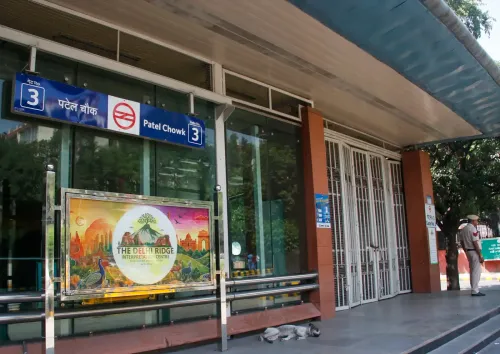
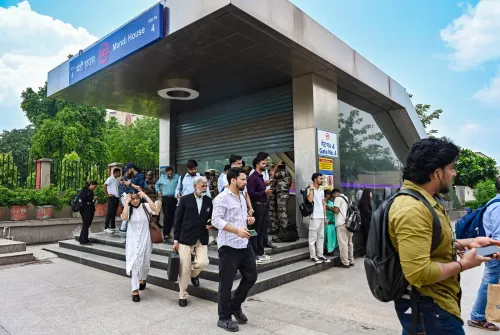
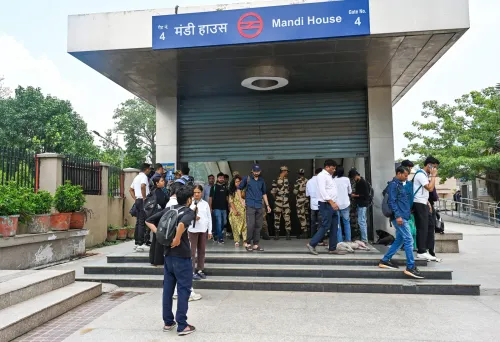
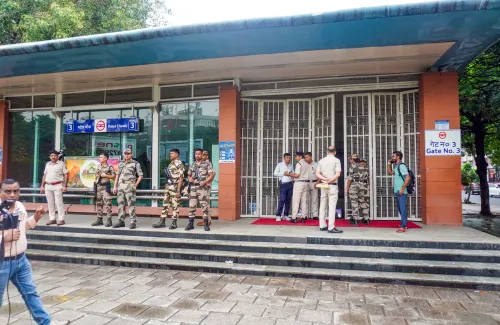
Metro stations including Supreme Court and Mandi House were closed; borders at Ghazipur and Badarpur were sealed with vehicle checks.
Internet services suspended within a 4-km radius of Janpath-Kartavya Path crossing for 24 hours from 10 pm Friday .
Section 163 BNSS imposed in Delhi and Gautam Buddh Nagar , banning gatherings of 5 or more without permission until 20 October .
Security tightened at residences of Chief Election Commissioner Gyanesh Kumar and Rahul Gandhi ; drone surveillance and body cameras deployed.
A 1.5-km zone around Jantar Mantar, Janpath, the Election Commission office, and Delhi Police HQ designated highly sensitive.
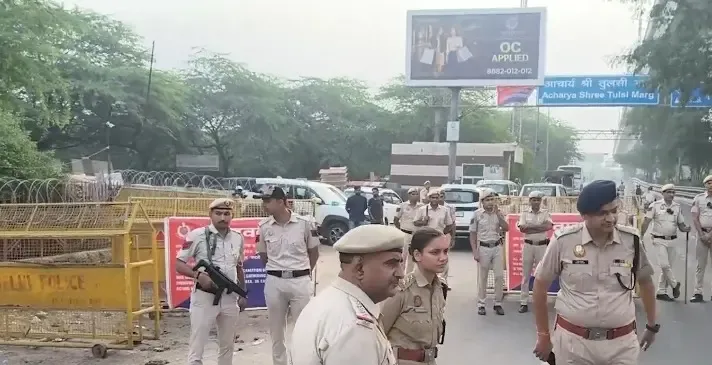
Delhi Police placed the national Capital on high alert on Saturday, 10 October ahead of a Cockroach Janata Party (CJP) protest at Jantar Mantar, deploying paramilitary forces, sealing inter-state borders, closing key Metro stations, and suspending internet services in a 4-km radius around the Janpath-Kartavya Path crossing. The demonstration, targeting the resignation of Chief Election Commissioner Gyanesh Kumar, triggered one of the most elaborate security mobilisations the Capital has seen ahead of a political rally in recent months.
Borders Sealed, Metro Stations Closed
Barricades were erected at multiple entry points including Ghazipur and Badarpur borders, where personnel screened suspicious vehicles. Deputy Commissioner of Police (DCP) Anant Mittal personally reviewed arrangements at the Aya Nagar border. Metro stations, including Supreme Court and Mandi House, were shut as part of the cordon, while security was also tightened on roads leading to Janpath Metro Station and along Feroz Shah Road towards Mandi House.
Speaking to reporters, DCP Mittal said: 'Regarding the call given by the CJP to protest in New Delhi, security arrangements have been made accordingly in Delhi and in the South district as well. Special security arrangements are in place at inter-state and inter-district borders. We are preventing unauthorised elements from entering New Delhi and checking them. Our effort is to ensure that everything remains peaceful and law and order is maintained.'
Surveillance and Force Deployment
Drone surveillance was activated at key sites including New Delhi Railway Station, where Delhi Police and Rapid Action Force (RAF) personnel were stationed and security marches conducted. Police personnel were equipped with body cameras to record any instances of manhandling or physical altercations. Heavy deployment was also reported at Janpath Gol Chakkar. In Ghaziabad, security was reinforced at Loni Gol Chakkar along the Delhi-Ghaziabad border, with Border Security Force (BSF) personnel deployed alongside Delhi Police and CCTV cameras used for continuous monitoring.
Additional Central Industrial Security Force (CISF) personnel were deployed outside Chief Election Commissioner Gyanesh Kumar's residence, and security arrangements were also put in place at the residence of Leader of the Opposition in the Lok Sabha Rahul Gandhi. The Delhi Police designated an area of approximately 1.5 kilometres as a highly sensitive zone, covering Jantar Mantar, Janpath, the Election Commission's office, and Delhi Police headquarters.
Internet Suspended, Section 163 Imposed
Internet services were suspended within a 4-km radius of the Janpath-Kartavya Path crossing for 24 hours beginning at 10 pm on Friday. Section 163 of the Bharatiya Nagarik Suraksha Sanhita (BNSS) was imposed in both Delhi and Gautam Buddh Nagar, prohibiting gatherings of five or more people without prior permission, processions, provocative speeches, and the spread of misleading information. The Gautam Buddh Nagar restrictions, imposed on Friday, came into force Saturday morning and are set to remain until 20 October.
Ground Situation and Passenger Movement
Despite the heightened security apparatus, passenger movement continued normally at Hazrat Nizamuddin Railway Station. One traveller noted that while there had been apprehension overnight about being stopped, movement was allowed without issue by morning. This comes amid a broader pattern of the administration deploying pre-emptive, large-scale security infrastructure ahead of opposition-aligned protests in the Capital — a trend that has drawn both support from law enforcement and criticism from civil liberties advocates.
As the protest unfolds, authorities will be watching closely for any breach of the security perimeter; the scale of the response signals that the government regards the CJP mobilisation as a significant public-order test.
Point of View
Metro closures, paramilitary cordons, and Section 163 orders across two jurisdictions — is disproportionate by any conventional public-order metric and deserves scrutiny independent of one's view of the CJP. Pre-emptive internet suspensions in particular have repeatedly been flagged by courts and civil society as a blunt instrument that harms ordinary residents far more than protesters. The fact that security was also tightened at the Leader of the Opposition's residence raises a political optics question the administration has not addressed. How India calibrates the line between maintaining order and suppressing assembly will be a test that this protest — whatever its outcome — puts squarely on the record.
NationPress
10 Oct 2026
Frequently Asked Questions
Why is Delhi on high alert on 10 October 2026?
Delhi is on high alert because the Cockroach Janata Party (CJP) called a protest at Jantar Mantar on 10 October demanding the resignation of Chief Election Commissioner Gyanesh Kumar. Authorities responded with large-scale security measures including border sealing, Metro closures, and internet suspension.
Which Delhi Metro stations were closed for the CJP protest?
Metro stations including Supreme Court and Mandi House were closed as part of the security measures. Security was also tightened on roads leading to Janpath Metro Station.
Has internet been suspended in Delhi for the protest?
Yes. Internet services were suspended within a 4-km radius of the Janpath-Kartavya Path crossing for 24 hours, beginning at 10 pm on Friday, 9 October.
What is Section 163 BNSS and why was it imposed?
Section 163 of the Bharatiya Nagarik Suraksha Sanhita (BNSS) empowers authorities to impose prohibitory orders banning gatherings of five or more people without prior permission, processions, and provocative speeches. It was imposed in both Delhi and Gautam Buddh Nagar ahead of the CJP protest and remains in force in Gautam Buddh Nagar until 20 October.
Who is Chief Election Commissioner Gyanesh Kumar and why is the CJP protesting against him?
Gyanesh Kumar is India's Chief Election Commissioner, the head of the Election Commission of India. The CJP has called the Jantar Mantar protest specifically demanding his resignation, though the source does not detail the party's full stated reasons for this demand.