Gandhi assassination: Dubey questions Nehru's role
Synopsis
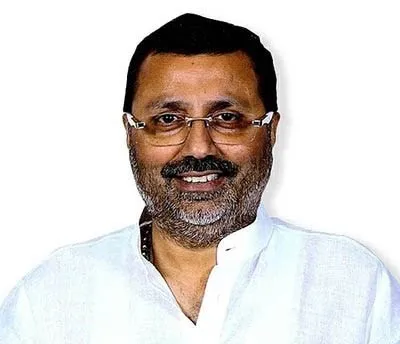
BJP MP Nishikant Dubey has questioned whether Jawaharlal Nehru acted on security warnings before Mahatma Gandhi's 1948 assassination, citing the Kapur inquiry. His claims about Nehru's knowledge and actions are not independently established by the source material.
Key Takeaways
BJP MP Nishikant Dubey questioned whether Jawaharlal Nehru acted on threats before Gandhi's assassination.
Mahatma Gandhi was assassinated by Nathuram Godse in New Delhi on 30 January 1948 .
Dubey referred to an alleged bomb attempt by Madan Lal Pahwa on 20 January 1948 .
Dubey said the Justice Jeevan Lal Kapur Committee was constituted in 1966 and its report released in 1969 .
Dubey's claims about Nehru's knowledge and response are not independently established by the source material.
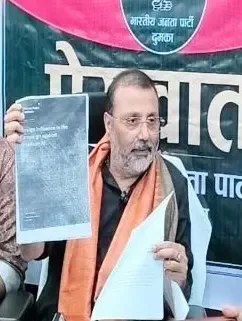
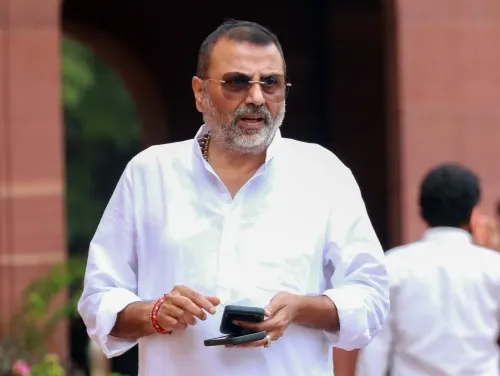
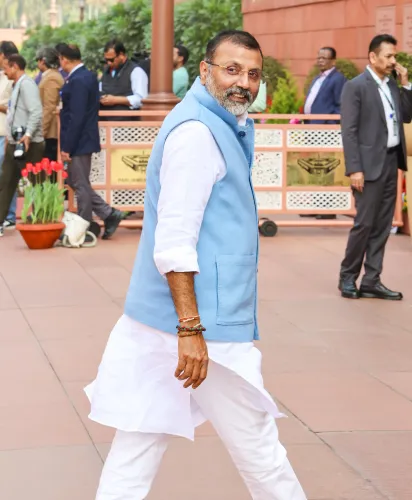
Mahatma Gandhi's assassination has returned to political debate after Bharatiya Janata Party (BJP) MP Nishikant Dubey questioned whether then Prime Minister Jawaharlal Nehru knew of security threats and whether his government acted on intelligence before the killing in New Delhi on 30 January 1948.
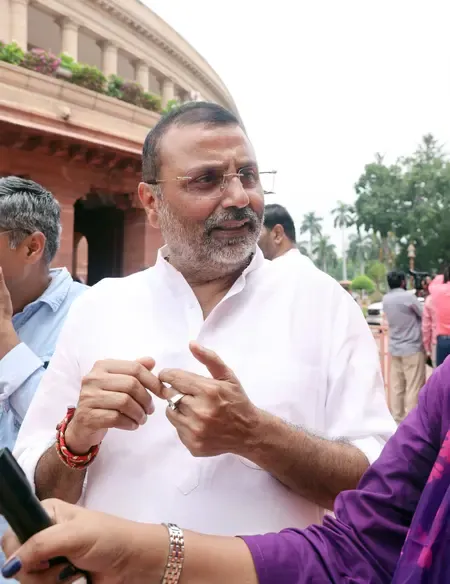
In a post on X dated 24 November, Dubey cited the inquiry led by Justice Jeevan Lal Kapur and raised questions about warnings following an earlier attempt on Gandhi's life. His claims about Nehru's knowledge and actions are political allegations; the source material does not independently establish them.
Dubey cites Kapur inquiry
Dubey said the Centre constituted the Justice Jeevan Lal Kapur Committee on 21 November 1966 to investigate fresh facts relating to the assassination, and that its report was released in 1969. He linked the inquiry to a disclosure made by Ketkar in Pune on 24 November 1964 and the subsequent debate in Parliament.
The BJP MP also claimed that the report was not made public until 1977 because the inquiry had indirectly raised suspicions about Nehru. That explanation is Dubey's assertion and is not independently established by the source material.
Claims about the earlier bomb attempt
Dubey referred to investigating police officer Nagarwala and said Madan Lal Pahwa had thrown a bomb in an attempt to assassinate Gandhi on 20 January 1948, 10 days before the fatal attack.
According to Dubey's account, Pahwa's arrest led to information that young men from Pune wanted to kill Gandhi. He said an investigation report was sent to then Bombay State Chief Minister Morarji Desai.
Dubey claimed Desai told the inquiry that he sent a special envoy to Delhi with the report for then Home Minister Sardar Patel, who passed it to Nehru. Dubey alleged that Nehru took no action and that Gandhi's security was reduced; the source material does not independently verify those claims.
Security questions and political context
In his post, Dubey also claimed that Manuben, Sarla Ben and others had accused the security arrangements and the central government of laxity before the inquiry. He asked whether the country should be informed about the Nehru-Gandhi family's role on the basis of judicial commission reports.
Those questions draw a distinction between the existence of a prior threat, as described by Dubey, and his further allegations about what officials knew or did. The source material does not provide the commission's findings in full or a response from the Indian National Congress (Congress) to his remarks.
Assassination and the inquiry
Nathuram Godse assassinated Mahatma Gandhi in New Delhi on 30 January 1948. The later Justice J.L. Kapur Commission was appointed to examine additional evidence and circumstances relating to the killing.
Dubey's intervention puts the handling of earlier warnings at the centre of a fresh political dispute. Any assessment of his claims will require scrutiny of the inquiry record and the evidence it considered.
Point of View
Not a substitute for evidence. A serious public debate should examine the commission's findings in full and allow contested interpretations to be tested.
NationPress
24 Nov 2026
Frequently Asked Questions
What did Nishikant Dubey say about Gandhi's assassination?
BJP MP Nishikant Dubey questioned whether Jawaharlal Nehru knew about security threats and whether his government acted on intelligence before Gandhi's assassination. He made the claims in a post on X while citing the Kapur inquiry.
What was the Kapur inquiry into Gandhi's assassination?
The inquiry led by Justice Jeevan Lal Kapur examined additional evidence and circumstances relating to Mahatma Gandhi's assassination. Dubey said it was constituted in 1966 and its report was released in 1969.
What happened before Gandhi was assassinated in 1948?
Dubey referred to an attempt on Gandhi's life involving a bomb thrown by Madan Lal Pahwa on 20 January 1948. Gandhi was assassinated 10 days later, on 30 January, in New Delhi.
Are Dubey's allegations about Nehru established?
The source material does not independently establish Dubey's allegations about Nehru's knowledge or actions. It does not provide the Kapur inquiry's findings in full.
What happens next in the debate over Dubey's claims?
The source material does not specify any formal next step. Assessing the claims would require scrutiny of the inquiry record and its evidence.