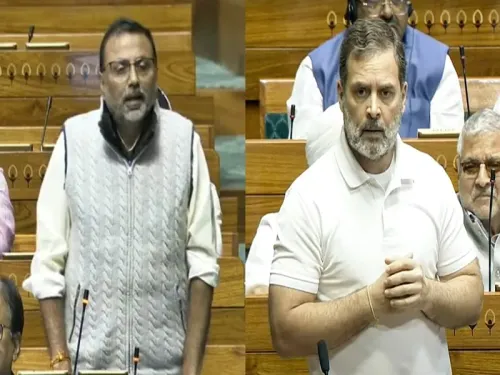
Does Nishikant Dubey's Motion Against Rahul Gandhi Echo Indira Gandhi's 1978 Expulsion?
Synopsis
In a bold political maneuver, BJP's Nishikant Dubey draws parallels between his motion against Rahul Gandhi and the historic expulsion of Indira Gandhi in 1978, igniting debates on privilege breaches and parliamentary conduct. What does this mean for the current political climate?
Key Takeaways
Nishikant Dubey moves a substantive motion against Rahul Gandhi .
Historic parallels drawn to Indira Gandhi ’s 1978 expulsion.
Accusations of privilege breach and collusion with ‘anti-national’ forces.
Congress defends Gandhi’s right to criticize the government.
Political tensions heightened in the Lok Sabha.
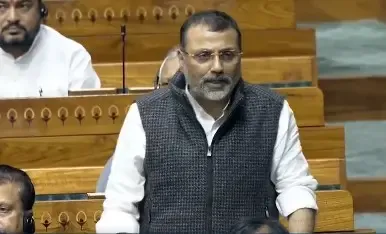
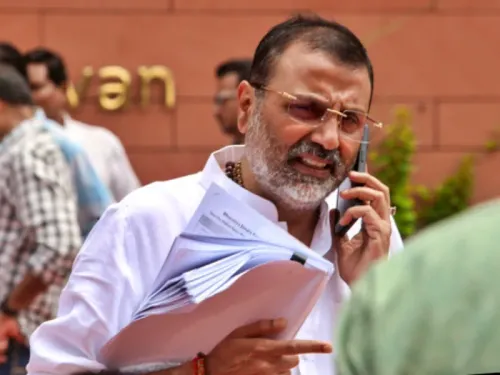
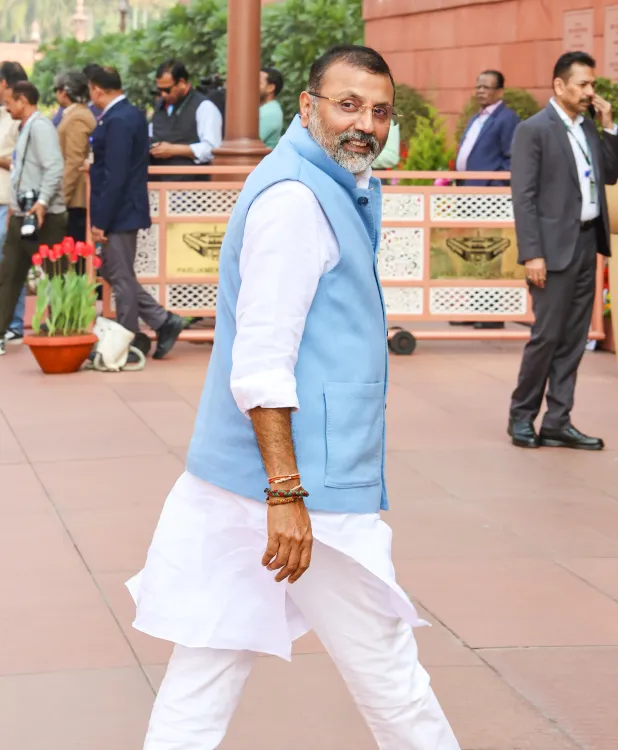
New Delhi, Feb 14 (NationPress) In a striking move, BJP MP Nishikant Dubey has initiated a substantive motion against Leader of Opposition (LoP) Rahul Gandhi, drawing comparisons to the December 1978 incident that led to the disqualification of former Prime Minister Indira Gandhi and her imprisonment due to electoral and privilege-related misconduct findings.
A substantive motion is a self-sufficient proposal presented for approval in a Legislative House, aiming to express a clear decision or opinion. Once accepted and moved, it sparks debate and requires a vote.
Dubey's motion accuses LoP Rahul Gandhi of privilege violations, advocating for the termination of his Lok Sabha membership and disqualification from future elections.
In a post on X, Dubey included excerpts from the 1978 parliamentary records, stating, “In December 1978, based on a similar substantive motion, Prime Minister Indira Gandhi, grandmother of Rahul Gandhi ji, lost her membership and was imprisoned.”
The 1978 incident originated from a motion introduced in the Lok Sabha on November 22, 1978, following a Committee of Privileges report that found Indira Gandhi guilty of privilege breach and contempt.
The findings were linked to actions during the 1975 Emergency, wherein she was accused of “obstruction, intimidation, harassment, and false case institution” against officials investigating her son Sanjay Gandhi’s Maruti project.
Following a heated debate, a resolution from then-Prime Minister Morarji Desai was approved on December 19, 1978, leading to Indira Gandhi’s expulsion from the Lok Sabha and her detention in Tihar Jail for the rest of the session.
However, this expulsion was not permanent as the 7th Lok Sabha revoked it on May 7, 1981, after she regained power.
Previously, Dubey claimed that he initiated this motion against LoP Gandhi for allegedly colluding with “anti-national” elements.
This action follows a tumultuous Lok Sabha session, where LoP Gandhi aggressively criticized the government regarding the India-US trade deal, accusing it of compromising India's integrity.
His remarks provoked loud outcries from treasury bench members, who deemed his comments “unparliamentary” and demanded they be removed from the official records.
In response, BJP MPs expressed their intent to move a privilege motion against the LoP, accusing him of “misleading” the House with “baseless and malicious” claims.
The Congress party dismissed these accusations, asserting no breach of parliamentary norms occurred. Party leaders defended the LoP's right to criticize the government regarding what they termed the “surrender” of India's interests in the trade deal.
Later, Union Parliamentary Affairs Minister Kiren Rijiju confirmed that the government has temporarily set aside its own proposed motion against LoP Gandhi due to the introduction of Dubey's private member's motion.
Point of View
The motion against Rahul Gandhi by Nishikant Dubey raises essential questions about parliamentary conduct and accountability. While the BJP aims to address privilege violations, the Congress party defends its leaders' right to criticize the government. This situation reflects the ongoing contention in Indian politics, where historical precedents shape modern narratives.
NationPress
5 Oct 2026
Frequently Asked Questions
What is a substantive motion?
A substantive motion is an independent proposal presented in a legislative house for approval, aimed at expressing a clear opinion or decision of the house.
What happened to Indira Gandhi in 1978?
In December 1978, Indira Gandhi was disqualified from the Lok Sabha and imprisoned following a substantive motion that found her guilty of electoral misconduct and contempt.
Why did Nishikant Dubey file a motion against Rahul Gandhi?
Nishikant Dubey filed the motion alleging breach of privilege by Rahul Gandhi and is seeking his disqualification and cancellation of his Lok Sabha membership.
What are the implications of this motion?
If successful, the motion could lead to serious political repercussions for Rahul Gandhi, including possible disqualification from future elections.
How has the Congress party responded?
The Congress party has rejected the charges against Rahul Gandhi, asserting that he was within his rights to criticize the government.