HP CM exempts PGIMER, AIIMS Delhi SR test-passers from re-exam
Synopsis
The Chief Minister's Office of Himachal Pradesh announced on 18 October 2026 that PG doctors clearing PGIMER or AIIMS Delhi tests will be exempt from a fresh state SR exam, and that 10 radiographers will be posted in each state medical college to strengthen diagnostic services.
Key Takeaways
PG graduates who clear tests at PGIMER Chandigarh or AIIMS New Delhi are now exempt from a separate Himachal Pradesh state-level test for Senior Residency positions.
The state will deploy 10 radiographers each across all state-run medical colleges to boost diagnostic capacity.
The announcement was made by the Chief Minister's Office of Himachal Pradesh on 18 October 2026 .
The move aligns Himachal with a broader Indian trend of accepting national-institute clearances to reduce duplicate testing for specialist posts.
The two-pronged policy addresses both specialist recruitment friction and paramedical support gaps in hill-region hospitals.
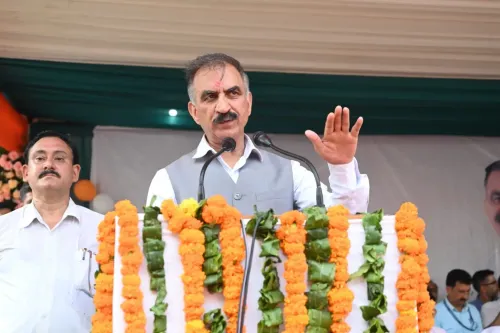
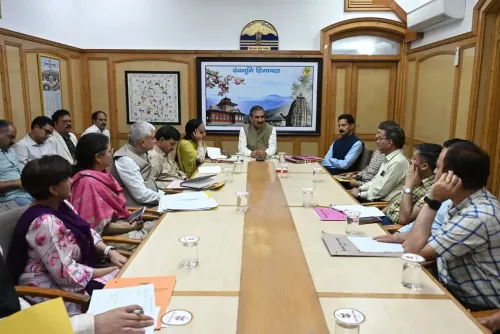
A quiet but consequential shift in Himachal Pradesh's medical recruitment landscape landed on Sunday, 18 October 2026: the state government announced that postgraduate doctors who have already cleared entrance tests at PGIMER Chandigarh or AIIMS New Delhi will no longer need to sit a separate state-level test to take up Senior Residency (SR) positions in Himachal's medical colleges. The Chief Minister's Office of Himachal Pradesh also announced the deployment of 10 radiographers each across all state medical colleges to bolster diagnostic services.
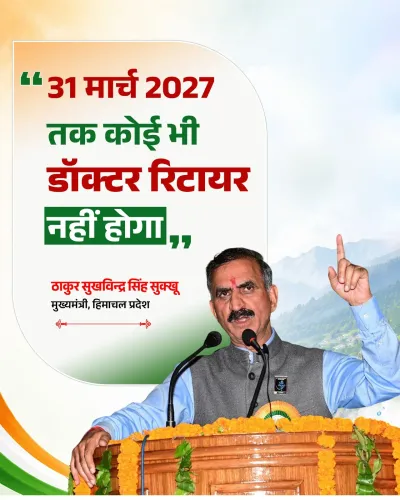
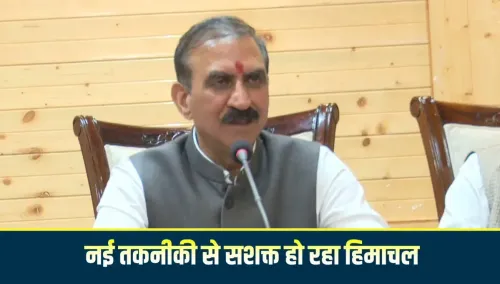
Posting on 18 October 2026, the Chief Minister's Office of Himachal Pradesh stated: 'आज हमने महत्वपूर्ण फैसला लिया है' — 'Today we have taken an important decision' — that PG graduates who have passed tests at PGI or AIIMS Delhi will not need to repeat the examination to pursue SR positions in Himachal. The post also flagged the placement of ten radiographers in each medical college as part of a broader push to strengthen health services.What the SR exemption means for specialist recruitment
Senior Residency posts sit at a critical junction in India's specialist pipeline — they are the bridge between completing a postgraduate medical degree and entering independent clinical or academic practice. For a hill state like Himachal Pradesh, which competes with metro institutions for scarce specialists, reducing procedural friction in recruitment is a meaningful lever.
PGIMER Chandigarh and AIIMS New Delhi are among India's most rigorous evaluators of postgraduate medical competence. Accepting their clearance certificates as sufficient for state SR eligibility signals that Himachal is aligning itself with national standards rather than insisting on parallel, sometimes redundant, state-level screening. Indian states have periodically made such moves to reduce duplication — but it matters most in states where specialist vacancies are structurally hard to fill.
Ten radiographers per college — closing the diagnostic gap
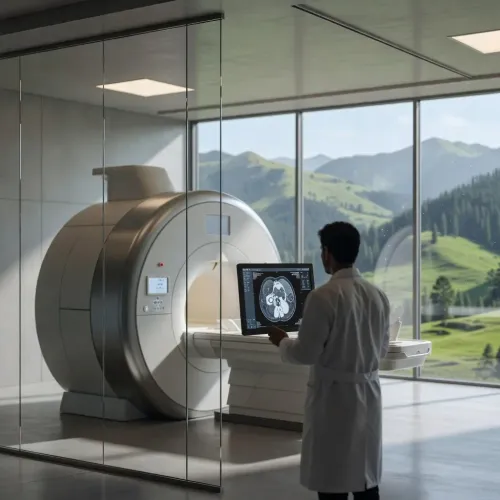
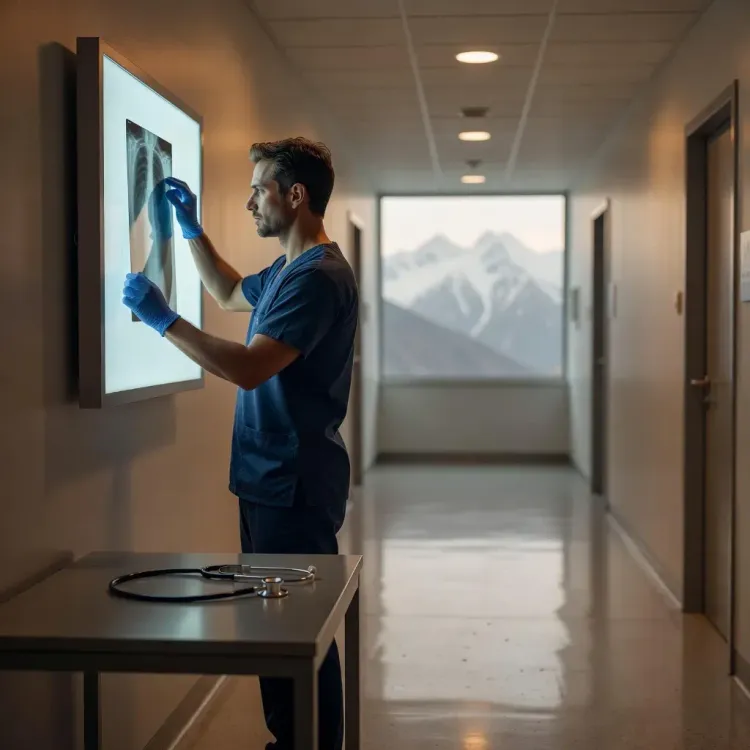
The simultaneous announcement on radiographers addresses a different but related bottleneck. Diagnostic imaging — X-rays, CT scans, fluoroscopy — is only as useful as the trained personnel available to operate equipment and process images. Deploying 10 radiographers to each state medical college is a targeted paramedical infusion designed to ensure that specialist physicians, once recruited, are supported by functional diagnostic infrastructure.
Himachal Pradesh's medical college network spans facilities at Shimla, Kangra, and several other districts, serving a dispersed population across difficult terrain. Gaps in imaging staff have historically meant delayed diagnoses — a particular risk in emergency and critical-care settings. The radiographer deployment directly targets that weakness.
A two-track approach to healthcare capacity
Together, the two measures reflect a two-track logic: attract qualified specialists by removing bureaucratic barriers, then equip those specialists with the paramedical support to function effectively. Neither move in isolation would be sufficient. An SR who arrives to find no radiographer is as stuck as a radiographer with no supervising clinician.
The next test will be implementation — whether the SR exemption is operationalised in the upcoming recruitment cycle and whether the radiographer appointments translate into filled posts rather than sanctioned vacancies. Health policy in India has a long history of strong announcements and slow rollouts. In Himachal's case, the geography makes execution harder and the stakes for patients higher.
For a state that has long struggled to retain specialists in its hills, removing one more reason for a qualified doctor to walk away is not a small thing.
Point of View
Reducing friction is arguably more impactful than raising pay. The radiographer deployment, while unglamorous, recognises that specialist recruitment fails without matching paramedical infrastructure — a lesson many state health systems have learned the hard way. Whether the policy survives administrative inertia in the next SR cycle will be the real indicator of its seriousness.
NationPress
18 Oct 2026
Frequently Asked Questions
What is the new rule for senior residency in Himachal Pradesh after PGIMER or AIIMS Delhi test?
PG doctors who have already passed the Senior Residency entrance test at PGIMER Chandigarh or AIIMS New Delhi will not be required to sit a separate state-level test to take up SR positions in Himachal Pradesh's medical colleges, as announced on 18 October 2026.
How many radiographers will be deployed in Himachal Pradesh medical colleges?
The Himachal Pradesh government announced the deployment of 10 radiographers in each state medical college as part of efforts to strengthen health and diagnostic services.
Why did Himachal Pradesh exempt PGIMER and AIIMS Delhi SR test-passers from re-examination?
The move is aimed at reducing duplication in specialist recruitment testing and making it easier for qualified PG doctors to join state medical colleges, addressing the persistent challenge of specialist shortages in hill-region healthcare.
Which Himachal Pradesh medical colleges will benefit from the radiographer deployment?
The announcement covers all state medical colleges in Himachal Pradesh, which include facilities in Shimla, Kangra, and other districts, though exact college-wise details are subject to official order.
What is a Senior Residency (SR) position in Indian medical colleges?
A Senior Residency is a post-PG clinical and teaching position in Indian medical colleges and teaching hospitals, typically held for one to three years, bridging postgraduate training and independent specialist practice.