Marseille bans all gatherings as France violence spreads across Europe
Synopsis
A weekend of pan-European fury over living costs left France with 997 officers injured and 2,397 arrests — prompting Marseille to ban all public gatherings on Monday and President Macron to vow criminal prosecution. From Paris to Milan to Lisbon, the simultaneous eruption of social unrest signals something more than a protest cycle: it is a continent-wide reckoning with inflation, housing failure, and governments that have run out of easy answers.
Key Takeaways
Marseille banned all gatherings and demonstrations on 19 October from noon to 8 pm local time following weekend violence.
Nationwide protests in France drew an estimated 550,000 participants ; 2,397 people were arrested and 997 officers injured, seven seriously.
French President Emmanuel Macron vowed prosecution of those who attacked government offices, businesses, and town halls.
Violent clashes also occurred in Milan (at least 4 officers, 20 protesters injured; ~50 detained), Brussels , and across Portugal .
Italian PM Giorgia Meloni condemned the rioting, stating: 'Demonstrating is a right.
Setting our cities ablaze is not.' The unrest is driven by surging living costs, housing shortages, and cuts to public services across the continent.
The police prefecture of Bouches-du-Rhone in southern France on Monday, 19 October banned all gatherings and demonstrations in Marseille from noon to 8 pm local time, according to an official post on X by the prefecture. The sweeping ban follows a weekend of violent clashes that swept across major European cities, leaving hundreds injured and thousands arrested.
The Violence Across France
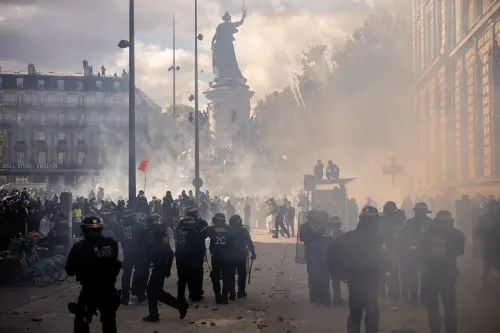
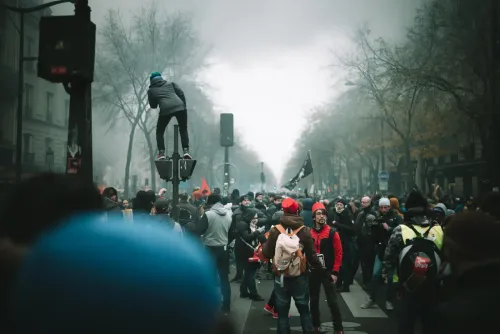
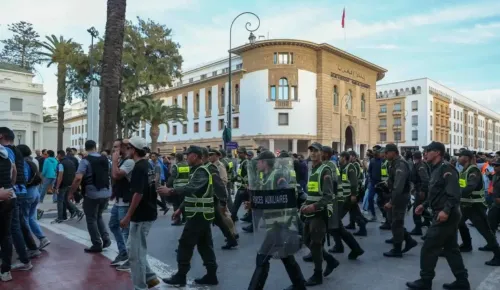
Nationwide demonstrations on Saturday drew an estimated 550,000 participants across France, uniting farmers, trade unions, climate activists, and students demanding relief from high fuel prices, inflation, and cuts to public services. The protests rapidly descended into widespread disorder.
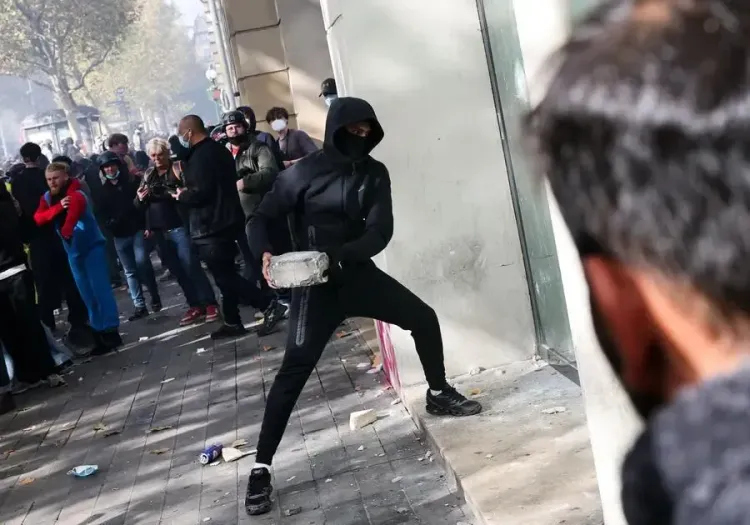
According to the French Interior Ministry, 997 police officers and gendarmes were injured — seven of them seriously — while 2,397 people were arrested across the country. Government offices, businesses, and town halls were reportedly attacked and looted during the unrest.
Macron Vows Prosecution of Rioters
French President Emmanuel Macron addressed the violence directly in a post on social platform X on Saturday, warning that those responsible would face legal consequences. 'Those who have engaged in destruction, attacked government offices and businesses, and even looted our town halls, will be prosecuted and punished,' he said.
Macron affirmed that there is no place for violence in France, signalling the government's intent to pursue criminal action against perpetrators beyond the mass arrests already carried out.
Unrest Spreads Across the Continent
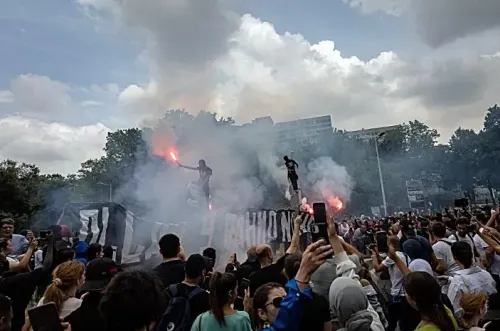
The social upheaval was not confined to France. In Milan, Italy, hundreds of black-clad demonstrators besieged Piazza del Duomo, hurling firecrackers and bottles at police. At least four officers and 20 protesters were injured, and approximately 50 demonstrators were detained, according to Italian media reports.
In Belgium, clashes erupted in the capital Brussels as students and supporters protested education reforms and rising living costs. Meanwhile, tens of thousands marched in Lisbon, Porto, Coimbra, and other Portuguese cities demanding affordable housing and action on inflation. Protesters in Lisbon reportedly pitched tents in the central square and carried banners demanding laws to 'ban vulture real estate funds,' which they accused of driving property speculation.
European Leaders Condemn the Violence
Several European heads of government have condemned the rioting while affirming citizens' right to peaceful protest. Italian Prime Minister Giorgia Meloni wrote on social media: 'Demonstrating is a right. Setting our cities ablaze is not.' She called the rioters thugs who exploited legitimate protests to 'sow chaos, attack those tasked with keeping people safe and hold entire cities hostage,' adding that silence in the face of such scenes was unacceptable.
The Deeper Fault Lines
The simultaneous wave of unrest across France, Italy, Belgium, and Portugal reflects a deepening socio-economic divide on the continent. Surging living costs, housing shortages, and strained public services have fuelled mounting public frustration that governments have so far struggled to address. This comes amid a broader pattern of European protest cycles tied to energy price shocks and post-pandemic austerity — dynamics that have recurred with increasing intensity since 2022.
With Marseille now locked down and Macron promising prosecutions, the central question is whether legal crackdowns alone can contain grievances that are structural, widespread, and growing.
Point of View
Not episodic. France has now seen this convergence — farmers, unions, students, climate activists — before, and each iteration ends with arrests, not answers. The deeper problem is that European governments have repeatedly framed cost-of-living surges as temporary shocks requiring patience, while millions experience them as permanent conditions requiring policy change. Until the gap between official framing and lived reality narrows, crackdowns will suppress protests without extinguishing the grievances that produce them. The simultaneous eruption across France, Italy, Belgium, and Portugal also signals that this is no longer a country-specific political problem — it is a continental governance failure, and one that is accelerating.
NationPress
19 Oct 2026
Frequently Asked Questions
Why were gatherings banned in Marseille on 19 October?
The police prefecture of Bouches-du-Rhone banned all gatherings and demonstrations in Marseille from noon to 8 pm on 19 October following violent weekend protests that swept across France. The ban was announced via an official post on X by the police prefecture.
How many people were arrested and injured during the France protests?
According to the French Interior Ministry, 2,397 people were arrested nationwide and 997 police officers and gendarmes were injured, seven of them seriously. The violence broke out during Saturday demonstrations that drew an estimated 550,000 participants.
What did President Macron say about the violence?
President Macron posted on X on Saturday that there is no place for violence in France and pledged legal action. He said those who 'engaged in destruction, attacked government offices and businesses, and even looted our town halls, will be prosecuted and punished.'
Which other European countries saw protests over the weekend?
Violent clashes occurred in Milan, Italy, where at least four officers and 20 protesters were injured and around 50 were detained. Protests also broke out in Brussels, Belgium, and tens of thousands marched in Lisbon, Porto, and other Portuguese cities over housing costs and inflation.
What are the root causes of the European protests?
The protests are driven by surging living costs, housing shortages, high fuel prices, and cuts to public services. In Portugal, demonstrators specifically targeted real estate speculation, while in France farmers, unions, climate activists, and students joined forces over inflation and public service cuts.