Sonowal: India-New Zealand FTA enters force, zero duty on all exports
Synopsis
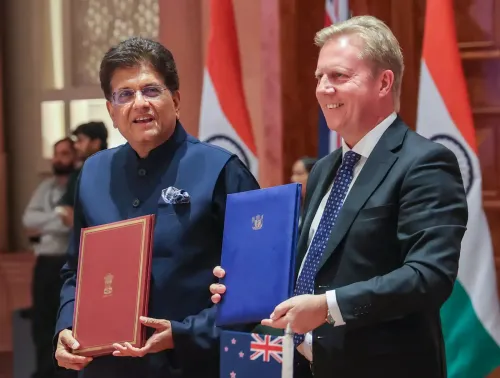
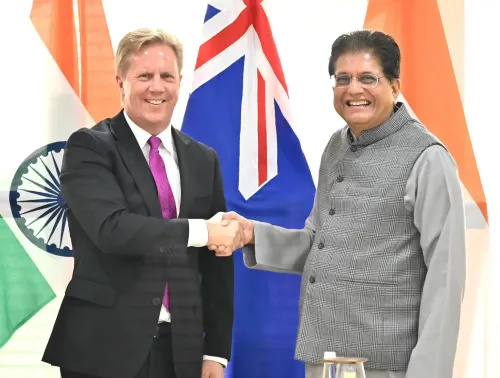
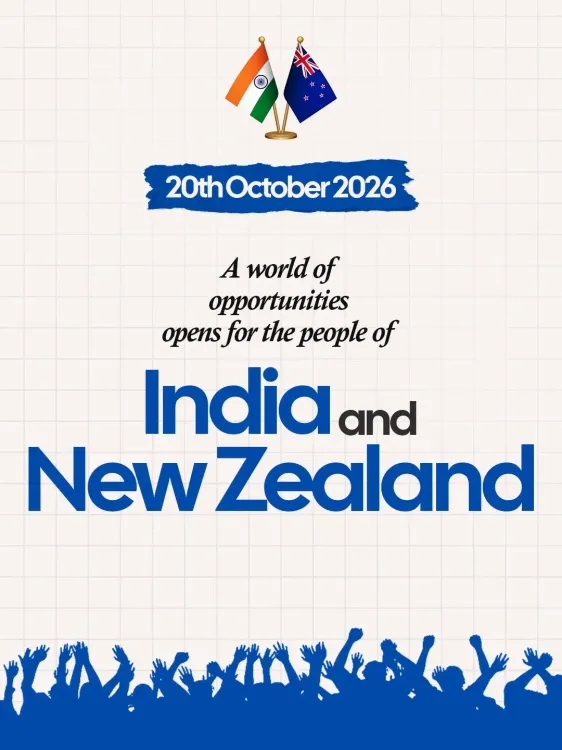
The India–New Zealand Free Trade Agreement enters into force on 20 October 2026, delivering zero duty on 100% of Indian exports. Minister Sarbananda Sonowal hailed the deal as a fulfilment of PM Modi's vision of wider global markets, offering Indian businesses and MSMEs a major competitive opening in New Zealand.
Key Takeaways
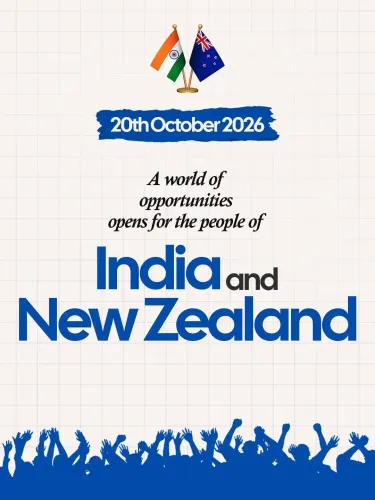
The India–New Zealand FTA enters into force on 20 October 2026 , the day after Sonowal's announcement.
The deal grants zero duty on 100% of Indian exports to New Zealand under its core goods-access provision.
Negotiations for the agreement, originally launched as a CECA in 2010 , were stalled for several years before being revived and concluded.
The FTA follows earlier deals including the India–Australia ECTA and India–UAE CEPA , both of which entered into force in 2022 .
Indian MSMEs and exporters in sectors such as processed goods, textiles and engineering products are among the primary beneficiaries.
Post-implementation bilateral trade statistics and any built-in review mechanisms will serve as the real-world test of the agreement's impact.
A new trade frontier opens for Indian businesses on Tuesday, 20 October 2026, as the India–New Zealand Free Trade Agreement enters into force — and Union Ports and Shipping Minister Sarbananda Sonowal marked the moment with a pointed message about what it means for exporters on the ground.
Sonowal's post framed the agreement squarely as a delivery on Prime Minister Narendra Modi's long-running push to widen India's global market footprint. 'Zero duty on 100% of Indian exports offers businesses more room to compete and grow,' he wrote — a line that cuts straight to the commercial arithmetic for every manufacturer and MSME eyeing the New Zealand market.
A decade-old negotiation finally lands
The road to this agreement was anything but swift. Talks for an India–New Zealand Comprehensive Economic Cooperation Agreement (CECA) were first launched in 2010 but stalled for the better part of a decade, casualties of diverging priorities and defensive postures on both sides. The revival and conclusion of negotiations reflects the same trade-deal momentum that produced the India–Australia ECTA and the India–UAE CEPA — both of which entered into force in 2022 — signalling a structural shift in New Delhi's willingness to lock in bilateral market access.
What zero-duty access actually means for Indian exporters
The headline provision — zero duty on 100 per cent of Indian exports — is the kind of blanket coverage that removes the friction of product-by-product tariff navigation. For Indian MSMEs, which often lack the compliance bandwidth to manage complex tariff schedules, a clean slate matters as much as the rate itself. Sectors traditionally active in India–New Zealand trade — agriculture-linked processed goods, textiles, engineering products — stand to gain immediate price competitiveness on New Zealand shelves.
The agreement also slots into India's broader Foreign Trade Policy architecture, which has systematically targeted export diversification away from over-reliance on a handful of traditional destination markets. Each new FTA adds a node to that network; New Zealand, though a smaller economy, offers a stable, high-income consumer base and a gateway to deeper Oceania engagement.
Early numbers will tell the real story
Ministers can announce entry-into-force; markets decide whether it matters. The first bilateral trade statistics published after implementation — tracking how quickly Indian export volumes to New Zealand respond to the duty-free window — will be the honest scoreboard. Review mechanisms built into the agreement will also determine whether the initial terms hold or evolve as both economies stress-test the deal.
For now, Indian exporters wake up on 20 October 2026 with one fewer tariff wall between their goods and a new market. That is not nothing.
Point of View
Multi-front trade-agreement strategy under the Modi government — one that prioritises locking in zero-duty goods access across diverse geographies rather than pursuing only large-bloc deals. The decade-long gap between the 2010 CECA launch and this conclusion underscores how difficult these negotiations are in practice, making the finish line more consequential than routine ministerial announcements suggest. For Sonowal, whose portfolio is port and shipping infrastructure, amplifying a trade deal signals how tightly market-access policy and logistics capacity are being positioned as a single export-growth narrative. The real political test will come when post-implementation trade data either validates or quietly contradicts the zero-duty optimism.
NationPress
19 Oct 2026
Frequently Asked Questions
When does the India–New Zealand FTA come into force?
The India–New Zealand Free Trade Agreement enters into force on 20 October 2026 , as announced by Union Minister Sarbananda Sonowal.
What does the India–New Zealand FTA mean for Indian exporters?
The agreement grants zero customs duty on 100% of Indian exports to New Zealand, removing tariff barriers and improving price competitiveness for Indian goods in the New Zealand market.
How long have India and New Zealand been negotiating a trade deal?
Talks for a Comprehensive Economic Cooperation Agreement (CECA) between India and New Zealand were first launched in 2010 but remained stalled for several years before the current FTA was concluded.
Which other trade deals has India signed under the Modi government?
India has signed multiple bilateral trade pacts in recent years, including the India–Australia ECTA and the India–UAE CEPA , both of which entered into force in 2022 .
Will MSMEs benefit from the India–New Zealand FTA?
Yes. The blanket zero-duty provision is particularly beneficial for Indian MSMEs , which often lack the resources to navigate complex, product-by-product tariff schedules, giving them straightforward access to New Zealand's high-income consumer market.