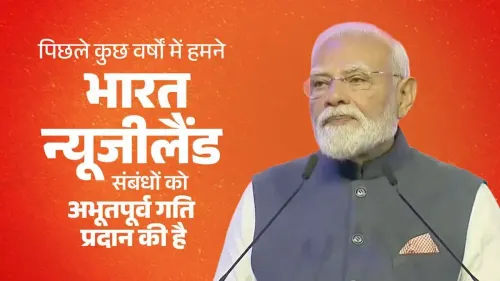
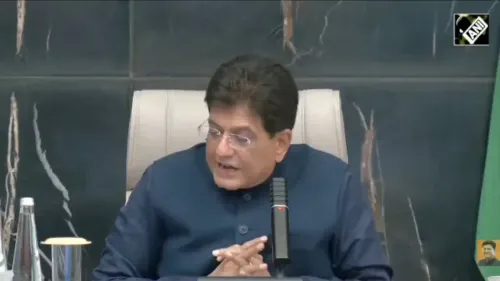
Piyush Goyal: India-New Zealand FTA Goes Live Tomorrow
Synopsis
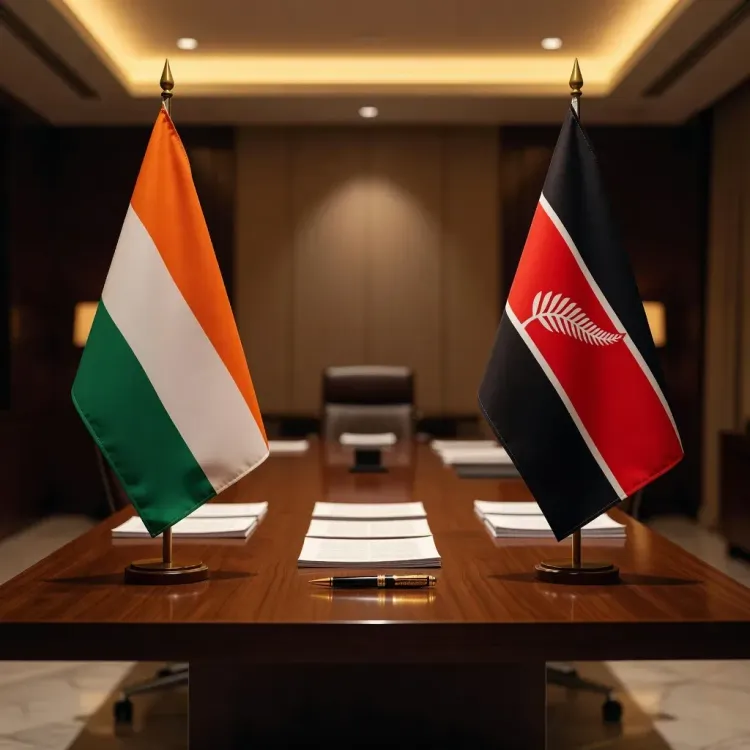
Union Commerce Minister Piyush Goyal announced the India-New Zealand Free Trade Agreement will go live on 20 October 2026, capping over 15 years of negotiations and extending India's series of bilateral deals with developed economies across the Indo-Pacific.
Key Takeaways
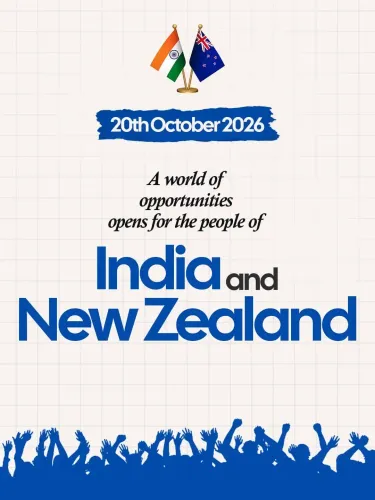
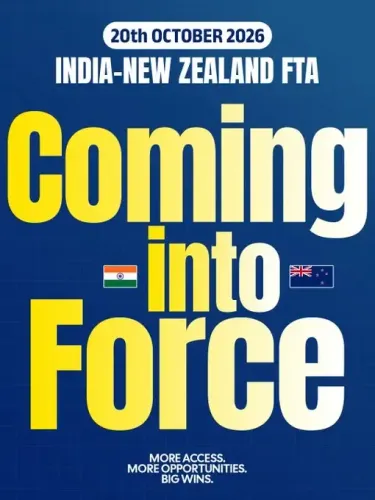
The India-New Zealand FTA is confirmed to enter into force on 20 October 2026 , as announced by Minister Piyush Goyal .
Negotiations for a Comprehensive Economic Cooperation Agreement between the two countries were first launched in 2010 — over 15 years ago.
The deal follows India's pattern of bilateral FTAs with developed economies, including agreements with Australia, the UAE, and the UK .
Key stakeholders include Indian IT services, pharma and textile exporters and the New Zealand dairy sector .
Post-entry-into-force attention will focus on final tariff schedules, rules of origin, and services commitments .
The agreement deepens India's Indo-Pacific trade architecture with a high-income Pacific partner.
After more than fifteen years of on-and-off negotiations, Union Commerce and Industry Minister Piyush Goyal confirmed on Monday, 19 October 2026 that the India-New Zealand Free Trade Agreement will enter into force on Tuesday, 20 October 2026 — a milestone that marks India's most significant trade deal with a Pacific developed economy to date.
Fifteen Years From Launch to Live
Formal negotiations for a Comprehensive Economic Cooperation Agreement (CECA) between India and New Zealand were first launched in 2010, making the road to this moment one of the longest in India's bilateral trade history. Talks stalled repeatedly over sensitive issues — New Zealand's dairy sector seeking greater access to Indian markets, and India pushing for expanded pathways for its services professionals and software exports. That the deal now crosses the finish line in 2026 reflects a sustained political will on both sides to resolve the impasse.
The Pattern Behind the Push
The India-New Zealand FTA slots into a deliberate sequencing strategy that New Delhi has pursued through the 2020s: bilateral deals with developed economies — Australia, the UAE, and the UK — that prioritise services-export liberalisation alongside carefully calibrated agricultural concessions. Each agreement has been framed as a faster, more targeted alternative to gridlocked multilateral platforms. New Zealand, as a key Indo-Pacific partner with shared interests in trade, education, and agri-technology, fits this template precisely.
For Indian exporters — particularly in IT services, pharmaceuticals, and textiles — the agreement promises improved market access to a high-income economy. For the New Zealand dairy sector, long eyeing India's vast consumer base, the final tariff schedules and phasing commitments will determine how transformative the deal truly is.
What Comes Next: Tariffs, Rules of Origin, Services Commitments
The deal going 'live' triggers the practical machinery: publication of final tariff schedules, rules of origin norms, and services commitments that businesses on both sides will need to operationalise immediately. Traders and legal teams will be parsing those annexures closely in the coming days. The speed and clarity with which both governments make these documents publicly accessible will set the tone for how quickly the deal moves from headline to commerce.
Minister Goyal's announcement — terse, flag-emoji-flanked, and unambiguous — signals that the political confidence on India's side is intact. The agreement is now a matter of hours away from reality.
Point of View
Decade-long accumulation of bilateral deals that New Delhi has used to build trade leverage outside the WTO's slow lane. For Minister Goyal personally, it adds another landmark agreement to a portfolio that already includes pacts with Australia, the UAE, and the UK. The real test, however, will be in the fine print: if agricultural concessions to New Zealand's dairy lobby are substantial, the government will face domestic political scrutiny. India's services-first FTA playbook has generally shielded it from that pressure, but the New Zealand deal's terms will clarify just how much was traded away to close a 15-year negotiation.
NationPress
19 Oct 2026
Frequently Asked Questions
When does the India-New Zealand FTA come into force?
The India-New Zealand Free Trade Agreement is set to go live on 20 October 2026 , as confirmed by Union Commerce Minister Piyush Goyal .
When did India-New Zealand FTA negotiations begin?
Formal negotiations for a Comprehensive Economic Cooperation Agreement between India and New Zealand were first launched in 2010 , making this a 15-plus year process.
What does the India-New Zealand FTA cover?
The agreement covers goods, services, and investment between the two countries. Key areas of interest include Indian IT and services exports and New Zealand's dairy sector access to Indian markets.
How does this FTA fit into India's broader trade strategy?
It is part of India's 2020s bilateral FTA push with developed economies, following similar agreements with Australia, the UAE, and the UK, prioritising services liberalisation alongside selective agricultural concessions.
Who benefits from the India-New Zealand trade deal?
Indian exporters in sectors such as IT services, pharmaceuticals, and textiles stand to gain improved market access, while the New Zealand dairy sector is expected to benefit from enhanced entry into Indian markets.