Piyush Goyal backs India-Canada FTA for investment growth
Synopsis
Union Commerce Minister Piyush Goyal has publicly championed an India-Canada Free Trade Agreement, calling it a gateway to massive investment opportunities. The statement renews focus on bilateral CEPA talks first launched in 2010 and revived in 2022, as India accelerates its global FTA strategy.
Key Takeaways
Piyush Goyal on 23 May 2026 publicly backed an India-Canada Free Trade Agreement, calling it a source of 'massive investment opportunities' for India.
India and Canada first launched Comprehensive Economic Partnership Agreement (CEPA) talks in 2010 ; negotiations were revived in 2022 after a suspension.
A concluded deal would benefit Indian exporters in textiles, pharmaceuticals, IT services and engineering goods by opening a high-income G7 market.
MSME manufacturers and Canadian investors in energy and agri-business are among the most closely watched stakeholders.
The push fits India's broader post-2022 FTA drive that has already produced deals with Australia , the UAE and the UK .
Observers will monitor whether the FTA appears on the agenda of forthcoming India-Canada ministerial or leaders' meetings.
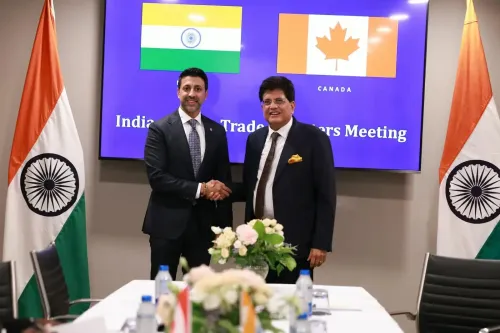
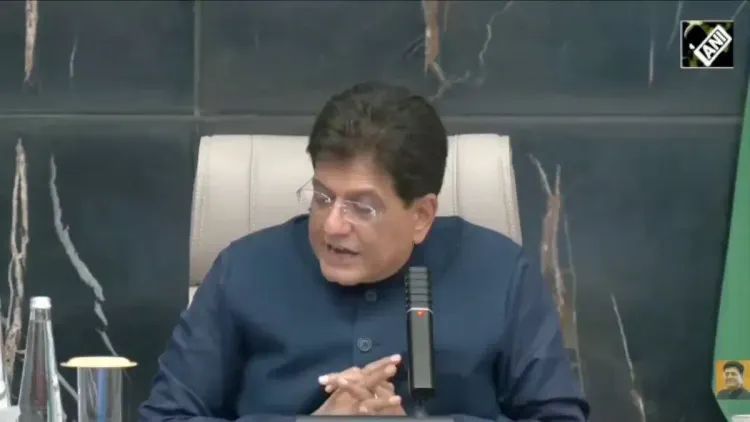
Union Commerce and Industry Minister Piyush Goyal on Saturday, 23 May 2026 publicly backed a Free Trade Agreement between India and Canada, saying the deal would unlock massive investment opportunities and contribute to the mutual growth of both nations.
Context
Posting on X, Goyal wrote: 'A Free Trade Agreement between India and Canada will unlock massive investment opportunities for our country and contribute to the mutual growth of both nations.' The statement signals continued political will at the ministerial level for a comprehensive bilateral trade pact, even as formal negotiations have had an uneven history spanning nearly two decades.
India and Canada first launched talks for a Comprehensive Economic Partnership Agreement (CEPA) in 2010. Those discussions were suspended before being formally revived in 2022, reflecting the strategic importance both sides attach to deepening economic ties.
Policy Backdrop
The push for an India-Canada FTA fits squarely within New Delhi's broader trade strategy since 2022. India has concluded or modernised FTAs with Australia, the UAE and the UK as part of an effort to diversify export markets and embed Indian industry deeper into global value chains. Parallel negotiations with the EU and the EFTA bloc reinforce the same outward-oriented posture.
Canada, a G7 economy, brings complementary strengths in energy, agri-products, technology and education — sectors where Indian industry sees significant scope for collaboration. For India, now the world's fifth-largest economy, a deal with Canada would open another high-income market for merchandise and services exporters.
Stakeholders and Impact
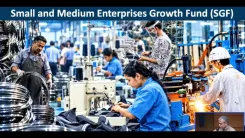
Indian exporters — particularly in textiles, pharmaceuticals, IT services and engineering goods — stand to gain from reduced Canadian tariffs under a concluded agreement. MSME manufacturers, who often face higher effective tariff barriers than large corporates, are among the most closely watched beneficiaries in any FTA scenario.
On the Canadian side, investors in energy, agri-business and educational services have long sought more predictable market-access conditions in India. A formal agreement would also provide a legal framework for dispute resolution and intellectual property protection, reducing friction for Canadian firms entering the Indian market.
What's Next
Analysts and trade officials will watch for any announcement on the resumption or conclusion of formal negotiating rounds, and whether the FTA figures on the agenda of upcoming India-Canada ministerial or leaders' meetings. Goyal's public endorsement raises expectations that commerce-ministry officials on both sides may accelerate technical-level talks. A concluded India-Canada FTA would add another pillar to India's expanding web of trade agreements and further cement its position as a preferred destination for Western investment.
Point of View
The UAE and the UK since 2022 — the post positions Canada as the next logical step in New Delhi's strategy to anchor itself in Western-aligned supply chains. The timing also reflects a broader diplomatic recalibration: India has consistently used high-profile ministerial messaging to build domestic and international consensus before formal negotiating rounds intensify. Whether this translates into a concluded agreement will depend as much on political will in Ottawa as on the technical progress of talks in New Delhi.
NationPress
6 Oct 2026
Frequently Asked Questions
What is the India-Canada Free Trade Agreement?
The India-Canada Free Trade Agreement, also discussed as a Comprehensive Economic Partnership Agreement (CEPA), is a proposed bilateral deal aimed at reducing tariffs and facilitating investment flows between India and Canada. Formal negotiations were first launched in 2010, suspended, and then revived in 2022.
Why did Piyush Goyal talk about the India-Canada FTA?
Commerce Minister Piyush Goyal posted on X on 23 May 2026 expressing support for the India-Canada FTA, saying it would unlock massive investment opportunities and contribute to mutual growth. The statement signals continued ministerial-level political will for the agreement.
What are the benefits of an India-Canada trade deal for India?
An India-Canada FTA would give Indian exporters — in sectors like pharmaceuticals, IT services, textiles and engineering goods — preferential access to a high-income G7 market. It would also attract Canadian investment in India across energy, technology and education sectors.
What is the current status of India-Canada CEPA negotiations?
India and Canada formally launched CEPA talks in 2010. After a period of suspension, negotiations were revived in 2022. As of Goyal's May 2026 statement, no concluded agreement has been announced, and observers are watching for the next round of formal talks.
How does the India-Canada FTA fit into India's broader trade policy?
It is part of India's accelerated FTA strategy since 2022, which has already produced agreements with Australia, the UAE and the UK. India is also in parallel talks with the EU and the EFTA bloc, aiming to diversify export markets and deepen integration into global value chains.