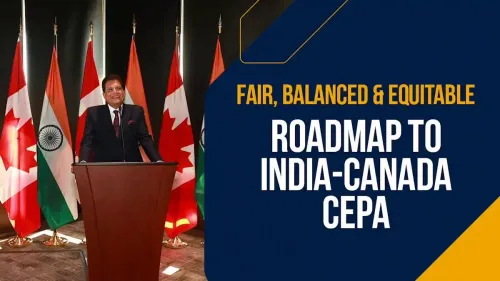
Goyal meets India-Canada chambers, flags CEPA momentum

Synopsis
Commerce Minister Piyush Goyal met regional chamber representatives in the India-Canada corridor on May 28, 2026, discussing CEPA negotiations, investment flows, and the renewed momentum in bilateral economic engagement between the two countries.
Key Takeaways
Commerce Minister Piyush Goyal held a direct interaction with regional chamber representatives operating in the India-Canada business corridor on May 28, 2026 .
The minister highlighted 'renewed momentum' in the India-Canada partnership and pointed to emerging opportunities for trade and investment.
Ongoing CEPA (Comprehensive Economic Partnership Agreement) negotiations between India and Canada were a central topic, with the framework first launched in November 2010 .
Business chambers were acknowledged for sustaining trade, investment, and people-to-people ties between the two nations.
The engagement signals the commerce ministry's intent to use chamber networks to accelerate ground-level commercial outcomes alongside formal diplomatic talks.
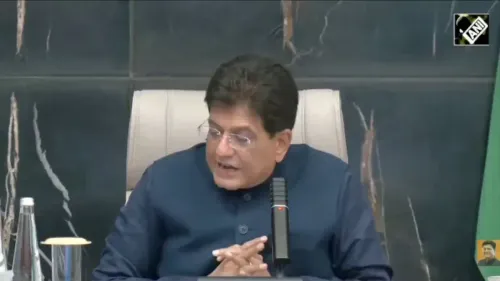
Union Commerce and Industry Minister Piyush Goyal met with representatives of regional chambers operating in the India-Canada corridor on Thursday, May 28, 2026, engaging them on ways to deepen bilateral trade, investment, and people-to-people ties.
Context
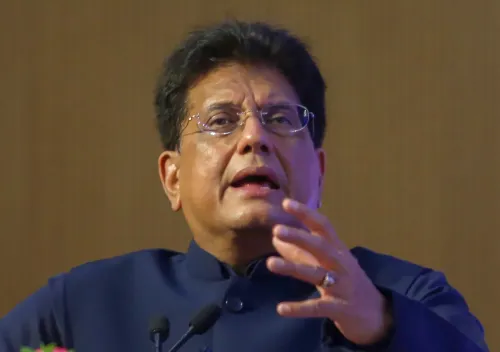
Minister Goyal described the interaction as an opportunity to hear 'constructive feedback on avenues to strengthen business collaboration and boost investment flows.' He acknowledged the chambers' role in sustaining commercial and community linkages between the two countries, and pointed to what he called 'renewed momentum' in the India-Canada partnership.
Central to the discussion were the ongoing negotiations for a Comprehensive Economic Partnership Agreement (CEPA) between India and Canada — a framework that, if concluded, would cover goods, services, investment, and regulatory cooperation across key sectors.
Policy Backdrop
Formal negotiations for an India-Canada CEPA were first launched in November 2010, making it one of the longer-running bilateral trade agreement processes in India's diplomatic calendar. The agreement covers a wide ambit — from energy and agri-products to information technology and education services — reflecting the breadth of the two countries' economic relationship.
India has pursued a series of bilateral and regional trade agreements in recent years as part of a broader strategy to diversify its trade partnerships and integrate more deeply into global supply chains. The commerce ministry has positioned CEPA negotiations with major economies as a pillar of this outreach.
Stakeholders and Impact
Regional chambers of commerce have historically served as a connective tissue between official-level diplomacy and ground-level business activity, especially in corridors where diaspora communities play a significant economic role. The Indian diaspora in Canada is one of the largest and most economically active in the world, with deep ties in trade, real estate, education, and professional services.
Exporters and investors on both sides stand to gain from any acceleration in CEPA talks, particularly in sectors where complementary strengths exist — such as Canadian energy and natural resources flowing into India, and Indian IT, pharmaceuticals, and skilled services entering the Canadian market. The minister's direct engagement with chamber representatives signals an intent to translate diplomatic signals into actionable commercial outcomes.
What's Next
The commerce ministry's next formal round of CEPA negotiations and any sector-specific investment facilitation announcements will be closely watched by businesses on both sides. Minister Goyal's reference to 'opportunities emerging from renewed momentum' suggests the ministry views the current period as a window for tangible progress.
Sustained engagement through business chambers — alongside official negotiating rounds — has historically been a method India's commerce establishment uses to build stakeholder consensus and identify priority sectors ahead of formal treaty milestones.
Point of View
Suggesting the ministry wants to project forward movement without being pinned to specific timelines. This pattern of minister-level chamber engagement mirrors India's approach in other key trade corridors, where business networks are activated ahead of formal negotiating rounds to build consensus and surface sector priorities.
NationPress
11 Oct 2026
Frequently Asked Questions
What is the India-Canada CEPA and where do negotiations stand?
The India-Canada Comprehensive Economic Partnership Agreement (CEPA) is a proposed bilateral trade deal covering goods, services, investment, and regulatory cooperation. Formal negotiations were launched in November 2010. Commerce Minister Piyush Goyal referenced 'ongoing CEPA negotiations' in his May 2026 interaction with regional chamber representatives, indicating talks remain active.
Why did Piyush Goyal meet India-Canada chamber representatives?
Minister Goyal met regional chamber representatives to hear feedback on strengthening business collaboration, boosting investment flows, and deepening economic engagement between India and Canada. He also highlighted opportunities arising from renewed momentum in the bilateral partnership.
What sectors are covered under India-Canada trade?
India-Canada trade spans a wide range of sectors including energy, agricultural products, information technology, pharmaceuticals, education services, and professional services. The proposed CEPA aims to create a structured framework across these and other areas.
What role do business chambers play in India-Canada relations?
Regional chambers of commerce act as intermediaries between official diplomacy and ground-level business activity. They aggregate feedback from exporters and investors, help identify priority sectors, and sustain commercial ties even during periods when official-level talks face interruptions.
What is the significance of 'renewed momentum' in India-Canada ties?
Minister Goyal's reference to renewed momentum suggests the commerce ministry views the current period as a favourable window for advancing CEPA negotiations and investment facilitation measures. It signals a policy intent to convert diplomatic signals into concrete commercial outcomes.