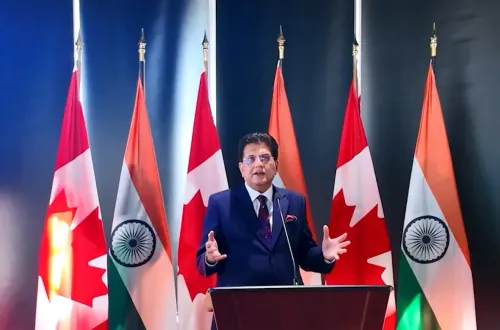
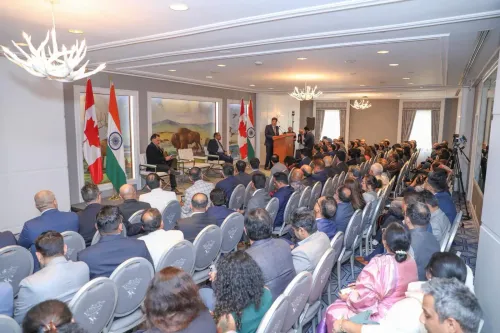
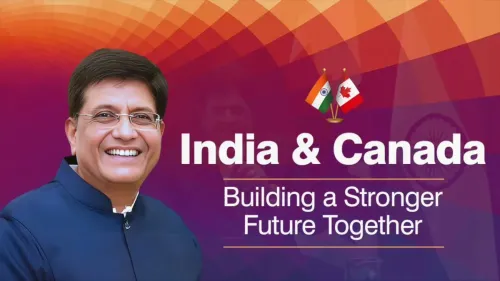
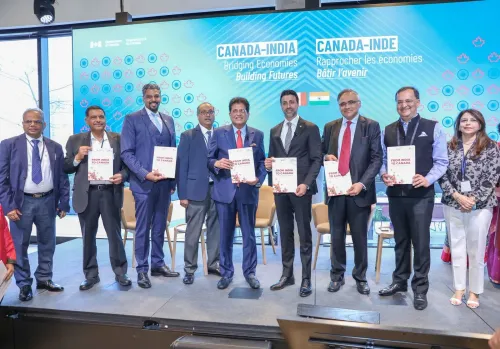
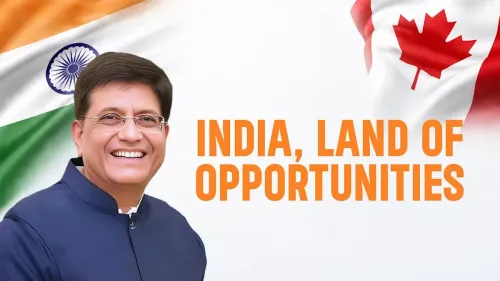
Piyush Goyal leads 150-member trade delegation to Canada, eyes $50 bn bilateral trade
Synopsis
India's most significant trade mission to Canada in years — Commerce Minister Piyush Goyal is leading 150 business leaders to Ottawa and Toronto to push a CEPA deadline of end-2026 and a ₹4.65 lakh crore trade target by 2030. With Canadian pension funds already holding $100 billion in Indian assets and 600 Canadian firms operating in India, the relationship has scale — and a new political will to match it.
Key Takeaways
Commerce Minister Piyush Goyal visits Canada from 25–27 May 2026 with a delegation of nearly 150 Indian industry leaders .
A third round of India–Canada CEPA negotiations will be held in Ottawa from 25–29 May .
Both sides target a CEPA conclusion by end of 2026 and bilateral trade of Canadian dollar 70 billion (₹4.65 lakh crore) by 2030 .
Bilateral trade currently stands at $8.5 billion in FY25 ; the five-year target is $50 billion .
Canadian pension funds and companies have invested nearly $100 billion in India; 600 Canadian firms operate in India with a target of 1,000 .
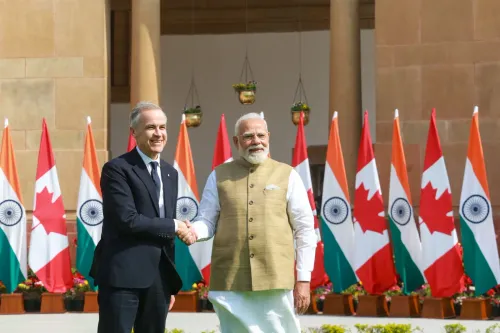
The visit follows a mandate from Prime Ministers of both nations set during PM Mark Carney's India visit in March 2026 .
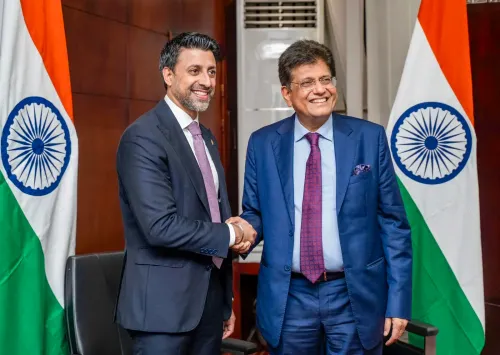
Commerce and Industry Minister Piyush Goyal is set to visit Canada from 25 to 27 May at the head of a delegation of nearly 150 Indian industry leaders, in a significant push to deepen bilateral economic and trade ties. The visit, announced on Saturday, 23 May, is aimed at accelerating negotiations on a comprehensive trade agreement and expanding a relationship currently valued at $8.5 billion in bilateral trade for FY25.
What the Visit Covers
The delegation will hold engagements in Ottawa on 25 May, followed by a two-day programme in Toronto from 26 to 27 May. A further round of India–Canada Comprehensive Economic Partnership Agreement (CEPA) negotiations will be conducted in Ottawa from 25 to 29 May. This follows the first round of negotiations held virtually in March 2026 and a second round that concluded on 8 May.
The Trade Agreement on the Table
At a news briefing, Goyal said India expects to sign a free trade agreement (FTA) with Canada covering sectors such as energy and critical minerals. Discussions will also focus on cooperation in technology, food processing, and clean energy. Both sides are working towards an early conclusion of a balanced and mutually beneficial CEPA by end of 2026, with a shared ambition to expand bilateral trade to Canadian dollar 70 billion (approximately ₹4.65 lakh crore) by 2030. India and Canada have separately set a target of $50 billion in bilateral trade over the next five years.
Investment and Business Presence
According to Goyal, Canadian pension funds and companies have invested nearly $100 billion in India. Nearly 600 Canadian companies currently operate in India, and both sides aim to raise that number to 1,000. The minister noted that the two countries maintain strong ties across agriculture, energy, education, and technology.
Diplomatic Backdrop
The visit carries forward the mandate given by the Prime Ministers of both nations during Canadian Prime Minister Mark Carney's visit to India in March 2026, when the Terms of Reference for CEPA negotiations were signed. This is the first major ministerial trade mission since that reset, and it signals a tangible warming of bilateral relations that had seen turbulence in preceding years. Notably, the pace of negotiations — two rounds completed within weeks of the ToR signing — reflects a deliberate urgency from both sides.
What Comes Next
With the third round of CEPA talks underway during the visit itself, the trajectory points toward a framework agreement before the 2026 year-end deadline both governments have endorsed. Industry bodies on both sides will be watching whether the Ottawa talks yield a negotiating text on tariff schedules — the traditional sticking point in India's FTA negotiations.
Point of View
Followed immediately by a 150-member ministerial delegation — this is a pace India rarely sustains in trade diplomacy. The $8.5 billion FY25 baseline against a $50 billion five-year target demands near-quadrupling of trade flows, which is ambitious even under a signed agreement. The harder test will be tariff schedules on dairy and agriculture, where India's defensive interests have stalled deals with far more patient partners. Whether the political reset translates into a commercially meaningful CEPA — or a framework agreement that papers over the hard chapters — will become clear in the Ottawa negotiating room, not the press briefing.
NationPress
7 Oct 2026
Frequently Asked Questions
Why is Piyush Goyal visiting Canada in May 2026?
Commerce and Industry Minister Piyush Goyal is visiting Canada from 25 to 27 May 2026 to advance India–Canada CEPA negotiations and strengthen bilateral trade and investment ties. The visit follows a mandate set by the Prime Ministers of both countries during PM Mark Carney's India visit in March 2026.
What is the India–Canada CEPA?
The India–Canada Comprehensive Economic Partnership Agreement (CEPA) is a proposed broad-based trade deal covering goods, services, investment, energy, and critical minerals. Terms of Reference were signed in March 2026, with the third round of negotiations scheduled during Goyal's May 2026 visit to Ottawa.
What is the bilateral trade target between India and Canada?
Both sides aim to expand bilateral trade to Canadian dollar 70 billion (approximately ₹4.65 lakh crore) by 2030, and have set a separate target of $50 billion over the next five years. Current bilateral trade stands at $8.5 billion for FY25.
How much have Canadian companies invested in India?
According to Minister Goyal, Canadian pension funds and companies have invested nearly $100 billion in India. Around 600 Canadian companies currently operate in India, with both sides targeting an increase to 1,000.
Which sectors are the focus of India–Canada trade talks?
The talks focus on energy, critical minerals, technology, food processing, and clean energy. Both countries also maintain strong existing ties in agriculture, education, and people-to-people connectivity.