PM Modi cites Shiva connection, flags new 1,000-yr temple renovation
Synopsis
Culture Minister Gajendra Singh Shekhawat shared PM Modi's remarks citing his lifelong Shiva connection — from Vadnagar's Hatkeshwar to Somnath, Kashi and Kedarnath — as the PM launched renovation of a 1,000-1,200-year-old Brahma-Vishnu-Mahesh heritage site, extending the government's temple redevelopment mission.
Key Takeaways
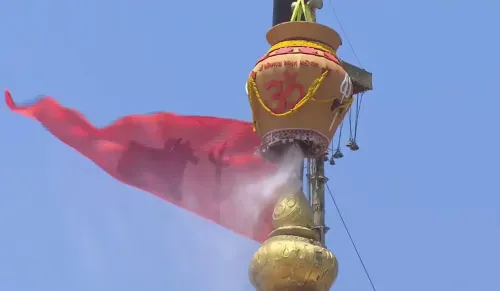
PM Narendra Modi launched the renovation of a heritage site linked to Brahma, Vishnu and Mahesh , described as approximately 1,000 to 1,200 years old .
The PM cited his birth in Vadnagar, Gujarat — home to Hatkeshwar Mahadev — and his connection to Somnath , the first Jyotirlinga, as part of a personal Shiva narrative.
Kashi Vishwanath in Varanasi , his parliamentary constituency, and reconstructions at Kedarnath and Ujjain Mahakal were cited as earlier milestones in the same mission.
The remarks were shared by Union Culture and Tourism Minister Gajendra Singh Shekhawat , underscoring the Ministry's role in executing the temple redevelopment agenda.
The announcement extends a central government programme that has combined archaeological preservation, pilgrim infrastructure , and domestic tourism development at major Jyotirlinga sites since the mid-2010s.
Formal project details — including the site's location, cost, and timeline — are yet to be officially disclosed.
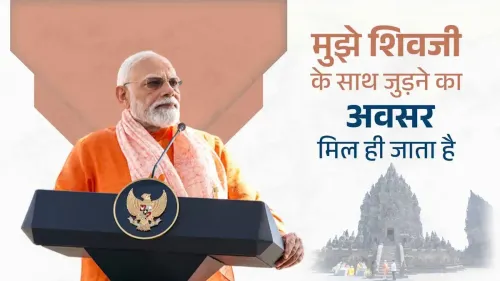
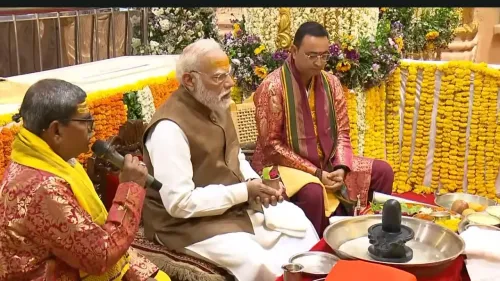
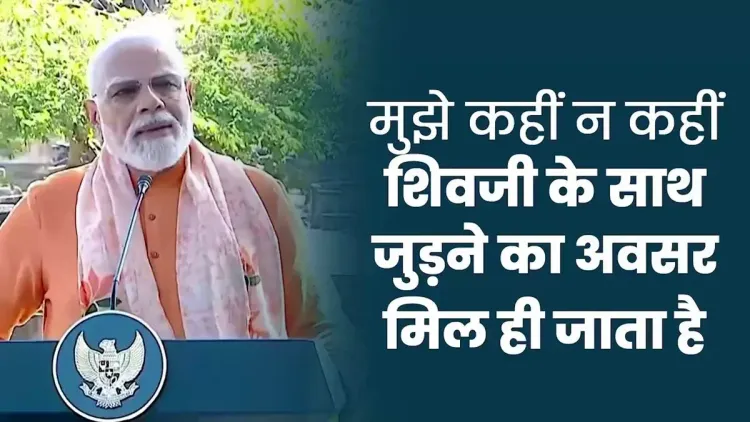
Union Culture and Tourism Minister Gajendra Singh Shekhawat on Wednesday, 8 July 2026 shared remarks by Prime Minister Narendra Modi in which the PM described his personal and political ties to major Shaivite shrines and announced the launch of a renovation project at an ancient site associated with Brahma, Vishnu and Mahesh, believed to be over 1,000 to 1,200 years old.
Context
Speaking at the site of the newly initiated restoration work, PM Modi reflected on what he called his fortune in being connected to Lord Shiva at multiple points in his life. He noted his birth in Vadnagar, Gujarat, home to the revered Hatkeshwar Mahadev shrine, and pointed to Somnath — the first among the Dwadash Jyotirlingas — also situated on Gujarat's soil, for whose development he said he carries direct responsibility.
He also cited the blessings of Kashi Vishwanath Mahadev in Varanasi, his parliamentary constituency, as a continuous source of support throughout his political career.
Policy Backdrop
The remarks come against the backdrop of a sustained central government push to redevelop major temple precincts since the mid-2010s. The Kashi Vishwanath Corridor project, launched in 2018 and inaugurated in 2021, expanded the temple precinct and linked it to the Ganga ghats. The Kedarnath reconstruction master plan was approved in 2015 following the devastating 2013 Uttarakhand floods, with phased completion reported by 2020.
The Mahakaleshwar Temple redevelopment in Ujjain — adding heritage walkways and plazas — was sanctioned in 2018 and inaugurated in October 2022. PM Modi cited both Kedarnath and Ujjain Mahakal reconstructions in his remarks, framing the latest launch as a continuation of the same cultural restoration mission.
The new project involves the revival and renovation of a heritage site connected to memories of Brahma, Vishnu and Mahesh, described by the PM as part of India's cultural legacy dating back roughly '1000-1200 saal purani' (1,000 to 1,200 years). The precise location of this site has not been officially confirmed in public records.
Stakeholders and Impact
The projects in this series directly affect pilgrims, domestic tourists, and local temple-town communities who depend on footfall for livelihoods. Heritage conservation agencies are also key stakeholders, as these initiatives blend archaeological preservation with large-scale urban and tourism infrastructure development.
Shekhawat, as Union Culture and Tourism Minister, holds administrative oversight over such projects. His decision to amplify the PM's remarks underscores the Culture Ministry's framing of these renovations as both religious and national heritage priorities. The broader pattern positions tangible cultural heritage as a driver of domestic tourism growth and regional economic linkages.
What's Next
Further details on the newly launched renovation — including the site's precise location, project cost, and completion timeline — are expected to be disclosed through official Culture Ministry communications. Observers will watch for mentions of additional Jyotirlinga or ancient temple precinct projects in the upcoming Union Budget or in Culture Ministry programme announcements. State-level coordination meetings between the Centre and relevant state governments are also anticipated as the project moves into its execution phase.
Point of View
Amplified by the Culture Ministry, signal that the government's temple-corridor and heritage-renovation programme — already executed at Kashi, Kedarnath and Ujjain — is entering a new phase targeting lesser-documented ancient sites. By personally narrating a biographical thread from Vadnagar to Somnath to Varanasi, the PM reinforces a political identity built around Shaivite cultural nationalism, lending symbolic weight to what are also significant infrastructure and tourism investments. The Culture Minister's decision to share the clip positions the Ministry as a direct executor of this agenda, not merely a facilitator. Analysts will note that each such launch has historically been followed by budget allocations and state-Centre coordination frameworks, making this announcement a likely precursor to formal policy announcements.
NationPress
8 Jul 2026
Frequently Asked Questions
Which temples has PM Modi redeveloped as part of the Jyotirlinga heritage project?
PM Modi has been associated with the redevelopment of several major Jyotirlinga sites, including the Kashi Vishwanath Corridor in Varanasi (inaugurated 2021), the Kedarnath reconstruction (master plan 2015, phased completion by 2020), and the Mahakaleshwar Temple corridor in Ujjain (inaugurated October 2022). Somnath in Gujarat, the first Jyotirlinga, has also seen sustained development with the PM citing direct responsibility for it.
What is the 1,000-1,200-year-old site PM Modi mentioned for renovation?
PM Modi referred to a heritage site connected to Brahma, Vishnu and Mahesh that he described as approximately 1,000 to 1,200 years old, and announced the start of its revival and renovation. The precise location of this site has not been officially confirmed in publicly available records at the time of this report.
What is Hatkeshwar Mahadev in Vadnagar?
Hatkeshwar Mahadev is a significant Shaivite pilgrimage site in Vadnagar, Gujarat — the birthplace of PM Narendra Modi. The temple is considered a major religious landmark in the region, and Vadnagar itself has been the subject of intensified archaeological excavations identifying settlement layers dating back to the 2nd millennium BCE.
Why is Gajendra Singh Shekhawat sharing PM Modi's temple remarks?
As Union Minister of Culture and Tourism, Gajendra Singh Shekhawat oversees heritage conservation and temple development projects at the central level. Sharing PM Modi's remarks aligns with the Ministry's mandate to promote cultural heritage and signals ministerial ownership of the ongoing temple renovation programme.
What is the Kashi Vishwanath Corridor project?
The Kashi Vishwanath Corridor is a large-scale redevelopment project in Varanasi that expanded the Kashi Vishwanath Temple precinct and created a direct walkway linking it to the Ganga ghats. It was launched in 2018 and inaugurated by PM Modi in December 2021, and is one of the flagship temple infrastructure projects of the current central government.