PM Modi's Somnath Temple visit on May 11: Historian calls it a landmark for Sanatan Dharma
Synopsis
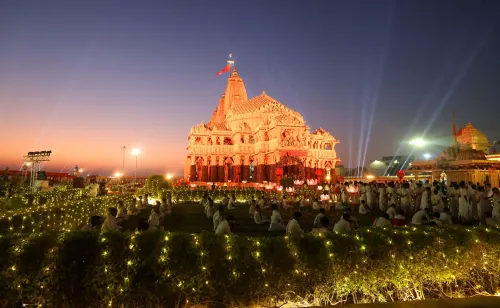
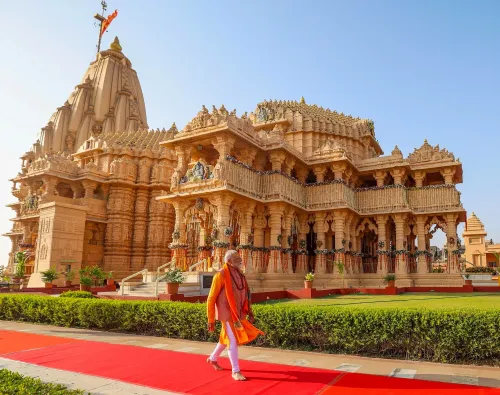
PM Modi's May 11 Somnath visit is more than a pilgrimage — it marks 75 years since the temple's restoration and follows a 1,000-year anniversary of its first recorded attack. With special pujas announced for 1,000 consecutive days, the visit signals a sustained institutional commitment to the temple as a symbol of Indian cultural revival.
Key Takeaways
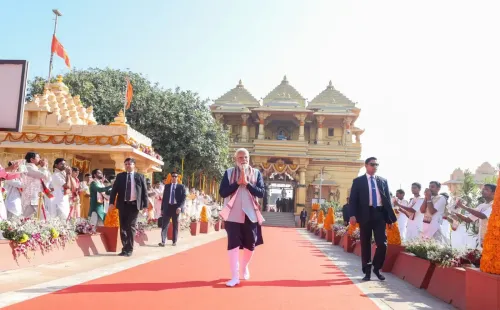
PM Modi is scheduled to visit the Somnath Temple in Gujarat on 11 May 2025 .
The visit coincides with 75 years since the restored temple's inauguration by President Rajendra Prasad .
Historian Chandrashekhar Patil called the visit "a very big moment for Sanatan Dharma." Mahmud of Ghazni raided the temple approximately 1,029 years ago , looting silver, diamonds, and jewellery, according to Patil.
Modi announced special pujas at Somnath for the next 1,000 days in tribute to those who sacrificed for the temple.
The visit is framed under the government's " Vikas Bhi, Virasat Bhi " heritage preservation approach.
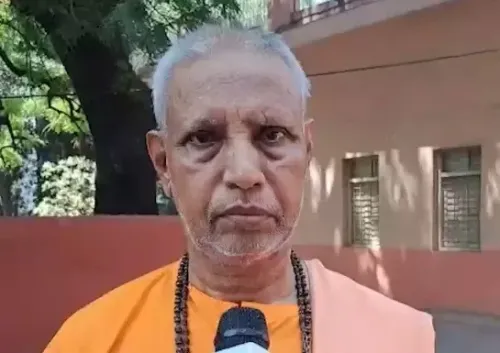
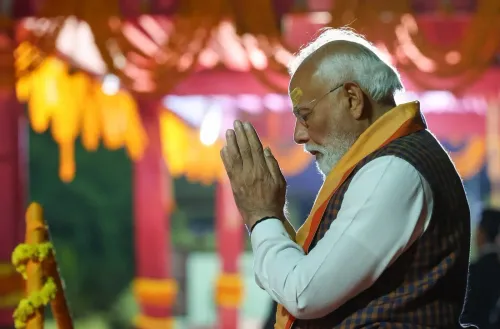
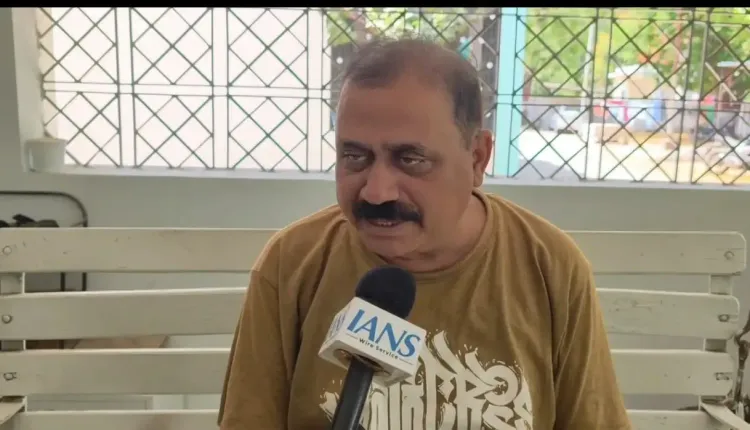
Vadodara-based historian and conservation specialist Chandrashekhar Patil on Friday, 8 May described Prime Minister Narendra Modi's upcoming visit to the Somnath Temple on 11 May as a significant moment for Sanatan Dharma, saying the temple "continues to represent Indian self-confidence, cultural revival and faith despite centuries of invasions." Patil was responding to an article shared by the Prime Minister ahead of the visit, in which Modi wrote that Somnath was not merely a pilgrimage site but "a shining symbol of India's eternal faith, renaissance and unbreakable national self-confidence."
What PM Modi Said Ahead of the Visit
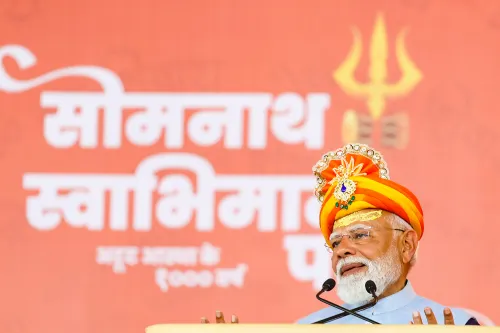
In the article shared on 8 May, Prime Minister Narendra Modi noted that the visit would coincide with 75 years since the inauguration of the restored Somnath Temple by India's first President, Rajendra Prasad. He recalled attending the Somnath Swabhiman Parv earlier this year, which marked 1,000 years since the first recorded attack on the temple, and described Somnath's history as a journey "from ruin to renewal" — or, in his words, "from Vidhvans to Srijan." Modi also said that no society's sentiments could be suppressed indefinitely and that communities could rise again with dignity and strength.
Historian's Perspective on Somnath's Significance
Patil, who described himself as a conservation specialist working on Indian history, said the continued memory of Somnath after more than a millennium demonstrated the temple's enduring cultural importance. Referring to the raid by Mahmud of Ghazni approximately 1,029 years ago, Patil said large quantities of silver, diamonds, and jewellery were looted, and that parts of the Shivling were reportedly removed. "The silver was melted and coins were made from it. Those coins are very important because they can still sometimes be found. The speciality of those coins is that it is written in the Prakrit language from where the silver was looted and what its purpose was. On the reverse side, there is praise of the Somnath Temple," Patil said. He added that he personally possesses one such coin connected to the Somnath plunder, which he described as an important historical document.
Cultural and Political Context
Patil also linked the Prime Minister's visit to the broader cultural significance of Sanatan Dharma in contemporary India. "Prime Minister Modi is specially going there for darshan, and that itself is very important. Recently, he won the election in West Bengal and Sanatan Dharma was also an important issue there. In that symbolic context too, he is specially visiting Somnath. If Sanatan Dharma is not worshipped in India, then where will it be?" he said. The visit comes at a moment when the ruling Bharatiya Janata Party (BJP) has consistently foregrounded cultural heritage and Hindu pilgrimage infrastructure as central to its governance narrative.
Key Announcements and Heritage Pilgrimage Push
Prime Minister Modi paid tribute to figures associated with the restoration and protection of the temple, including Sardar Vallabhbhai Patel, K.M. Munshi, Ahilyabai Holkar, and Rajendra Prasad. Highlighting the government's "Vikas Bhi, Virasat Bhi" (Development as well as Heritage) approach, Modi said spiritual centres across India — including the Kashi Vishwanath Temple, Kedarnath Temple, Ram Mandir Ayodhya, and Mahakaleshwar Jyotirlinga — had been modernised while preserving their traditional character. The Prime Minister also announced that special pujas would be organised at Somnath for the next 1,000 days in tribute to those who sacrificed for the temple over the centuries. The announcement signals a sustained institutional focus on Somnath well beyond the May 11 visit.
Point of View
And the timing, coinciding with 75 years of restoration and a post-West Bengal election moment, is unlikely to be incidental. The 1,000-day puja announcement is a notable institutional move: it extends the political salience of the visit well beyond a single day's news cycle. What is worth watching is whether the 'Vikas Bhi, Virasat Bhi' framing translates into measurable heritage infrastructure at Somnath, or remains primarily symbolic. The historian's account of Ghazni-era coins is a reminder that India's temple history carries genuine scholarly weight — a dimension that often gets flattened in the political retelling.
NationPress
23 Sept 2026
Frequently Asked Questions
Why is PM Modi visiting the Somnath Temple on May 11?
PM Modi is visiting the Somnath Temple on 11 May 2025 to mark 75 years since the restored temple's inauguration by India's first President, Rajendra Prasad. The visit also follows the Somnath Swabhiman Parv, which commemorated 1,000 years since the first recorded attack on the temple.
What is the significance of the Somnath Temple in Indian history?
The Somnath Temple is one of the twelve Jyotirlingas and has been rebuilt multiple times after repeated raids, most notably by Mahmud of Ghazni approximately 1,029 years ago. Historians regard it as a symbol of India's cultural resilience and religious continuity.
What did PM Modi announce for the Somnath Temple?
PM Modi announced that special pujas would be organised at the Somnath Temple for the next 1,000 consecutive days as a tribute to those who sacrificed for the temple over the centuries. He also highlighted ongoing modernisation of pilgrimage infrastructure under the government's 'Vikas Bhi, Virasat Bhi' policy.
Who is Chandrashekhar Patil and what did he say?
Chandrashekhar Patil is a Vadodara-based historian and conservation specialist focused on Indian history. He described Modi's May 11 Somnath visit as 'a very big moment for Sanatan Dharma' and provided historical context about the Ghazni raid, including details about coins minted from looted Somnath silver.
Which other pilgrimage sites has the Modi government developed?
According to PM Modi's article, the government has modernised several major pilgrimage sites including the Kashi Vishwanath Temple, Kedarnath Temple, Ram Mandir in Ayodhya, and the Mahakaleshwar Jyotirlinga, with the aim of providing modern facilities while preserving their traditional character.