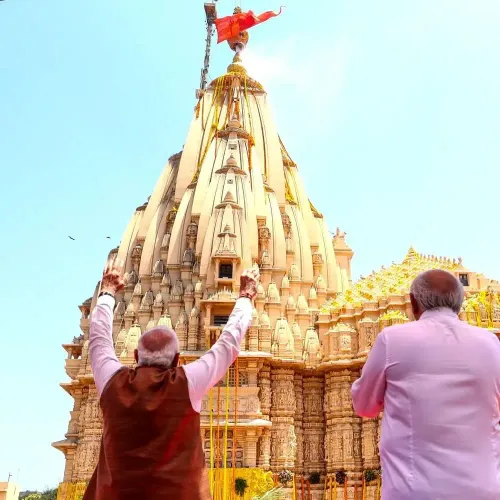
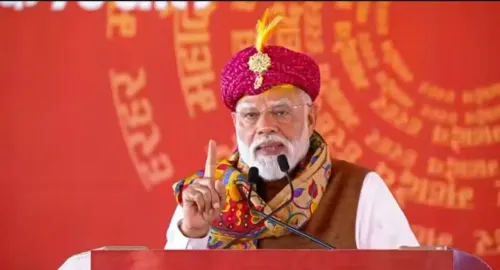
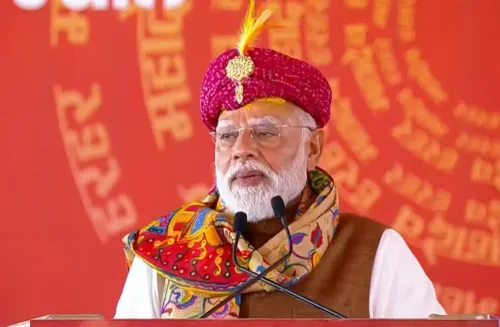
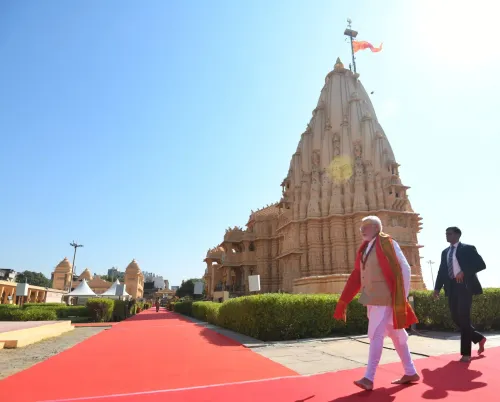
PM Modi's Somnath visit on May 11 marks 75 years of temple's restoration
Synopsis
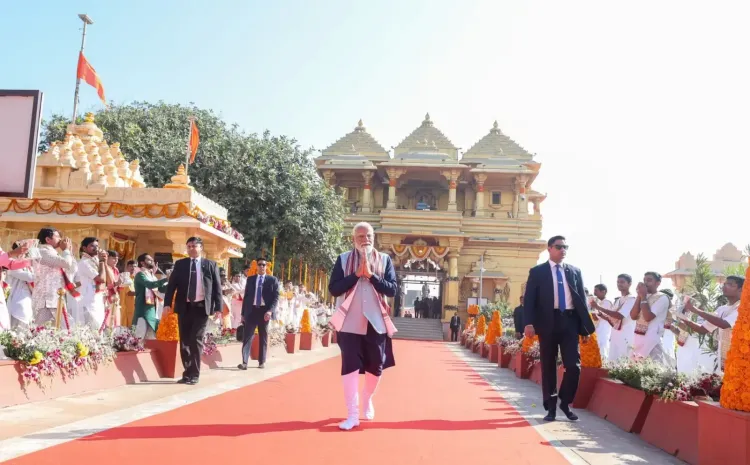
Ahead of his 11 May visit to Somnath, PM Modi has penned a sweeping tribute to the temple's thousand-year arc of destruction and revival — from Sardar Patel's 1947 pledge beside its ruins to Dr. Rajendra Prasad's 1951 inauguration, reportedly against Nehru's objections. Special Pujas for the next thousand days signal a deliberate civilisational statement.
Key Takeaways
PM Modi will visit Somnath, Gujarat on 11 May 2025 to mark 75 years since the temple's re-inauguration by President Dr.
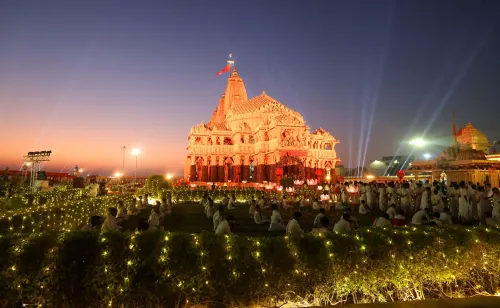
The visit follows the Somnath Swabhiman Parv held at the start of 2026 , marking 1,000 years since the first attack on the temple.
Sardar Patel pledged the temple's reconstruction on 13 November 1947 ; he passed away before its completion.
Rajendra Prasad inaugurated the restored temple on 11 May 1951 , reportedly overcoming objections from then PM Pandit Nehru .
Modi announced special Pujas at Somnath for the next thousand days as a tribute to the temple's millennium of resilience.
The visit is framed under Modi's 'Vikas Bhi, Virasat Bhi' principle, linking heritage preservation to economic and spiritual development.
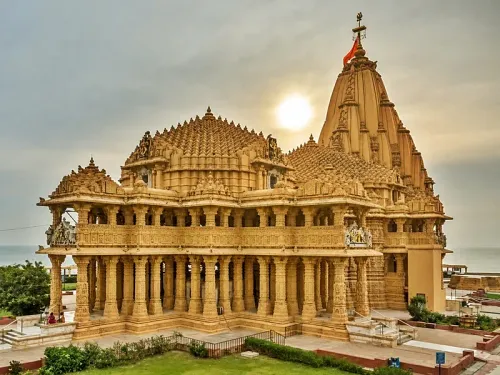
Prime Minister Narendra Modi on Friday, 8 May 2025, penned an OpEd ahead of his scheduled visit to Somnath, Gujarat, on 11 May, marking 75 years since the restored Somnath Temple was inaugurated by then President Dr. Rajendra Prasad. In the piece titled 'Somnath and Bharat's Unconquerable Spirit', Modi paid tribute to every individual who, across centuries, protected and rebuilt the temple against repeated destruction.
Why 11 May Holds Special Significance
Modi noted that his upcoming visit follows closely on the heels of another milestone. "At the start of 2026, I had gone to Somnath for the Somnath Swabhiman Parv, marking a thousand years since the first attack on the Somnath Temple," he wrote. The 11 May visit, he said, marks 75 years since the temple's formal re-inauguration — completing what he described as a journey "from Vidhvans to Srijan" (from ruin to renewal). He called it a privilege to attend two such milestones within a single year.
The Civilisational Message of Somnath
Drawing on imagery of the Arabian Sea, Modi wrote that Somnath carries a civilisational message of resilience. "The waves tell us that no matter how fierce the storms are or how turbulent the tides are, one can always rise again with dignity and strength," he said. He cited a Sanskrit shloka equating a Pradakshina of the divine Prabhasa (Somnath) with a circumambulation of the entire earth, underscoring the temple's spiritual centrality across generations.
Honouring Those Who Rebuilt Somnath Through History
The OpEd named a long roll of historical figures who contributed to the temple's protection and reconstruction. Modi invoked Lakulisha and Soma Sarman, who turned Prabhasa into a philosophical centre; Chakravarti Maharaja Dharasena IV of Vallabhi, who built the second temple; and Bhima Deva, Jayapala, and Anandapala, remembered for defending the site against invasions. He also acknowledged Raja Bhoja, Karna Deva, Siddharaja Jayasimha, Kumarapala Solanki, Vishaladeva Vaghela, Mahipaladeva, and Ra Khangar for their respective roles in revival and protection.
Modi highlighted Punyashlok Ahilyabai Holkar — whose 300th birth centenary is being observed — for sustaining devotion during difficult times, as well as the Gaekwads of Baroda for safeguarding pilgrims' rights. He also remembered Veer Hamirji Gohil and Veer Vegdaji Bhil as figures whose "sacrifice and courage have become a part of Somnath's living memory."
Sardar Patel's Role and the 1951 Inauguration
Modi recalled that on 13 November 1947, during Diwali, Sardar Vallabhbhai Patel stood beside the temple's ruins and pledged its reconstruction, saying: "On this auspicious day of the (Gujarati) New Year, we have decided that Somnath should be reconstructed." Patel did not live to see the temple's completion. His vision was carried forward by Shri K.M. Munshi, supported by the Jamsaheb of Nawanagar.
When the temple was ready in 1951, President Dr. Rajendra Prasad presided over the inauguration ceremony — reportedly overcoming strong objections from then Prime Minister Pandit Jawaharlal Nehru. Modi quoted Prasad's speech of 11 May 1951: "The Somnath Temple proclaims to the world that anything with unparalleled faith and love cannot be destroyed."
Vikas Bhi, Virasat Bhi — and What Comes Next
Modi connected the Somnath restoration to his government's broader principle of 'Vikas Bhi, Virasat Bhi' (development alongside heritage), citing upgrades at pilgrimage sites from Kashi to Kedarnath, Kamakhya to Ayodhya, and Trimbakeshwar to Srisailam. He said improved connectivity at these centres boosts local economies and deepens the spirit of 'Ek Bharat, Shreshtha Bharat'.
As a tribute to the temple's thousand-year journey, Modi announced that special Pujas will be held at Somnath for the next thousand days, with donations already flowing in from across the country. He urged fellow Indians to visit Somnath during this period, promising an experience of "Bharat's unconquerable spirit."
Point of View
The piece draws a pointed historical contrast that resonates with the BJP's long-standing narrative on cultural nationalism. The thousand-day Puja announcement transforms a single visit into an extended civilisational campaign. What is less examined is how the 'Vikas Bhi, Virasat Bhi' framing quietly merges state resources with religious site development — a convergence that courts both devotees and voters, but raises questions about the boundaries between governance and faith that mainstream coverage tends to gloss over.
NationPress
24 Sept 2026
Frequently Asked Questions
Why is PM Modi visiting Somnath on 11 May 2025?
PM Modi is visiting Somnath on 11 May 2025 to mark 75 years since the restored Somnath Temple was inaugurated by then President Dr. Rajendra Prasad on 11 May 1951. The visit is part of a series of milestones the Prime Minister is observing relating to the temple's journey from destruction to renewal.
What is the significance of the Somnath Temple in Indian history?
The Somnath Temple has been destroyed and rebuilt multiple times over a thousand years, making it a powerful symbol of cultural and civilisational resilience in India. Its most recent restoration was championed by Sardar Vallabhbhai Patel in 1947 and completed in 1951, with President Dr. Rajendra Prasad presiding over the inauguration.
What did Sardar Patel say about the Somnath Temple restoration?
On 13 November 1947, Sardar Patel stood beside the temple's ruins and declared: 'On this auspicious day of the (Gujarati) New Year, we have decided that Somnath should be reconstructed.' He passed away before the temple's completion, but his vision was carried forward by K.M. Munshi and the Jamsaheb of Nawanagar.
What are the special Pujas announced for Somnath?
PM Modi announced that special Pujas will be held at Somnath for the next thousand days as a tribute to the temple's thousand-year journey of resilience and reconstruction. He noted that several people have already donated for these Pujas.
What is the 'Vikas Bhi, Virasat Bhi' principle Modi refers to?
'Vikas Bhi, Virasat Bhi' translates to 'development as well as heritage' and is the guiding principle Modi says his government has followed for over a decade in upgrading pilgrimage sites. It involves equipping spiritual centres like Somnath, Kashi, Kedarnath, and Ayodhya with modern facilities while preserving their traditional character.