Somnath Temple at 75: PM Modi to visit shrine marking 1,000 years of faith and resilience
Synopsis
As Somnath Temple marks 75 years since its post-Independence reopening and 1,000 years since its first recorded attack, PM Modi's scheduled visit on 11 May 2025 frames a deeply layered moment — where ancient faith, civilisational memory, and modern nation-building converge at one of India's most resilient sacred sites.
Key Takeaways
Somnath Temple marks 75 years since its reopening on 11 May 1951 , when President Dr Rajendra Prasad dedicated the reconstructed shrine to the nation.
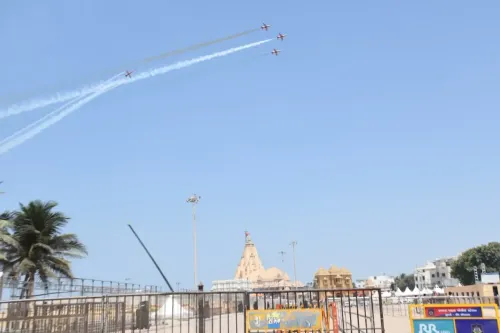
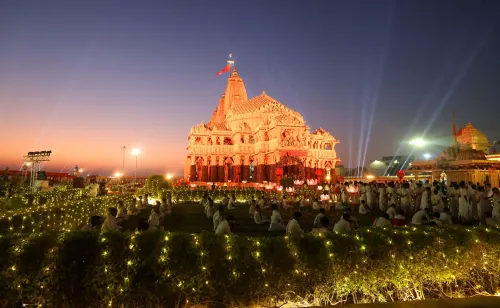
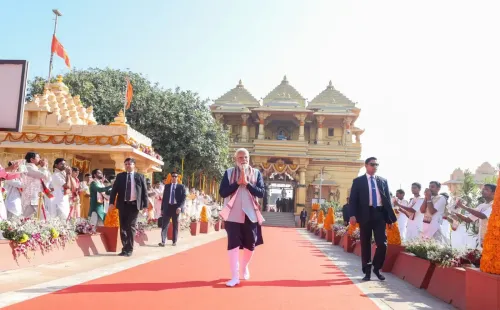
PM Narendra Modi is scheduled to visit Somnath on 11 May 2025 as part of the 'Somnath Amrut Mahotsav' commemorations.
The occasion also marks 1,000 years since the first recorded attack on the temple in 1026 AD .
The temple attracts between 92 lakh and 97 lakh pilgrims annually; rituals like Bilva Pooja alone draw over 13 lakh participants each year.
The Shree Somnath Trust has expanded into education, healthcare, skill development, and environmental initiatives, including a Miyawaki forest absorbing an estimated 93,000 kg of CO₂ annually.
Of the trust's 906 employees , 262 are women , managing key temple-linked activities.
Somnath Temple, revered as the first among the 12 Jyotirlingas of Lord Shiva, is set to mark 75 years since its reopening in independent India, with Prime Minister Narendra Modi scheduled to visit the shrine on 11 May 2025 as part of the 'Somnath Amrut Mahotsav' commemorations. The occasion converges two historic milestones — 1,000 years since the first recorded attack on Somnath in 1026 AD, and the 75th anniversary of its ceremonial reopening on 11 May 1951, when India's first President, Dr Rajendra Prasad, dedicated the reconstructed temple to the nation.
A Temple at the Centre of India's Civilisational Memory
Located on the Arabian Sea coast at Prabhas Patan in Gujarat's Saurashtra region, Somnath occupies a singular place in Hindu religious tradition. Mentioned in the Shiva Purana and placed first in the Dwadasha Jyotirlinga Stotram, the temple is associated with the worship of Lord Shiva, Lord Krishna, and Shakti traditions. Its spiritual significance has made it one of India's most prominent pilgrimage destinations, drawing between 92 lakh and 97 lakh devotees annually.
Centuries of Destruction and Reconstruction
Over the centuries, Somnath became identified with repeated cycles of destruction and revival. According to historical accounts and traditional narratives, the temple's most turbulent period began in January 1026, when it faced its first recorded attack by invading forces. Between the 11th and 18th centuries, the shrine was attacked and rebuilt multiple times. Successive reconstructions were undertaken by rulers and devotees, including King Kumarapala in the 12th century, the ruler of Junagadh in the 13th century, and Maratha queen Ahilyabai Holkar of Indore in the 18th century.
One figure remembered in local tradition is Veer Hamirji Gohil, a regional warrior believed to have sacrificed his life defending the temple during Zafar Khan's invasion in 1299 AD. Though his story survives largely through oral tradition and regional memory rather than official chronicles, he continues to be associated with the idea of rajadharma — the duty to protect sacred places and society.
Post-Independence Reconstruction and the 1951 Reopening
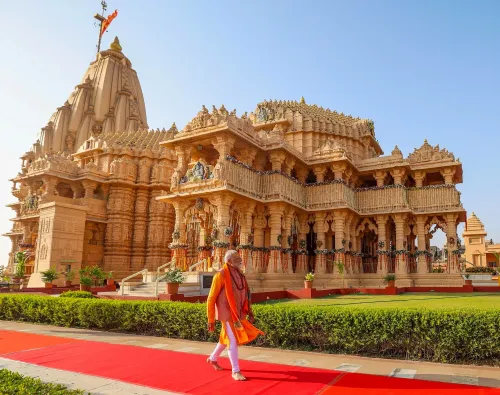
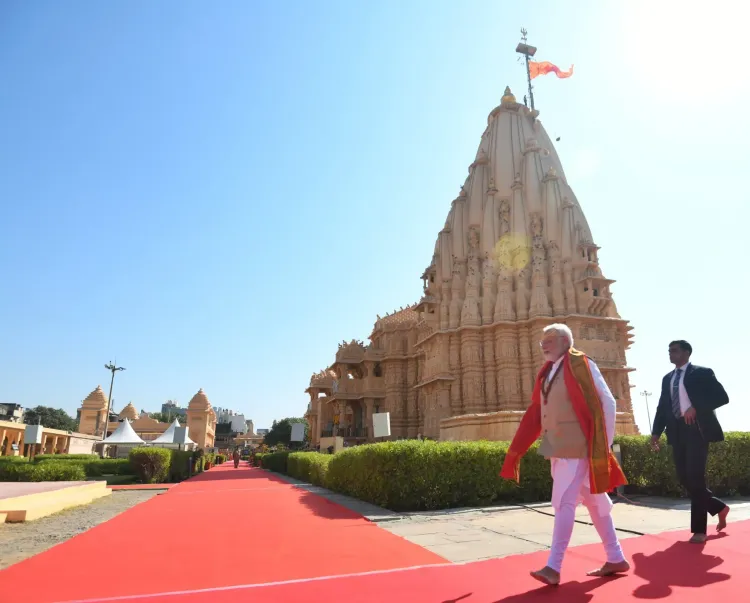
The temple's modern reconstruction began after Independence, when Deputy Prime Minister Sardar Vallabhbhai Patel visited the ruins in 1947 and supported rebuilding efforts as a symbol of restoring national confidence and cultural continuity. Constructed in the Kailash Mahameru Prasad architectural style, the present temple was consecrated on 11 May 1951. Officials associated with the commemorative events said the Somnath Swabhiman Parv seeks to reflect both the destruction faced by the temple and its repeated revival — and that the 1951 reopening came to symbolise a wider civilisational resurgence in post-Independence India.
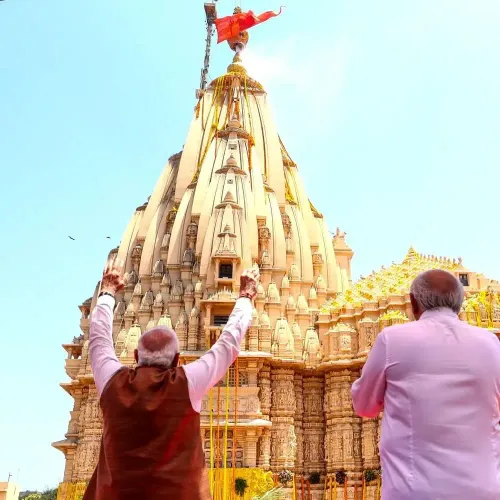
The present temple complex includes the Garbhagriha, Sabha mandap, and Nritya mandap overlooking the Arabian Sea. The structure is crowned by a 150-foot shikhar topped with a 10-tonne kalash and a 27-foot dhwajdand, with 1,666 gold-plated kalash and 14,200 dhwajas adorning the complex.
PM Modi's Role and the Amrut Mahotsav Commemorations
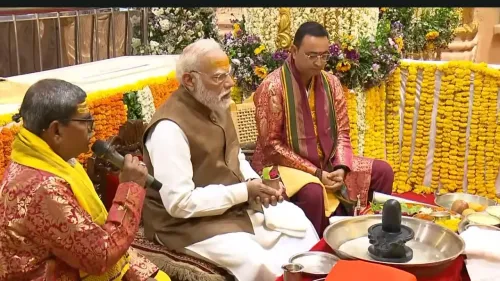
Prime Minister Modi, who also serves as chairman of the Somnath Trust, is expected to participate in ceremonies marking the anniversary on 11 May. Ahead of the visit, he described Somnath as a
Point of View
Even as the temple's historical narrative of resilience holds genuine civilisational weight. The convergence of 1,000 years since the 1026 attack and 75 years since the 1951 reopening has been carefully curated into a single commemorative frame, amplifying the 'from ruin to renewal' arc that has become central to the current government's cultural messaging. What is less discussed is how the 1951 reopening itself was contested — then-Prime Minister Jawaharlal Nehru was reportedly cautious about state involvement in the temple's reconstruction, reflecting an older debate about secularism that has not disappeared, only shifted register.
NationPress
23 Sept 2026
Frequently Asked Questions
Why is Somnath Temple significant in Hindu tradition?
Somnath is regarded as the first among the 12 Jyotirlingas of Lord Shiva and is placed first in the Dwadasha Jyotirlinga Stotram, making it one of the most sacred shrines in Hinduism. Located at Prabhas Patan on the Arabian Sea coast in Gujarat, it is also associated with Lord Krishna and Shakti traditions.
When was the Somnath Temple reopened after Independence?
The present Somnath Temple was consecrated on 11 May 1951, when India's first President, Dr Rajendra Prasad, dedicated the reconstructed shrine to the nation. The rebuilding effort was championed by Deputy Prime Minister Sardar Vallabhbhai Patel, who visited the ruins in 1947.
What is the Somnath Amrut Mahotsav?
The Somnath Amrut Mahotsav is a commemorative observance marking 75 years since the temple's reopening in 1951 and 1,000 years since its first recorded attack in 1026 AD. PM Modi is scheduled to visit the temple on 11 May 2025 as part of the celebrations, which include special pujas for the next 1,000 days.
How many times was the Somnath Temple destroyed and rebuilt?
According to historical accounts and traditional narratives, the temple was attacked and rebuilt multiple times between the 11th and 18th centuries. Key reconstructions were undertaken by King Kumarapala in the 12th century, the ruler of Junagadh in the 13th century, and Maratha queen Ahilyabai Holkar in the 18th century.
What community and environmental work does the Somnath Trust undertake?
The Shree Somnath Trust runs programmes in education, healthcare, skill development, and environmental sustainability. Initiatives include a Miyawaki forest absorbing an estimated 93,000 kg of CO₂ annually, vermicomposting, plastic recycling, rainwater harvesting, free medical camps, and a 'School on Wheels' mobile computer education programme for villages.