PM Modi at Somnath Amrut Mahotsav: Attackers faded, soul of Bharat endures
Synopsis
Seventy-five years after Dr Rajendra Prasad inaugurated the restored Somnath Temple, PM Modi returned to the shrine for the Amrut Mahotsav — invoking a millennium of resilience and framing the temple's survival as proof that India's civilisational soul outlasts every assault on it.
Key Takeaways
PM Narendra Modi attended the Somnath Amrut Mahotsav on 11 May 2025 at the Somnath Temple , Gir Somnath, Gujarat .
The event marked 75 years since the restored temple was inaugurated by President Dr Rajendra Prasad on 11 May 1951 .
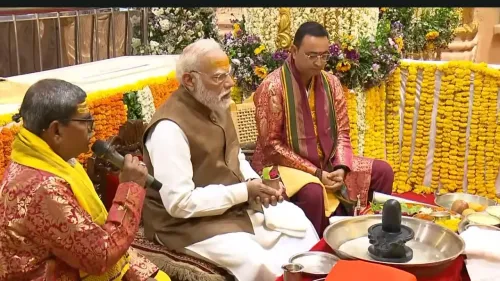
Modi participated in Vishesh Maha Puja , Kumbhabhishek , and Dhwajarohan ceremonies.
He released a commemorative stamp and coin honouring the temple's legacy.
Modi posted on X that Somnath's survival over 1,000 years of attacks proves "the soul of Bharat endures." The temple's reconstruction was led by Sardar Vallabhbhai Patel after Independence.
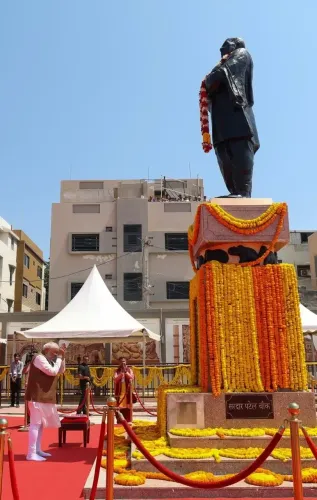
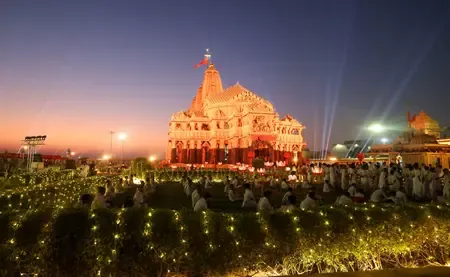
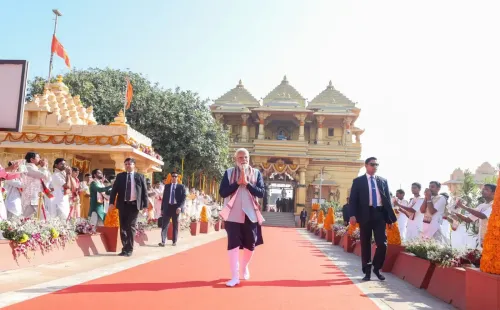
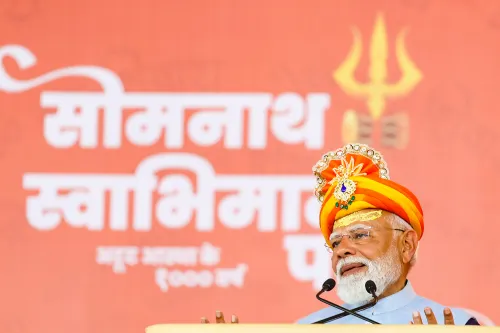
Prime Minister Narendra Modi on Monday, 11 May attended the Somnath Amrut Mahotsav at the Somnath Temple in Gujarat's Gir Somnath, declaring that the ancient shrine — which has withstood numerous attacks over the past 1,000 years — stands as proof that "while the attackers have faded into the dust of history, the soul of Bharat endures." The event marked 75 years since the restored temple was inaugurated by India's first President, Dr Rajendra Prasad, on 11 May 1951.
Significance of the Somnath Amrut Mahotsav
The Somnath Amrut Mahotsav commemorates seven and a half decades since the reconstructed temple was formally reopened, following rebuilding efforts championed by Sardar Vallabhbhai Patel. The restoration was widely regarded as a civilisational and national act of reclamation in the years immediately after Independence. The original temple had faced repeated destruction over centuries, making its revival a potent symbol of cultural resilience.
What PM Modi Said
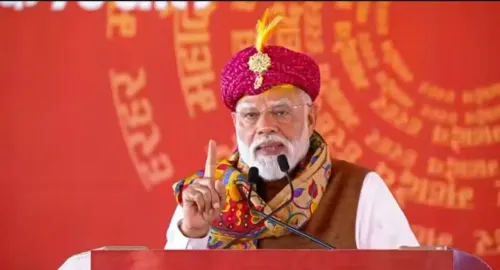
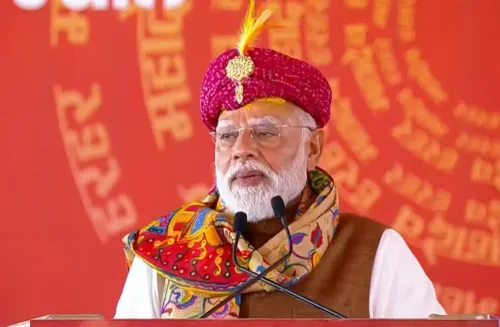
In a post on X, Modi wrote: "A thousand years ago, the first of many attacks on Somnath took place. Those who kept engaging in such attacks believed they could shatter the ethos of our land. But they were wrong. Thanks to fiercely courageous children of Bharat Mata, Somnath kept getting rebuilt."
He added: "Seventy-five years ago on this day, the doors of the newly rebuilt Somnath Temple opened in the presence of the then President Dr Rajendra Prasad, proclaiming to the world that while the attackers have faded into the dust of history, the soul of Bharat endures."
Modi further said: "Somnath stands tall and eternal. It showcases our civilisational courage and our unbroken devotion. May the blessings of Mahadev always remain upon us all."
Ceremonies and Commemorations
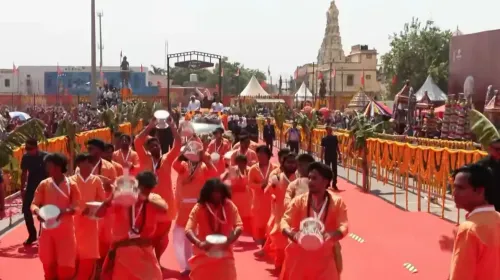
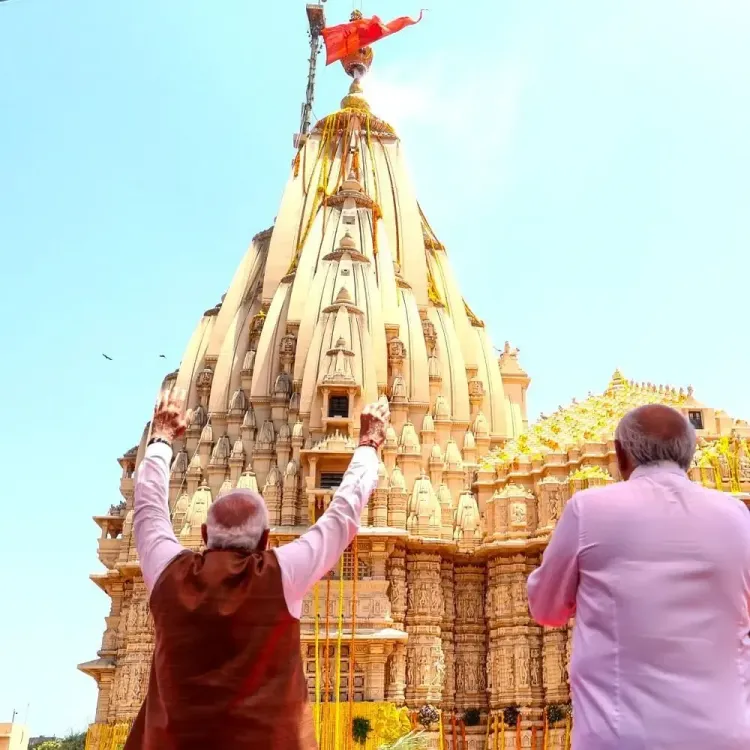
During the event, Prime Minister Modi participated in the Vishesh Maha Puja, the historic Kumbhabhishek, and the Dhwajarohan ceremonies at the temple. He also released a commemorative stamp and coin marking the legacy of the sacred shrine. These rituals, conducted at one of Hinduism's twelve Jyotirlinga shrines, drew large gatherings of devotees.
The Saffron Flag and Its Symbolism
In a separate post, Modi referred to the saffron flag atop the temple's spire, describing it as "a symbol of the triumph of faith across India" and "a divine proclamation of the collective consciousness of countless Indians." He called the flag a "living saga of victory of our unwavering devotion," adding that it "shall forever sing the song of India's glory, continuing to inspire every Indian."
Historical Context
The Somnath Temple, located on the western coast of Gujarat, is considered one of the holiest shrines in Hinduism and has been destroyed and rebuilt multiple times over the centuries. The most cited historical attack dates to 1025 CE by Mahmud of Ghazni. The post-Independence reconstruction, driven by Sardar Patel and completed after his death, was inaugurated by President Rajendra Prasad despite some political reservations at the time. The temple's story has since become a recurring reference point in India's civilisational discourse. The 75th anniversary of that inauguration lends fresh resonance to Monday's event, arriving at a moment of heightened national conversation around cultural heritage and identity.
Point of View
Resilience, and Hindu reclamation — maps neatly onto that political project. Yet the historical substance is real: Sardar Patel's reconstruction effort was a genuine act of national consolidation, and the temple's endurance across centuries is an undeniable fact of Indian history. The question is whether commemorating that history serves civic memory or functions primarily as a mobilisation signal — and Monday's event, with its carefully crafted X posts and national broadcast, suggests the answer is both simultaneously.
NationPress
23 Sept 2026
Frequently Asked Questions
What is the Somnath Amrut Mahotsav?
The Somnath Amrut Mahotsav marks 75 years since the restored Somnath Temple was inaugurated by India's first President, Dr Rajendra Prasad, on 11 May 1951. The reconstruction was led by Sardar Vallabhbhai Patel following Independence, and the anniversary is being celebrated with religious ceremonies and national commemorations.
Why did PM Modi visit the Somnath Temple on 11 May 2025?
PM Modi attended the Somnath Amrut Mahotsav to mark the 75th anniversary of the temple's post-Independence inauguration. He participated in the Vishesh Maha Puja, Kumbhabhishek, and Dhwajarohan ceremonies, and released a commemorative stamp and coin honouring the shrine's legacy.
What is the historical significance of the Somnath Temple?
The Somnath Temple, one of Hinduism's twelve Jyotirlinga shrines on Gujarat's western coast, has been destroyed and rebuilt multiple times over centuries. The most cited historical attack dates to 1025 CE. Its post-Independence reconstruction by Sardar Patel and inauguration by President Rajendra Prasad is widely regarded as a civilisational act of reclamation.
What did PM Modi say about the Somnath Temple's history?
Modi said that a thousand years of attacks failed to shatter India's ethos, crediting the courage of Indians for repeatedly rebuilding the temple. He declared that "while the attackers have faded into the dust of history, the soul of Bharat endures," and called the temple a showcase of India's civilisational courage and unbroken devotion.
What ceremonies took place at the Somnath Amrut Mahotsav?
PM Modi participated in the Vishesh Maha Puja, the Kumbhabhishek, and the Dhwajarohan flag-hoisting ceremony. He also released a commemorative stamp and coin. The saffron flag atop the temple's spire was a central symbol of the event, which Modi described as representing the triumph of faith across India.