Dr. Jitendra Singh Remembers CV Raman on Birth Anniversary
Synopsis
Union Science and Technology Minister Dr. Jitendra Singh honoured Sir CV Raman on his birth anniversary, recalling the Raman Effect — the 1928 discovery that won Raman the 1930 Nobel Prize in Physics, making him the first Asian to win a science Nobel.
Key Takeaways
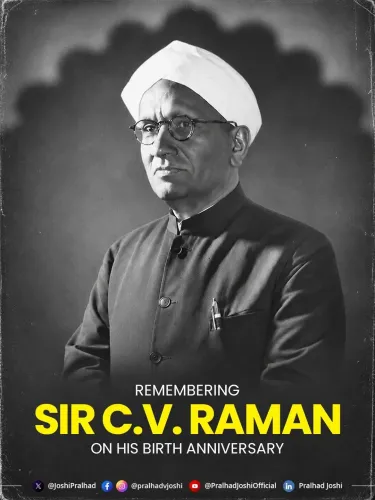
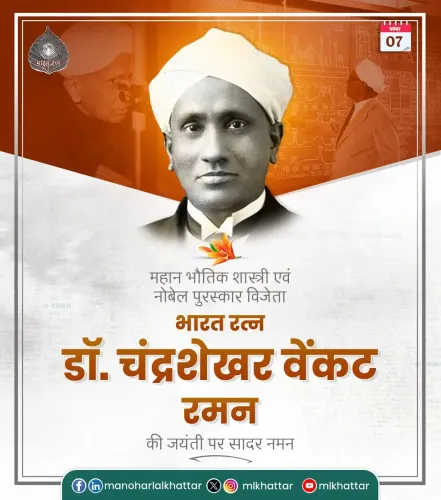
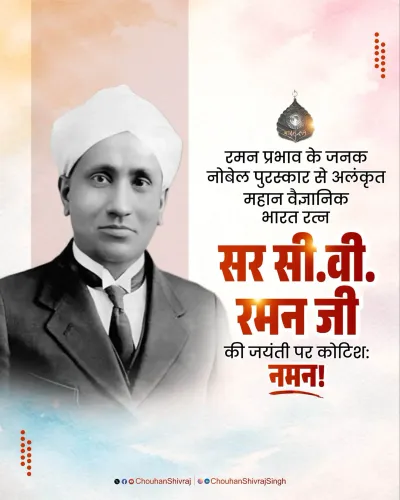
Jitendra Singh , Union Minister of State (Independent Charge) for Science and Technology, paid tribute to Sir CV Raman on his birth anniversary on 7 November 2026 .
The Raman Effect , discovered on 28 February 1928 , demonstrated inelastic scattering of light and became foundational to modern spectroscopy.
CV Raman won the Nobel Prize in Physics in 1930 , making him the first Asian recipient of a science Nobel in any discipline.
The Government of India designated 28 February as National Science Day in 1986 to commemorate the discovery of the Raman Effect.
CV Raman was awarded the Bharat Ratna in 1954 , India's highest civilian honour.
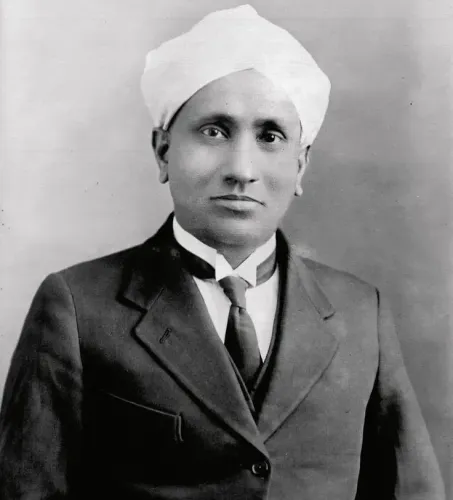
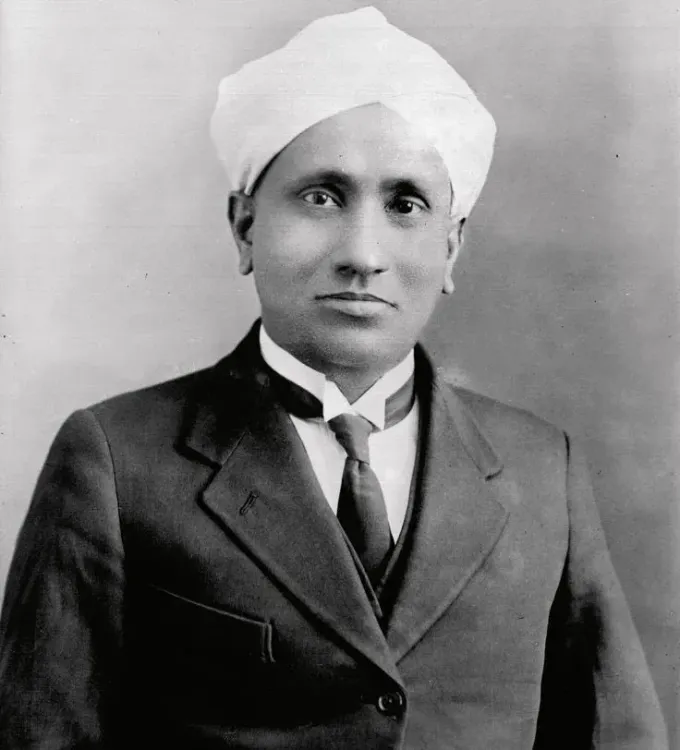
A century after he bent a beam of light and changed physics forever, Sir CV Raman is remembered on his birth anniversary — this time by Union Science and Technology Minister Dr. Jitendra Singh, who paid tribute on Saturday, 7 November 2026 to the man whose discovery made all of Asia sit up at the Nobel podium.
Dr. Singh's post on X saluted Raman as a 'great physicist' and honoured his landmark research — the Raman Effect — describing it as the work that earned India 'the first Nobel Prize for Physics in 1930 in Asia for any science stream.' The tribute came from the minister who oversees the very department that now carries Raman's scientific legacy forward.
What the Raman Effect actually did to physics
On 28 February 1928, working in Calcutta with rudimentary equipment, CV Raman demonstrated that when light passes through a transparent material, a small fraction of it scatters at a different wavelength — a phenomenon that became the bedrock of modern spectroscopy. The elegance was breathtaking: a truth about the universe's inner workings, revealed with filtered sunlight and a human eye. Two years later, the Nobel Committee in Stockholm awarded him the Nobel Prize in Physics for 1930 — the first science Nobel ever won by an Asian.
The Government of India subsequently designated 28 February as National Science Day in 1986, ensuring the discovery is re-examined and celebrated every year by students, researchers, and institutions across the country. In 1954, the nation conferred on him the Bharat Ratna, India's highest civilian honour — a recognition that placed the physicist alongside the republic's most consequential figures.
A minister's tribute, a ministry's inheritance
Dr. Singh's tribute is part of a consistent pattern among successive Indian governments: invoking pre-independence scientific giants to anchor contemporary science-promotion messaging. Coming from the minister in charge of the Department of Science and Technology and Department of Earth Sciences, the salute carries institutional weight — it is, in effect, the ministry reminding the country what a single original mind can accomplish. The scientific community and India's vast population of physics students and researchers are the natural audience for such a moment.
Raman's story is a standing argument for curiosity-driven research with limited resources — a point that lands with particular force at a time when India is scaling up science funding. The legacy he built in a Calcutta laboratory in 1928 still frames how the country sees itself in the global scientific order.
Point of View
Coming from the minister who oversees the Department of Science and Technology, transforms a ceremonial gesture into a statement of institutional continuity. It signals that Raman's achievement — a Nobel won with modest resources and extraordinary intellect — remains the aspirational template for Indian science policy. As India scales up research investment, invoking Raman is shorthand for arguing that world-class science has always been possible here.
NationPress
7 Nov 2026
Frequently Asked Questions
When was CV Raman born?
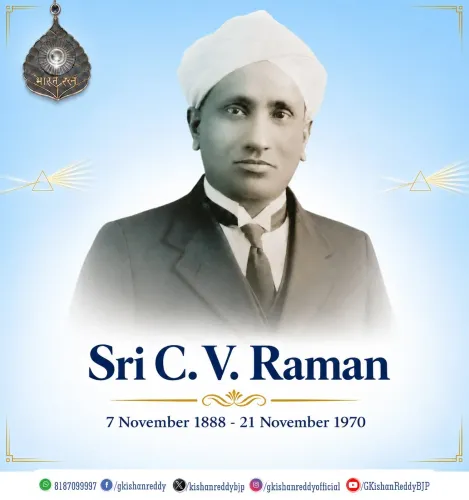
Sir CV Raman was born on 7 November 1888 in Tiruchirapalli, Madras Presidency, in present-day Tamil Nadu.
What is the Raman Effect?
The Raman Effect is the inelastic scattering of photons by molecules, discovered by CV Raman on 28 February 1928 . When light passes through a transparent material, a small fraction scatters at shifted wavelengths, revealing the material's molecular structure — a principle now central to spectroscopy and chemical analysis.
Why did CV Raman win the Nobel Prize?
CV Raman was awarded the Nobel Prize in Physics in 1930 for his discovery of the Raman Effect, the light-scattering phenomenon he demonstrated in 1928. He was the first Asian to win a Nobel Prize in any science discipline.
What is National Science Day and why is it on 28 February?
National Science Day is observed every year on 28 February in India to mark the anniversary of CV Raman's discovery of the Raman Effect in 1928. The Government of India officially designated the date in 1986 .
What Bharat Ratna honour did CV Raman receive?
CV Raman was conferred the Bharat Ratna — India's highest civilian honour — in 1954 , in recognition of his extraordinary contribution to science and his status as India's first Nobel laureate.