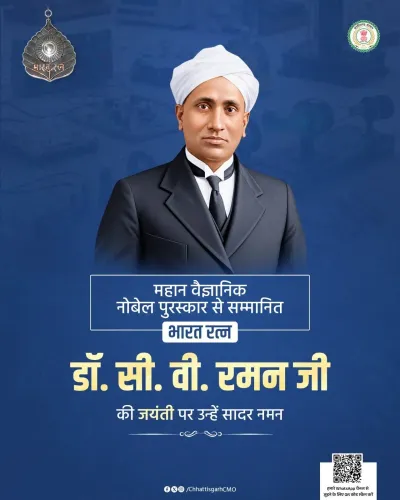
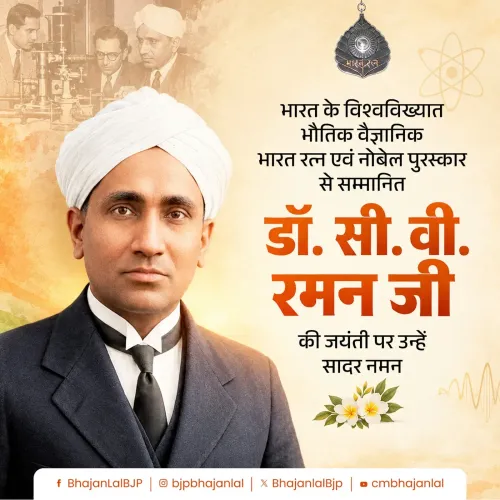
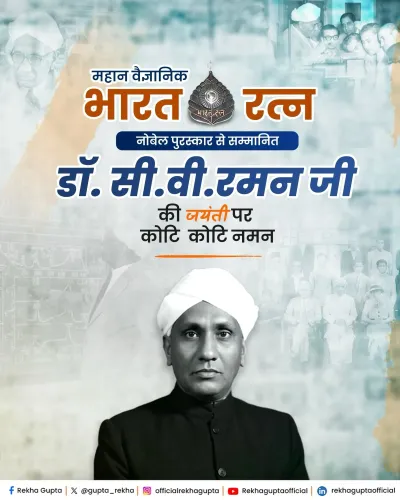
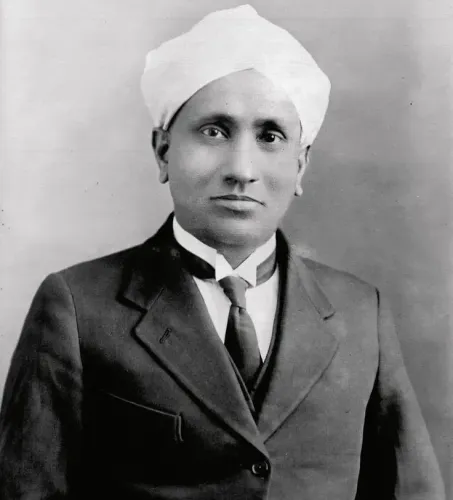
Pralhad Joshi Pays Tribute to C.V. Raman on Birth Anniversary
Synopsis
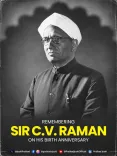
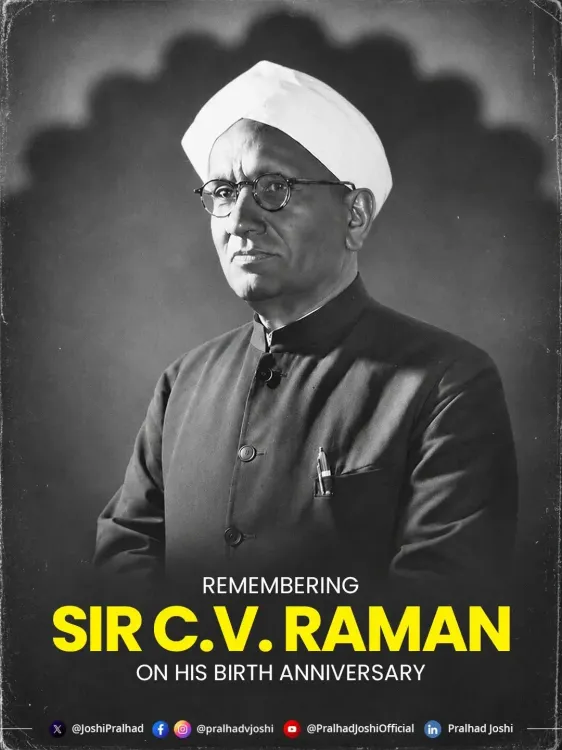
Union Consumer Affairs Minister Pralhad Joshi paid tribute to Bharat Ratna Sir C.V. Raman on his birth anniversary, honouring the physicist's 1928 discovery of the Raman Effect — the Nobel-winning finding that remains a cornerstone of global spectroscopy and a touchstone of Indian scientific pride.
Key Takeaways
Union Consumer Affairs Minister Pralhad Joshi paid tribute to Sir C.V.
Raman on his birth anniversary on 7 November 2026 .
Joshi posted in both English and Kannada, calling Raman 'the pride of India' and his discovery 'a landmark in global science.' Raman announced the Raman Effect — inelastic scattering of light by molecules — in 1928 .
The discovery earned Raman the Nobel Prize in Physics in 1930 , making him the first Asian to win the prize in the sciences.
Raman was awarded the Bharat Ratna in 1954 , India's highest civilian honour.
Raman founded the Raman Research Institute in Bengaluru, which continues to shape Indian scientific research.
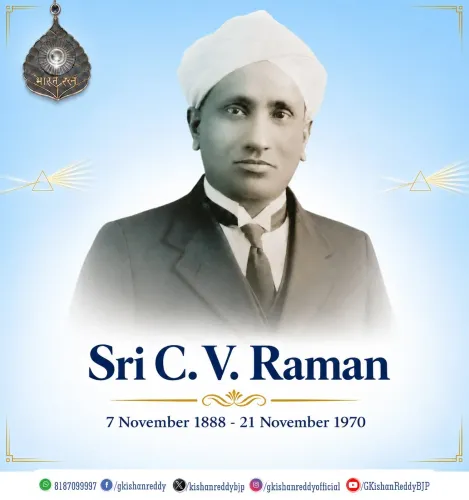
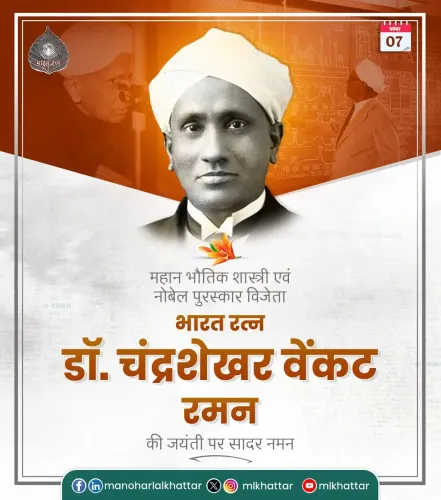
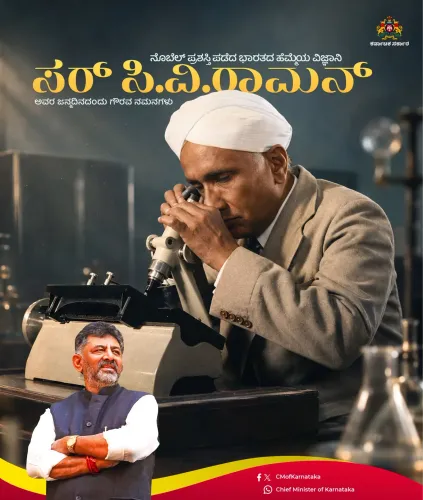
A Nobel laureate who bent light — and history — with a single experiment: Union Consumer Affairs Minister Pralhad Joshi on Saturday, 7 November 2026, paid tribute to Bharat Ratna Sir C.V. Raman on the physicist's birth anniversary, calling his discovery of the Raman Effect 'a landmark in global science and a lasting inspiration for generations of young Indian scientists.'
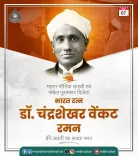
Posting in both English and Kannada, Joshi offered his 'respectful salutations' — ಗೌರವಪೂರ್ವಕ ನಮನಗಳು [gauravapūrvaka namanagaḷu] — to the scientist he described as the pride of India and a Nobel Prize-winning icon whose work introduced the world to the full potential of Indian scientific talent.
The discovery that changed spectroscopy forever
Sir Chandrasekhara Venkata Raman announced the Raman Effect in 1928 — a finding that showed light, when scattered by molecules, shifts in wavelength in ways that reveal the precise chemical fingerprint of a substance. The discovery was not a refinement of existing science; it was a rupture. Within two years, in 1930, it earned Raman the Nobel Prize in Physics, making him the first Asian and first non-white scientist to win that honour in the sciences. The Government of India later conferred on him the Bharat Ratna in 1954, the country's highest civilian distinction. Raman spectroscopy today underpins everything from pharmaceutical quality control to the detection of art forgeries — a 97-year-old discovery still running at the frontier.A Karnataka scientist, a national memory
Raman's connection to Karnataka gives the tribute an added resonance coming from Joshi, himself a senior BJP leader from the state. Raman spent the defining decades of his research career in Bengaluru, founding the Indian Institute of Astrophysics and the Raman Research Institute, institutions that continue to shape Indian science. Joshi's Kannada-language tribute was a pointed acknowledgement of that regional pride fused with national legacy. The BJP-led government has made annual tributes to pre-independence scientists a consistent feature of its public communications, threading figures like Raman into a broader narrative of indigenous scientific achievement and the ambition to build a globally competitive research ecosystem in India. One man, one experiment, one shift in wavelength — and a country still drawing the line of its scientific ambition back to that moment.Point of View
A pattern common across BJP communications. The consistent official invocation of Raman fits a broader government narrative that seeks to anchor contemporary science policy ambitions, from quantum missions to deep-tech funding, in the legitimacy of a proven pre-independence legacy. For a minister overseeing portfolios as varied as consumer affairs and renewable energy, the association with foundational scientific rigour also carries implicit messaging about evidence-based governance. The tribute's reach beyond ceremonial duty lies in how it frames India's scientific self-image: not as an emerging nation catching up, but as one reclaiming a heritage of world-class discovery.
NationPress
7 Nov 2026
Frequently Asked Questions
When was C.V. Raman born?
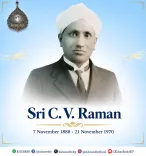
Sir C.V. Raman was born on 7 November 1888 in Tiruchirapalli, in present-day Tamil Nadu.
What is the Raman Effect?
The Raman Effect, discovered in 1928 , is the inelastic scattering of light by molecules — when light hits a substance, a small fraction of it shifts in wavelength, revealing the chemical identity of that substance. It is the foundational principle behind Raman spectroscopy.
Why did C.V. Raman win the Nobel Prize?
Sir C.V. Raman won the Nobel Prize in Physics in 1930 for his discovery of the Raman Effect, which opened an entirely new field of spectroscopic analysis.
What is Bharat Ratna and when did C.V. Raman receive it?
The Bharat Ratna is India's highest civilian honour. C.V. Raman was awarded it in 1954 , among the first recipients after the award was established.
Why is Pralhad Joshi paying tribute to C.V. Raman?
Union Minister Pralhad Joshi paid tribute on C.V. Raman's birth anniversary, 7 November , as part of a broader government practice of honouring landmark Indian scientists and linking their legacy to national scientific ambition.