Jitendra Singh Visits IACS Exhibition on Raman Effect Legacy
Synopsis
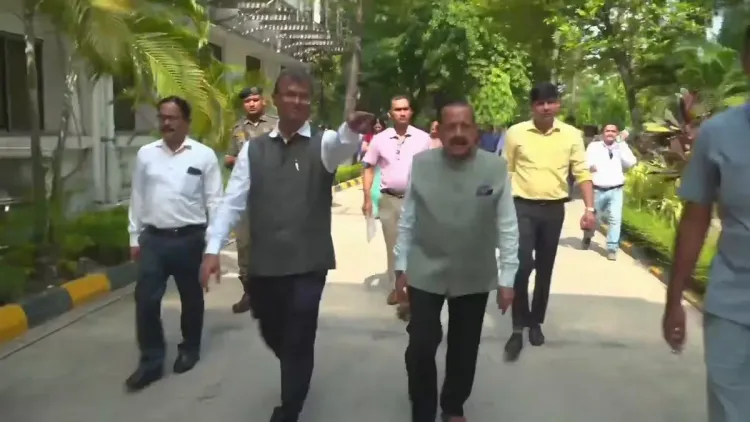
Union Science and Technology Minister Dr. Jitendra Singh walked through an exhibition at IACS in Kolkata on 26 May 2026, lauding displays on India's scientific heritage including the 1928 Raman Effect discovery that earned C.V. Raman the Nobel Prize in Physics.
Key Takeaways
Jitendra Singh visited the IACS exhibition in Kolkata on 26 May 2026 .
IACS , founded in 1876 , is India's first institution dedicated exclusively to scientific research.
The exhibition featured the Raman Effect , discovered at IACS by C.V.
Raman won the Nobel Prize in Physics in 1930 — the first Nobel for an Indian scientist.
The visit aligns with the ministry's broader effort to link institutional scientific memory with current STEM promotion.
Possible follow-up actions include archival digitisation initiatives and funding reviews for legacy research institutes.
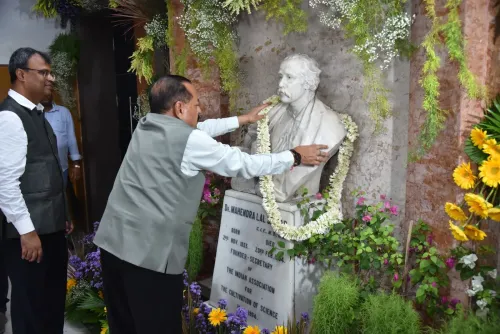
Union Science and Technology Minister Dr. Jitendra Singh visited an exhibition at the Indian Association for the Cultivation of Science (IACS) in Kolkata on Tuesday, 26 May 2026, touring displays that chronicle the institute's historic contributions to modern science, including the landmark discovery of the Raman Effect.
Context
The minister described the exhibition as one that 'beautifully highlighted India's remarkable heritage and the pioneering contributions made by IACS to the world of modern science.' The display is mounted at one of India's most storied research institutions, whose corridors witnessed a Nobel Prize-winning breakthrough nearly a century ago.
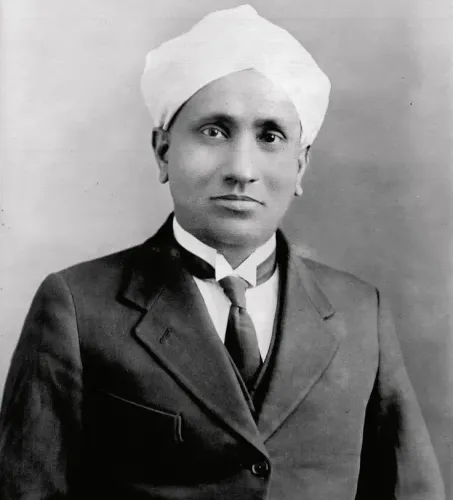
IACS, founded in 1876, holds the distinction of being India's first organisation devoted exclusively to scientific research. It was at this very institute that physicist C.V. Raman conducted the experiments that led to his discovery of the Raman Effect in 1928 — the inelastic scattering of light that earned him the Nobel Prize in Physics in 1930, the first Nobel awarded to an Indian scientist.
Policy Backdrop
Dr. Singh's visit fits within a sustained effort by the Ministry of Science and Technology to amplify institutional memory as a tool of science communication and national pride. Indian ministries have periodically organised and attended exhibitions at legacy research institutes to document pre-independence and early post-independence scientific achievements.
The Raman Effect remains one of the most cited examples in domestic STEM outreach — invoked to demonstrate that world-class fundamental research has deep Indian roots. Connecting current policy priorities to that legacy has become a recurring feature of the ministry's public engagement.
Stakeholders and Impact
The primary beneficiaries of such heritage exhibitions are students, early-career researchers, and the broader scientific community, for whom the physical walk-through of historic instruments and archival material can reinforce the culture of fundamental research. IACS continues to function as an active research centre and a deemed university, making its institutional memory directly relevant to current graduate and doctoral programmes.
For Kolkata, long regarded as a hub of Indian intellectual and scientific life since the 19th century, the minister's visit also carries symbolic weight — reaffirming the city's place in the national science narrative at a time when newer research corridors are emerging across the country.
What's Next
The visit may signal closer ministerial attention to IACS ahead of upcoming Science and Technology ministry reviews, where questions of archival digitisation, infrastructure upgrades, and research funding for legacy institutes are likely to feature. Observers will watch for any follow-up announcements tied to the exhibition, including possible initiatives to document or digitise IACS's historical records for wider public access.
As India positions itself as a global science power, the government's engagement with institutions like IACS underscores a broader ambition: to ground future scientific ambition in a well-documented and celebrated past.
Point of View
Indigenous roots. The visit comes as the Science and Technology ministry seeks to balance investment in frontier research with public appreciation for foundational science. By personally touring and publicly endorsing the display, the minister signals to the research community that heritage institutions remain valued rather than sidelined in the push for new innovation corridors. It also keeps Kolkata — historically central to Indian intellectual life but increasingly anxious about its place in the new science economy — visible in the national policy conversation.
NationPress
10 Oct 2026
Frequently Asked Questions
What is the Raman Effect and why is it significant for India?
The Raman Effect is the inelastic scattering of light discovered by physicist C.V. Raman at IACS, Kolkata in 1928 . It earned Raman the Nobel Prize in Physics in 1930 , making him the first Indian scientist to win a Nobel Prize, and remains a landmark moment in India's scientific history.
What is the Indian Association for the Cultivation of Science (IACS)?
IACS is India's first institution dedicated exclusively to scientific research, founded in Kolkata in 1876 . It functions today as both an active research centre and a deemed university, with a legacy spanning fundamental physics, chemistry, and materials science.
Why did Jitendra Singh visit IACS in Kolkata?
Dr. Jitendra Singh , Union Science and Technology Minister, visited an exhibition at IACS on 26 May 2026 that showcased the institute's historic scientific discoveries, including the Raman Effect , as part of broader ministerial engagement with India's legacy research institutions.
What is the connection between IACS and the Nobel Prize?
C.V. Raman conducted his groundbreaking light-scattering experiments at IACS , leading to the discovery of the Raman Effect in 1928 and the award of the Nobel Prize in Physics in 1930 — the first Nobel Prize won by an Indian scientist, achieved on Indian soil.
What could follow from the Science Minister's visit to IACS?
The visit may precede announcements on archival digitisation of IACS 's historical records or additional funding for legacy research institutes during upcoming Science and Technology ministry reviews, though no specific commitments have been announced yet.