Dr. Jitendra Singh Visits IACS, Asia's Oldest Science Institute
Synopsis
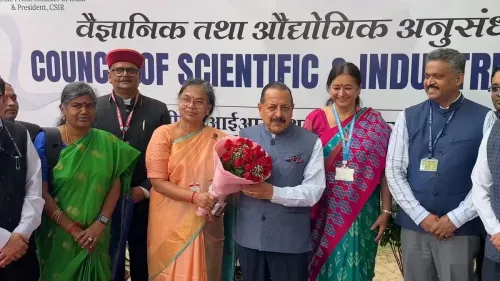
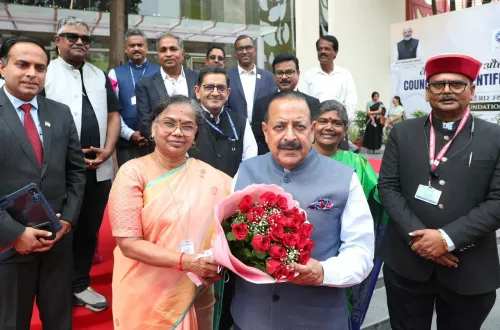
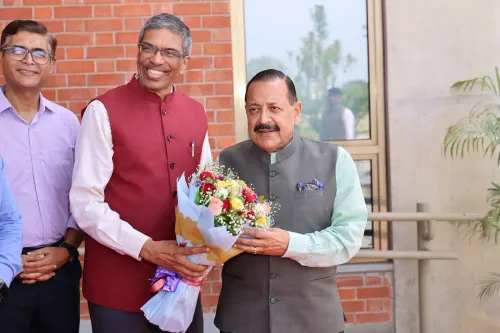
Union Science Minister Dr. Jitendra Singh visited the Indian Association for the Cultivation of Science in Kolkata on May 26, 2026, as the institute celebrates 150 years. IACS, Asia's oldest academic science research body, is where Sir C.V. Raman's Nobel Prize-winning work on the Raman Effect was conducted.
Key Takeaways
Jitendra Singh , Union Minister for Science and Technology, visited IACS in Kolkata on May 26, 2026 .
IACS is Asia's oldest academic science research and teaching institute, founded in 1876 and currently celebrating its 150th anniversary .
The institute is the site where Sir C.V.
Raman discovered the Raman Effect , which won India its first Nobel Prize in Science in 1930 .
Key figures in IACS's history include Sir C.V.
Syama Prasad Mookerjee , and former West Bengal Chief Minister Dr.
Bidhan Chandra Roy .
The visit signals continued Union Ministry engagement with legacy scientific institutions as India marks milestones in its science and technology heritage.
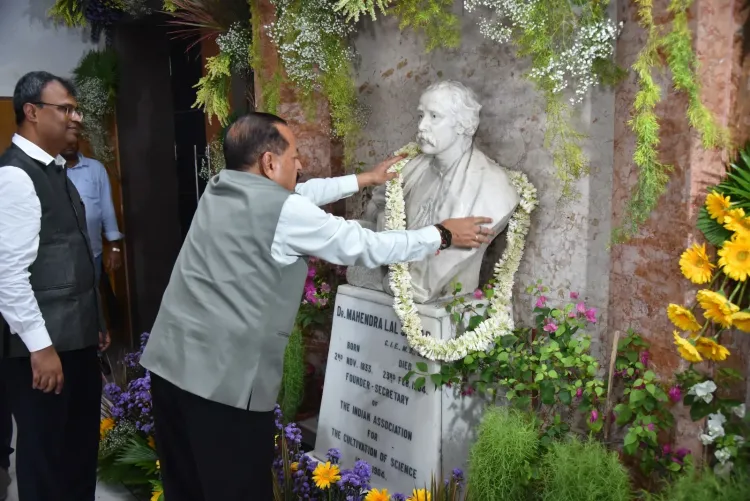
Union Science and Technology Minister Dr. Jitendra Singh visited the Indian Association for the Cultivation of Science (IACS) in Kolkata on Tuesday, May 26, 2026, calling it 'a brush with history' at Asia's oldest academic science research and teaching institute, which is currently marking 150 years of its existence.
Context
The Indian Association for the Cultivation of Science was established in 1876 in Kolkata, making it the first dedicated centre for experimental science research in India. The institute's sesquicentennial milestone places it among a rare group of institutions that have spanned three centuries of Indian history — from the colonial era through independence and into the present day.
Dr. Singh described the visit as an encounter with the very foundations of Indian science, noting that the institute has been 'part of India's growth journey across three centuries.'
Policy Backdrop
IACS holds a singular place in India's scientific heritage as the site where Sir C.V. Raman conducted the research that led to the discovery of the Raman Effect, earning India its first Nobel Prize in Science in 1930. The institute's early development was shaped by distinguished figures including Dr. Meghnad Saha, the astrophysicist renowned for his theory of thermal ionisation, and Dr. Syama Prasad Mookerjee, the scholar and administrator who strengthened its institutional foundations.
Post-independence, the institute received crucial state patronage from Dr. Bidhan Chandra Roy, the former Chief Minister of West Bengal, whose support helped consolidate IACS as a premier research body in independent India. Successive central and state governments have continued to support legacy institutions such as IACS alongside newer bodies like CSIR laboratories and the IITs, reflecting a consistent policy emphasis on preserving and leveraging pre-independence scientific achievements within contemporary science and technology frameworks.
Stakeholders and Impact
For India's scientific research community, IACS remains both a living institution and a symbol of the country's long tradition of fundamental research. The institute currently supports advanced research across disciplines including physical sciences, chemical sciences, and materials science, training successive generations of researchers.
The Minister's visit, coming during the institute's 150th anniversary celebrations, signals continued high-level attention to the institution from the Union Science Ministry. Researchers, faculty, and students at IACS and peer institutions across India stand to benefit from any policy or funding decisions that may follow from such ministerial engagement.
What's Next
The 150th anniversary of IACS provides a natural moment for the Union Ministry of Science and Technology to consider enhanced support for the institution, whether through dedicated research programmes, infrastructure upgrades, or commemorative policy initiatives. Observers of India's science policy will watch upcoming Union Budget allocations and Ministry announcements for any fresh commitments to IACS or to legacy research institutes more broadly.
As India positions itself as a global science and innovation hub, institutions like IACS — which anchored the country's earliest Nobel-level research — are likely to feature prominently in the government's narrative of scientific continuity and ambition.
Point of View
Lending institutional legitimacy and national pride to S&T investments. By publicly invoking figures such as C.V. Raman, Syama Prasad Mookerjee, and Bidhan Chandra Roy, the Minister signals a cross-partisan, pan-Indian framing of scientific achievement — notable given Mookerjee's association with the political right and Roy's with the Congress. The timing of the visit, with Union Budget allocations on the horizon, may also be a soft signal to the scientific community that legacy institutions are not being overlooked in favour of newer innovation bodies.
NationPress
9 Oct 2026
Frequently Asked Questions
What is the Indian Association for the Cultivation of Science (IACS)?
IACS is Asia's oldest academic science research and teaching institute, founded in Kolkata in 1876. It is best known as the institution where Sir C.V. Raman conducted the research that won India its first Nobel Prize in Science in 1930 for the discovery of the Raman Effect.
Why is IACS celebrating 150 years?
IACS was established in 1876, making 2026 its 150th anniversary. The institute has been a centre of fundamental scientific research in India for a century and a half, spanning the colonial period, independence, and the modern era.
What did Dr. Jitendra Singh say about his visit to IACS?
Dr. Singh described the visit as 'a brush with history,' noting that IACS has been 'part of India's growth journey across three centuries' and that it 'fetched India's first Nobel Prize in Science' for the Raman Effect.
Who are the famous scientists associated with IACS Kolkata?
The most prominent is Sir C.V. Raman, who discovered the Raman Effect at IACS and won the Nobel Prize in Physics in 1930. Dr. Meghnad Saha, known for his work on thermal ionisation, and Dr. Syama Prasad Mookerjee also played key roles in the institute's development.
What is the Raman Effect and why is it significant for India?
The Raman Effect is the phenomenon of inelastic scattering of light by molecules, discovered by Sir C.V. Raman at IACS in Kolkata. The discovery earned Raman the Nobel Prize in Physics in 1930 — India's first Nobel Prize in any science field.