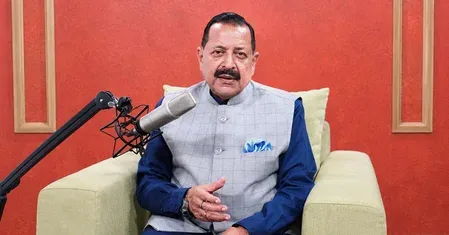
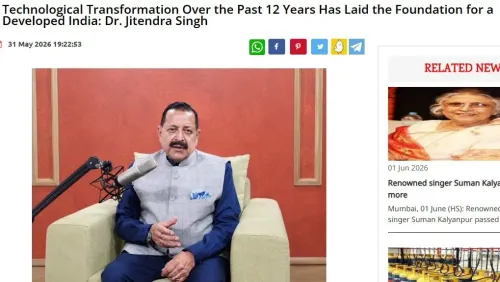
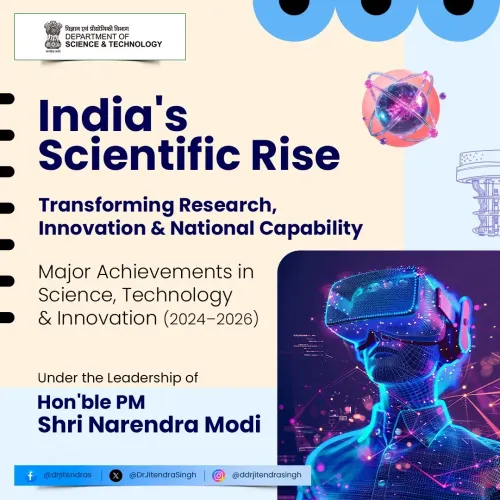
Dr. Jitendra Singh Marks 12 Years of Science Under Modi Govt
Synopsis
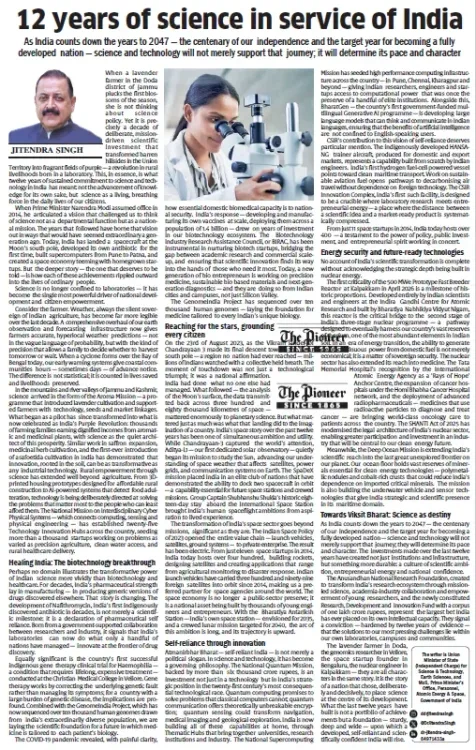
Union Science Minister Dr. Jitendra Singh marked June 9, 2026 — the second anniversary of Modi 3.0 and twelve continuous years of Modi governments — by publishing a retrospective article titled '12 Years of Science in Service of India', highlighting the ministry's policy record from Atal Innovation Mission to STIP 2020.
Key Takeaways
June 9, 2026 marks both the second anniversary of the Modi 3.0 government and twelve uninterrupted years of Modi-led governments since 2014.
Jitendra Singh has held the Science and Technology portfolio continuously since 2014 , making him one of the longest-serving ministers in this role.
The article, titled '12 Years of Science in Service of India', was published in The Pioneer and pinned on Dr.
Singh's official X account under #12YearsofSeva .
Key initiatives cited in the policy backdrop include the Atal Innovation Mission (2016) , STIP 2020 , and the National Education Policy 2020 .
The ministry's messaging consistently frames science spending as direct service to citizens, aligned with the broader Atmanirbhar Bharat narrative.
Upcoming 2026-27 science budget discussions and potential announcements from ISRO and DBT will be the next major policy markers to watch.
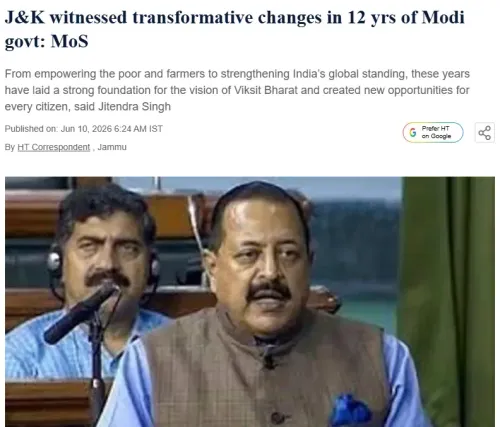
Union Science and Technology Minister Dr. Jitendra Singh published an article in The Pioneer newspaper on Tuesday, June 9, 2026, titled '12 Years of Science in Service of India', timed to coincide with the completion of two years of the Modi 3.0 government and twelve uninterrupted years of Prime Minister Narendra Modi's governments since 2014.
Context
June 9, 2026 marks a dual milestone: the second anniversary of the Modi 3.0 cabinet sworn in after the 2024 general elections, and the cumulative completion of twelve consecutive years of Modi-led governments at the Centre. Dr. Singh, who has held the Science and Technology portfolio continuously since 2014, used the occasion to author a retrospective piece under the hashtag #12YearsofSeva.
The article, pinned to Dr. Singh's official X profile, frames the ministry's work over this period as 'science in service of India' — a formulation that links departmental outputs directly to citizen welfare, a consistent communication posture of the ministry since its inception under the current dispensation.
Policy Backdrop
The Ministry of Science and Technology has overseen several landmark initiatives over the twelve-year span. The Atal Innovation Mission, launched in 2016, seeded incubators and Atal Tinkering Labs across schools to build a grassroots innovation pipeline. The Science, Technology and Innovation Policy (STIP) 2020 replaced the earlier 2013 policy and embedded science and technology goals within broader national development priorities.
The National Education Policy 2020 further deepened this agenda by integrating research and innovation from school level upward. These initiatives have collectively been positioned under the Atmanirbhar Bharat umbrella, which seeks to build indigenous capability across space, biotechnology, and digital infrastructure.
Stakeholders and Impact
The primary stakeholders of the ministry's twelve-year record include scientific researchers, national research institutions, CSIR laboratories, the biotechnology sector, and the broader start-up ecosystem that has grown partly on the back of government-backed incubation infrastructure. Dr. Singh's article is aimed at both this specialist audience and a wider public readership.
The framing of science expenditure as service delivery — rather than purely academic or institutional investment — reflects an effort to make the ministry's work legible to a general electorate. Anniversary communications of this nature typically serve to consolidate the government's narrative around governance milestones.
What's Next
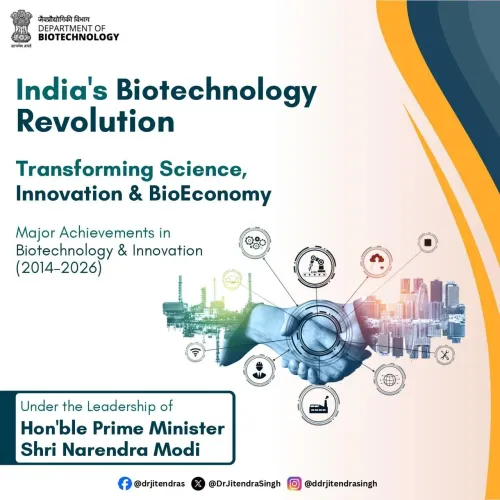
Parliamentary deliberations on the 2026-27 science and technology budget are expected to be a key near-term moment, with potential new mission announcements from bodies such as ISRO and the Department of Biotechnology (DBT) anticipated before the winter session. Dr. Singh's retrospective article is likely to set the rhetorical baseline against which new commitments will be measured in the months ahead.
As the Modi government enters the second half of its third term, the science ministry's ability to demonstrate tangible outcomes — in areas such as deep-tech start-ups, space commercialisation, and bioeconomy growth — will shape both its policy credibility and its political messaging ahead of future electoral cycles.
Point of View
Rather than academic investment, reflects a deliberate effort to broaden the ministry's political constituency beyond specialist audiences. This pattern, repeated across successive Modi government anniversaries, suggests the science ministry is being positioned as a visible deliverable of the 'Viksit Bharat' development arc. The real test will come when specific outcome metrics — start-up survival rates, R&D-to-GDP ratios, and patent commercialisation — face independent legislative examination.
NationPress
23 Oct 2026
Frequently Asked Questions
What is Dr. Jitendra Singh's article '12 Years of Science in Service of India' about?
The article, published in The Pioneer on June 9, 2026, reviews the science and technology ministry's work over twelve continuous years of Modi-led governments, covering initiatives such as the Atal Innovation Mission, STIP 2020, and broader Atmanirbhar Bharat goals in science.
Why was the article published on June 9, 2026?
June 9, 2026 marks the second anniversary of the Modi 3.0 government sworn in after the 2024 general elections, and simultaneously the cumulative completion of twelve uninterrupted years of Narendra Modi as Prime Minister since May 2014.
How long has Dr. Jitendra Singh been Science and Technology Minister?
Dr. Jitendra Singh has held the Science and Technology portfolio continuously since 2014, serving across all three terms of the Modi government, making him one of the longest-serving ministers in that role.
What is the Atal Innovation Mission mentioned in the science ministry's record?
The Atal Innovation Mission was launched in 2016 under the NITI Aayog to establish incubators and Atal Tinkering Labs in schools, aimed at fostering grassroots scientific entrepreneurship and innovation across India.
What comes next for India's science policy after this anniversary?
Parliamentary discussions on the 2026-27 science and technology budget are the immediate next milestone, with potential new mission announcements from ISRO and the Department of Biotechnology expected before the winter session of Parliament.