Dr. Jitendra Singh: India moved from tech follower to leader under Modi
Synopsis
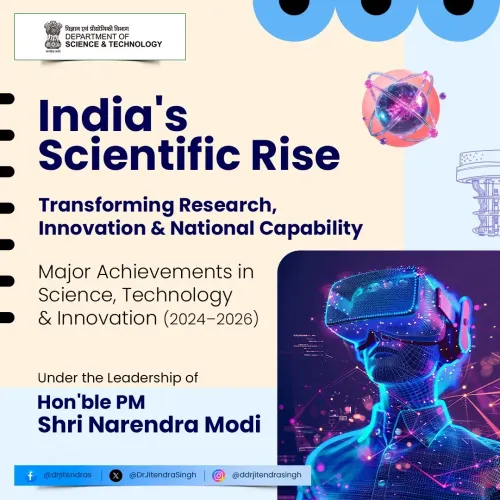
Science and Technology Minister Dr. Jitendra Singh on June 1, 2026 amplified a report claiming India has shifted from a technology follower to a leader under PM Modi, marking twelve years of the Modi government and citing Digital India, Startup India and ISRO milestones as evidence.
Key Takeaways
Jitendra Singh on June 1, 2026 shared a report framing India as a technology leader under PM Modi , marking #12YearsOfModiGovernment .
The Digital India programme (2015), Startup India initiative (2016) and Atmanirbhar Bharat campaign (2020) are the principal policy pillars cited in this narrative.
ISRO 's achievements, including the Chandrayaan missions and the Mars Orbiter Mission , are part of the government's evidence for India's frontier technology credentials.
The post targets a vernacular audience through a Hindi-language report, broadening the reach of the technology-leadership message beyond English-speaking constituencies.
Upcoming Union Budget allocations for science and technology, and new missions in semiconductors , quantum computing and AI , will be the next indicators of how this narrative translates into policy commitment.
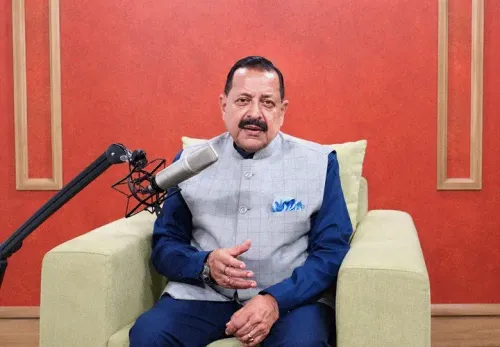
Union Minister of State (Independent Charge) for Science and Technology Dr. Jitendra Singh on Monday, June 1, 2026, shared a report asserting that India has transformed from a technology follower to a technology leader under the leadership of Prime Minister Narendra Modi, marking the occasion of #12YearsOfModiGovernment.
Context
Dr. Singh shared a Hindi-language report whose headline translates as: 'Pradhanmantri Modi ke netritva mein Bharat technology ke kshetra mein follower se leader bana' — 'Under Prime Minister Modi's leadership, India has moved from a follower to a leader in technology.' The post was part of a broader wave of government communication marking twelve years of the Modi administration, which took office in May 2014.
The minister's amplification of this framing signals the government's intent to highlight technology transformation as a central achievement of the past decade-plus in office.
Policy Backdrop
The claim of a shift from follower to leader rests on a series of flagship programmes initiated since 2014. The Digital India programme, launched in July 2015, aimed to expand digital infrastructure, e-governance and citizen services across the country. The Startup India initiative, announced in January 2016, created a regulatory framework, tax incentives and an ecosystem designed to nurture technology entrepreneurship.
The Atmanirbhar Bharat campaign, launched in May 2020, extended this logic to domestic manufacturing and indigenous technology development, explicitly targeting a reduction in import dependence. ISRO's successive achievements — including the Chandrayaan missions and the Mars Orbiter Mission — have been cited by the government as evidence of India's growing capability in frontier science and space technology.
Successive administrations have incrementally raised public R&D spending and created dedicated missions spanning space, digital services and emerging technologies. The current government has framed these as a coherent arc from IT services and technology importation towards indigenous design, patents and high-value manufacturing.
Stakeholders and Impact
The constituencies most directly addressed by this framing include India's technology startup community, the broader IT and electronics industry, and the scientific and research community. For startups, the narrative of leadership carries implications for investor sentiment and international positioning. For the scientific community, it reflects continued political support for missions in areas such as semiconductors, quantum computing and artificial intelligence.
Regulatory changes aimed at easing technology adoption and fostering international partnerships have accompanied these programmes, affecting both domestic firms and multinational technology companies operating in India.
What's Next
Attention will now turn to the allocation for science and technology in the next Union Budget, as well as any new national missions on semiconductors, quantum computing or artificial intelligence that the government may announce in Parliament. The twelve-year milestone provides a political moment for the government to consolidate its technology narrative ahead of future electoral cycles, and Dr. Singh's post is likely one of several such communications in this campaign window.
Point of View
Deploying the 'follower to leader' framing to consolidate the administration's technology narrative. The choice of a Hindi-language report signals an outreach to a vernacular audience that may be less familiar with policy specifics but is receptive to the pride-and-progress message. This fits a broader pattern in which science and technology achievements — from ISRO missions to the startup boom — are increasingly marshalled as electoral and reputational assets. The real test of the 'leader' claim will come in upcoming budget allocations and the pace of India's semiconductor and AI missions.
NationPress
15 Oct 2026
Frequently Asked Questions
What did Dr. Jitendra Singh say about India and technology on June 1, 2026?
Dr. Jitendra Singh shared a report asserting that India has moved from being a technology follower to a technology leader under Prime Minister Modi's leadership, marking twelve years of the Modi government.
What is the 12 Years of Modi Government campaign about?
The #12YearsOfModiGovernment campaign marks the completion of twelve years of the Narendra Modi-led administration since May 2014, with ministers and the ruling party highlighting key policy achievements across sectors including technology, infrastructure and governance.
Which government schemes are cited as proof of India's technology progress?
Key schemes include Digital India (launched July 2015), Startup India (announced January 2016) and the Atmanirbhar Bharat campaign (launched May 2020), alongside ISRO's space missions such as Chandrayaan and the Mars Orbiter Mission.
What is Dr. Jitendra Singh's role in the Indian government?
Dr. Jitendra Singh serves as Union Minister of State (Independent Charge) for Science and Technology and Earth Sciences, and also holds a Minister of State position in the Prime Minister's Office and the Ministry of Personnel.
What should we watch next regarding India's technology policy?
Key developments to watch include the science and technology allocation in the next Union Budget and any new national missions on semiconductors, quantum computing or artificial intelligence announced in Parliament.