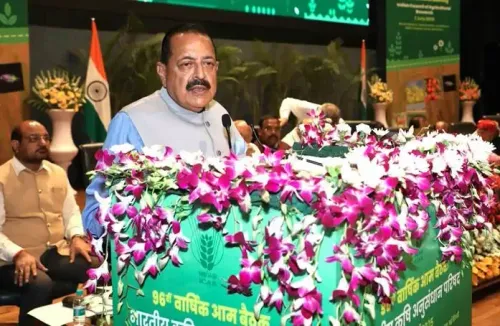
Dr. Jitendra Singh: India shifting to collaborative innovation model

Synopsis
Science and Technology Minister Dr. Jitendra Singh has declared that India is witnessing a structural shift from a government-centric innovation model to a collaborative ecosystem involving startups, academia and private industry — a change he attributes to PM Narendra Modi's tenure since 2014.
Key Takeaways
Jitendra Singh stated that technology and innovation cannot reach their potential 'locked inside government confines.' He credited PM Narendra Modi, in office since 2014 , with initiating India's first structural shift away from a government-centric innovation model.
The new model involves academia, industry, startups and private enterprises as collaborative partners in innovation.
The Startup India initiative (launched January 2016 ) and the Atal Innovation Mission are key policy anchors of this shift.
Sectors including space, defence and biotechnology have progressively opened to private participation since 2014.
Analysts will watch for new public-private partnership guidelines for national laboratories and R&D allocations in the next Union Budget.
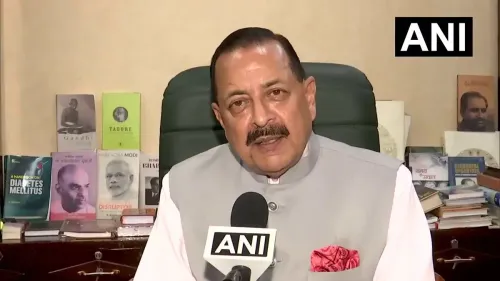
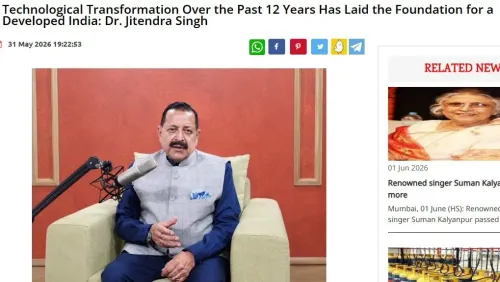
Union Science and Technology Minister Dr. Jitendra Singh on Friday, 26 June 2026, declared that India is undergoing a structural transformation in its innovation model — moving away from government-centric research toward a collaborative ecosystem that includes academia, industry, startups and private enterprises. He made the remarks at a #FiresideChat, sharing his views on X.
Context
Dr. Jitendra Singh stated that 'technology and innovation cannot realise their full potential as long as kept locked inside government confines.' He credited Prime Minister Narendra Modi, who took office in 2014, with initiating this shift for the first time in India's post-independence governance history. The minister described the change as structural — not merely incremental — signalling a deliberate policy departure from the older public-sector-led R&D model.
The remarks were made in the context of a Fireside Chat, the exact venue and event details of which have not been independently confirmed. The post, however, reflects a broader communication posture the ministry has maintained around opening up India's science and technology ecosystem to non-government actors.
Policy Backdrop
The shift Dr. Jitendra Singh described has concrete policy roots. The Startup India initiative, launched in January 2016, was among the first flagship moves to extend entrepreneurship support beyond government departments — offering tax incentives, simplified compliance and improved funding access to private innovators. Around the same time, the Atal Innovation Mission was established under NITI Aayog to seed incubators and tinkering labs in partnership with academic institutions and private players.
Since 2014, successive policy decisions have progressively opened sectors such as space, defence and biotechnology to private participation. The emphasis has shifted toward increasing gross expenditure on R&D through industry linkages and startup ecosystems, rather than relying solely on government-funded laboratories and public-sector undertakings.
Stakeholders and Impact
The principal beneficiaries of this reorientation are startups, academic research institutions and private R&D firms that were historically excluded from or marginalised within India's state-dominated innovation architecture. For startups in particular, the policy shift has meant access to national laboratory infrastructure, government procurement pipelines and co-funding mechanisms that were previously unavailable to them.
Academic institutions stand to gain through deeper industry partnerships and research commercialisation pathways. Private enterprises, especially in deep-tech sectors, benefit from a regulatory environment that is progressively more accommodating of non-government research and intellectual property creation.
What's Next
Observers will watch for the rollout of new public-private partnership guidelines for national laboratories, which could formalise the collaborative model Dr. Jitendra Singh described. Any dedicated R&D allocation in the next Union Budget that channels funds through industry or startup conduits — rather than exclusively through government agencies — would be a concrete indicator of how deeply this structural shift is being institutionalised. The minister's remarks set a clear political benchmark against which future policy announcements in science and technology will be measured.
Point of View
The minister is doing double duty — defending a policy record and setting a political contrast ahead of future electoral cycles. The structural shift he describes is real and documented in Startup India and the Atal Innovation Mission, but the pace of private R&D as a share of GDP remains a metric critics use to test whether the rhetoric has translated into measurable outcomes. The statement raises the stakes for the next Union Budget's R&D allocation, making it a litmus test for the collaborative model's depth.
NationPress
25 Sept 2026
Frequently Asked Questions
What did Dr. Jitendra Singh say about India's innovation model?
Dr. Jitendra Singh said India is witnessing a structural shift from a government-centric innovation model to a collaborative ecosystem involving academia, industry, startups and private enterprises — a change he attributed to PM Narendra Modi's leadership since 2014.
What is the Startup India initiative?
Startup India is a flagship government scheme launched in January 2016 that offers tax incentives, simplified compliance and improved funding access to encourage private entrepreneurship and innovation beyond government departments.
What is the Atal Innovation Mission?
The Atal Innovation Mission, established in 2016 under NITI Aayog, creates incubators and tinkering labs in partnership with academic institutions and private players to foster grassroots and institutional innovation across India.
Which sectors has India opened to private participation in R&D since 2014?
Since 2014, India has progressively opened sectors including space, defence and biotechnology to private participation, moving away from exclusively public-sector R&D models.
What should we watch for next in India's science and technology policy?
Key things to watch include new public-private partnership guidelines for national laboratories and any dedicated R&D allocation in the next Union Budget that channels funds through startups or industry rather than solely through government agencies.