Shekhawat Hails 7 Cabinet Decisions on Semicon, Urea, Infra
Synopsis
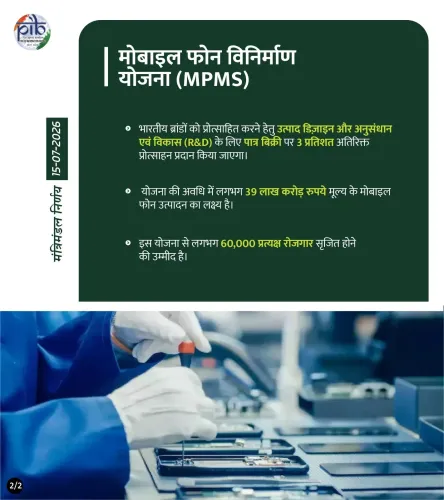
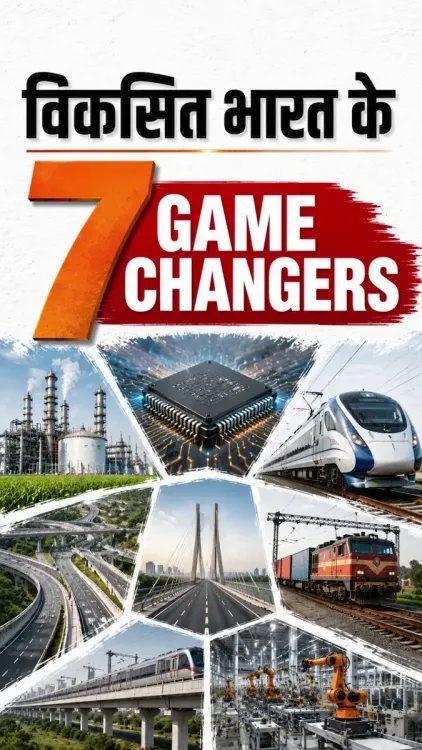
Union Minister Gajendra Singh Shekhawat on 17 July 2026 flagged seven major cabinet decisions — covering semiconductor manufacturing, mobile production incentives, nine new urea plants and mega infrastructure — as pivotal steps toward the government's Viksit Bharat 2047 vision.
Key Takeaways
Union Minister Gajendra Singh Shekhawat on 17 July 2026 highlighted seven major decisions from a single cabinet meeting spanning semiconductors, mobile production, fertilizers and infrastructure.
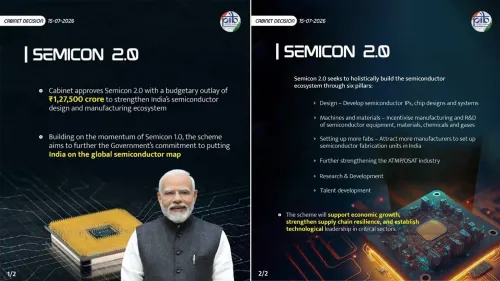
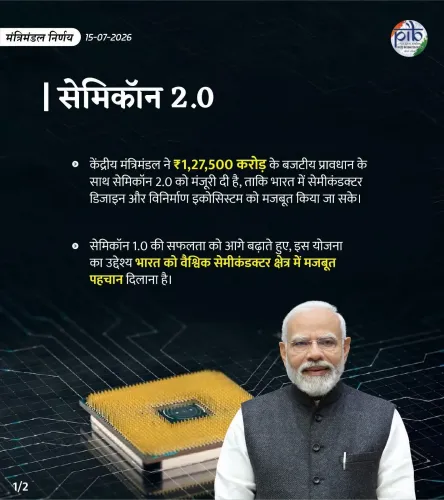
The decisions reference a Semicon 2.0 Mission , building on the India Semiconductor Mission approved in 2021 with an outlay of over Rs 76,000 crore .
Nine new urea plants are cited as part of the government's ongoing fertilizer self-sufficiency drive, which began in phases from 2015 .
The announcements are framed within the Viksit Bharat vision targeting a developed India by 2047 .
Key stakeholders include electronics manufacturers, fertilizer companies and infrastructure developers across multiple states.
Detailed cabinet notifications and implementation timelines are awaited to assess the full scope and financial outlays of the seven decisions.
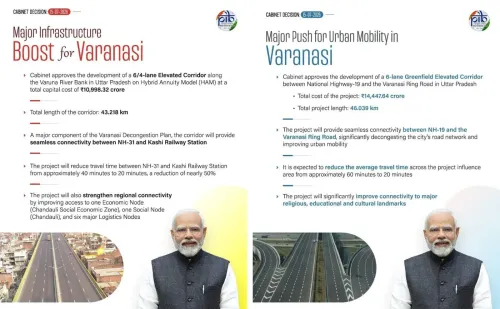
Union Culture and Tourism Minister Gajendra Singh Shekhawat on Friday, 17 July 2026, highlighted a set of seven major policy decisions taken in a single cabinet meeting, calling them a catalyst for India's long-term development goals. The decisions span sectors from semiconductor manufacturing and mobile production to fertilizer self-sufficiency and mega infrastructure projects, and are framed by the minister as building blocks for the Viksit Bharat vision of a developed India by 2047.
Context
Shekhawat posted on X in Hindi, stating: 'Semicon 2.0 Mission se lekar mobile utpadan scheme tak, 9 naye urea plants se lekar mega infrastructure projects tak...' — translated as: 'From the Semicon 2.0 Mission to the mobile production scheme, from nine new urea plants to mega infrastructure projects — one meeting, seven big decisions that will give new momentum, new strength and new speed to the vision of Viksit Bharat.' The post was accompanied by a video, suggesting an official government communication or cabinet briefing clip.
The minister's post reflects a pattern of senior BJP leaders amplifying cabinet-level announcements on social media to underscore the government's economic agenda ahead of key policy cycles.
Policy Backdrop
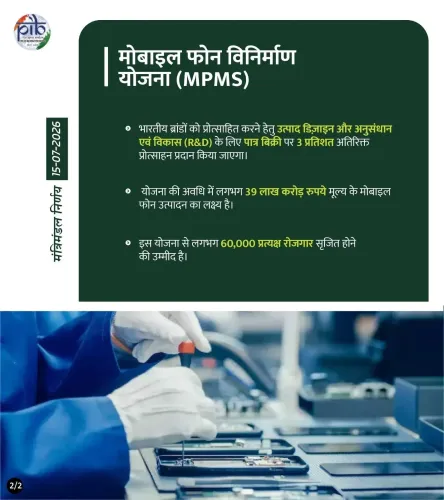
Several of the sectors referenced have deep policy lineage. The Production Linked Incentive (PLI) scheme for mobile and electronics manufacturing was launched in 2020 to attract domestic and global manufacturers, offering financial incentives tied to incremental production. The India Semiconductor Mission, approved in 2021 with an outlay exceeding Rs 76,000 crore, has been the government's flagship effort to build a domestic chip fabrication and design ecosystem.
On the fertilizer front, the government has sanctioned new and revived urea plants in phases since 2015 as part of broader fertilizer self-sufficiency measures under the Atmanirbhar Bharat framework. These efforts aim to reduce India's significant dependence on imported urea, which has historically strained the subsidy budget. Mega infrastructure projects — spanning highways, railways, ports and urban development — have similarly been a defining feature of the government's capital expenditure push over the past decade.
The Viksit Bharat vision, publicly emphasised from 2022 onward in official government addresses, targets transforming India into a fully developed economy by the centenary of independence in 2047. The seven decisions cited by Shekhawat appear to be positioned as concrete steps toward that overarching goal.
Stakeholders and Impact
The decisions, as described, cut across multiple industry stakeholders. Electronics manufacturers and global semiconductor companies with India operations stand to benefit from any expansion or upgrade of the semiconductor and mobile production incentive architecture. The fertilizer industry and farming community — particularly in states like Rajasthan, Uttar Pradesh and Punjab — would be directly affected by new urea plant capacity, which could lower input costs and improve supply reliability for the kharif and rabi crop cycles.
Infrastructure developers, construction firms and logistics companies are the third major stakeholder group, with mega project announcements typically triggering procurement, employment and supply-chain activity across multiple states. The breadth of sectors touched in a single meeting signals a coordinated push rather than isolated policy moves.
What's Next
Detailed cabinet notifications and implementation guidelines for the seven decisions are expected to follow, including any revised financial outlays, project timelines and inter-ministerial coordination frameworks. Analysts and industry bodies will closely watch the specifics of the semiconductor mission's next phase and whether the new urea plant announcements come with firm commissioning deadlines. The pace at which these decisions translate into ground-level activity will be a key metric for the government's economic management ahead of the next round of state assembly elections.
Point of View
Framing routine policy approvals within the emotive Viksit Bharat arc. The breadth of sectors cited — semiconductors, fertilizers, infrastructure — signals the government's intent to project a comprehensive industrial policy identity rather than piecemeal announcements. This fits a broader pattern where cabinet decisions are communicated not just through official channels but through ministers' personal platforms to reach vernacular-language audiences. The real test will be implementation speed, particularly in the semiconductor and urea sectors where past announcements have faced commissioning delays.
NationPress
17 Jul 2026
Frequently Asked Questions
What is the Semicon 2.0 Mission India?
The Semicon 2.0 Mission, as referenced by Minister Shekhawat, appears to be the next phase of India's semiconductor push building on the India Semiconductor Mission approved in 2021 with an outlay of over Rs 76,000 crore. Specific details of the 2.0 phase are expected to be released through official cabinet notifications.
What are the seven cabinet decisions announced in July 2026?
Minister Shekhawat referenced seven major decisions from a single cabinet meeting covering areas including semiconductor manufacturing, mobile production incentives, nine new urea plants and mega infrastructure projects. Full details are pending official government notification.
What is Viksit Bharat and how does it relate to these decisions?
Viksit Bharat is the government's national vision to transform India into a fully developed economy by 2047, the centenary of independence. The seven cabinet decisions highlighted by Shekhawat are being positioned as concrete steps toward achieving that long-term goal.
How many new urea plants is India planning?
Minister Shekhawat's post references nine new urea plants as part of the latest cabinet decisions. India has been sanctioning new and revived urea plants in phases since 2015 to reduce dependence on imported fertilizer.
What is the PLI scheme for mobile manufacturing in India?
The Production Linked Incentive scheme for mobile and electronics manufacturing was launched in 2020, offering financial incentives to domestic and global manufacturers tied to incremental production targets. It is one of the sectors cited in the latest cabinet decisions amplified by Minister Shekhawat.