Goyal Flags Five Cabinet Decisions Worth Over ₹1.9 Lakh Crore
Synopsis
The Union Cabinet on 15 July 2026 approved five major decisions including the ₹1.27 lakh crore Semicon 2.0 programme, a ₹62,500 crore mobile manufacturing scheme, ₹25,400 crore Varanasi elevated corridors, a new urea investment policy, and ₹3,907 crore rail projects in Odisha and Jharkhand.
Key Takeaways
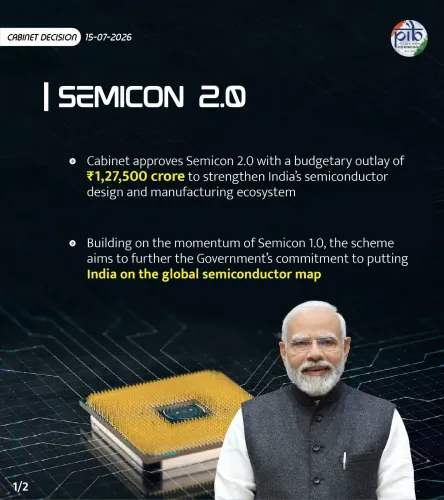
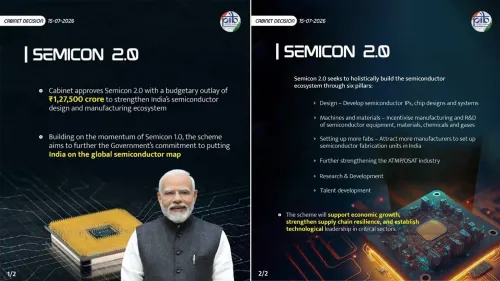
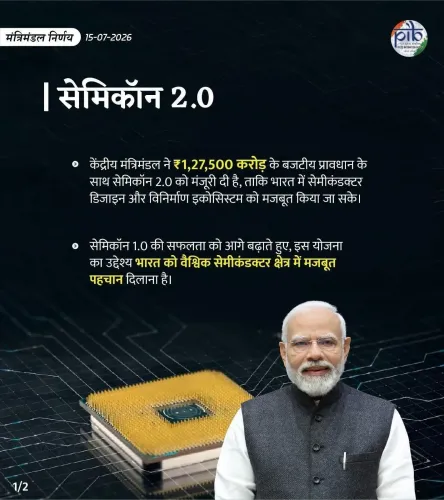
Semicon 2.0 approved with an outlay of ₹1.27 lakh crore to accelerate India's semiconductor design and manufacturing ecosystem.
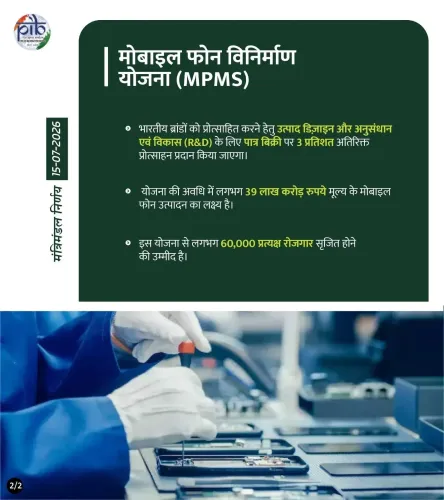
The Mobile Phone Manufacturing Scheme (MPMS) worth ₹62,500 crore covers FY 2026-27 to FY 2030-31 to boost electronics exports and employment.
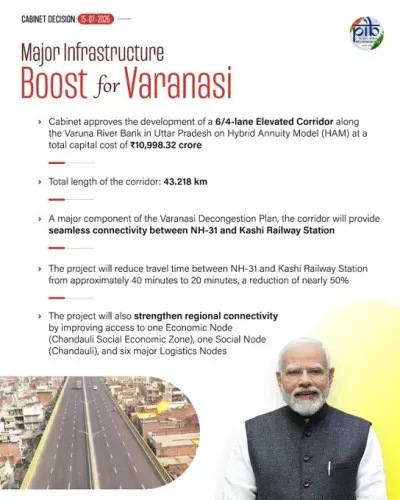
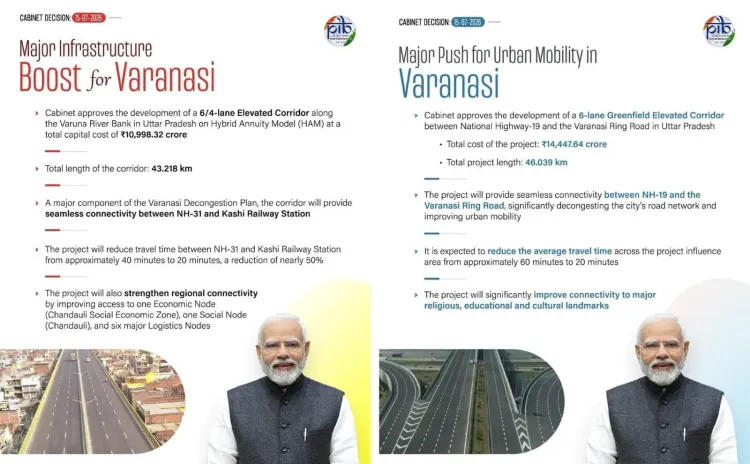
Two elevated corridor projects worth over ₹25,400 crore approved for Varanasi to improve urban mobility and decongest the city.
The National Investment Policy for Urea-2026 aims to attract investment in gas-based urea plants and reduce fertiliser import dependence.
Two rail multitracking projects worth ₹3,907 crore spanning 145 km cleared for Odisha and Jharkhand to boost freight capacity.
Total combined outlay across all five decisions exceeds ₹1.9 lakh crore , underscoring the scale of the single-day Cabinet push.
Union Commerce and Industry Minister Piyush Goyal on Wednesday, 15 July 2026 outlined five major decisions approved by the Union Cabinet under Prime Minister Narendra Modi, covering semiconductor manufacturing, mobile phone production, rail and road infrastructure, and fertiliser self-reliance — with a combined outlay exceeding ₹1.9 lakh crore.
Context
Goyal described the approvals as 'transformative decisions to strengthen India's journey towards Viksit Bharat' — the government's overarching vision for a developed India by 2047. The announcements span five distinct sectors, signalling a broad-based push to simultaneously upgrade physical infrastructure and deepen domestic industrial capacity.
The decisions were shared by the minister with supporting government press releases, making it one of the more detailed single-day Cabinet communication exercises in recent months.
Policy Backdrop
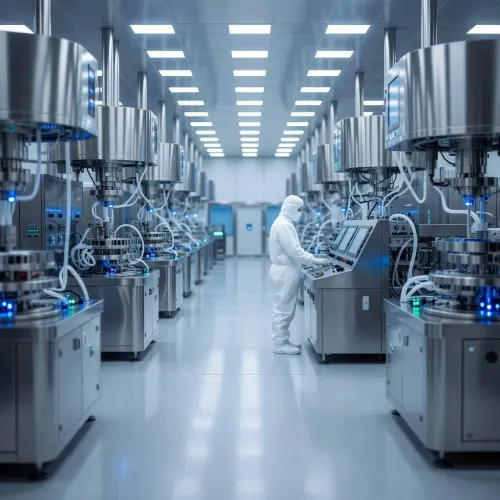
Semicon 2.0, with a total outlay of ₹1.27 lakh crore, is the most significant of the five announcements by financial scale. It builds on the India Semiconductor Mission launched in 2021, which sought to establish domestic chip design and fabrication capacity. The new programme is aimed at accelerating India's semiconductor design and manufacturing ecosystem, strengthening supply chains, and reinforcing the country's position as a 'trusted global technology hub.'
The Mobile Phone Manufacturing Scheme (MPMS), valued at ₹62,500 crore for the period FY 2026-27 to FY 2030-31, extends the logic of the Production Linked Incentive scheme for mobile phones introduced in 2020. It targets domestic manufacturing, value addition, exports, and employment in the electronics sector.
The National Investment Policy for Urea-2026 is designed to encourage investment in gas-based urea manufacturing and enhance domestic production capacity, advancing India's fertiliser self-reliance goals under the Aatmanirbhar Bharat framework — the self-reliance campaign launched in 2020. It succeeds the New Urea Policy of 2015, which focused on rationalising subsidies and promoting efficient plant operations.
Infrastructure Decisions
Two elevated corridor projects worth over ₹25,400 crore were approved for Varanasi, connecting key national highways with the Varanasi Ring Road. The projects are intended to decongest the city, improve urban mobility, and reduce travel time in what Goyal called 'one of India's most important cultural and economic centres.' Varanasi is also the parliamentary constituency of Prime Minister Modi.
On the rail side, two multitracking projects worth ₹3,907 crore spanning 145 km across Odisha and Jharkhand were cleared. The projects aim to enhance rail capacity, improve freight movement, and reduce network congestion in two eastern states with significant mining and industrial activity. The approvals align with the PM Gati Shakti National Master Plan, announced in 2021, for multimodal infrastructure coordination.
Stakeholders and What's Next
The decisions affect a wide range of stakeholders: residents of Varanasi seeking relief from chronic traffic congestion, electronics manufacturers and semiconductor firms looking for policy certainty, fertiliser producers and farmers dependent on domestic urea supply, and rail freight operators in Odisha and Jharkhand.
Attention will now turn to fund disbursement timelines for Semicon 2.0 and MPMS from FY 2026-27 onwards, land acquisition progress for the Varanasi corridors, and the pace at which new urea plant investment proposals materialise under the National Investment Policy for Urea-2026. The scale and breadth of Wednesday's approvals suggest the government is accelerating its pre-election infrastructure and manufacturing agenda ahead of the next electoral cycle.
Point of View
Agriculture, urban mobility, and logistics — into single communication events to amplify the narrative of decisive governance. The ₹1.27 lakh crore Semicon 2.0 outlay in particular marks a significant escalation from the original semiconductor mission, positioning India more aggressively in the global chip supply chain debate at a moment when geopolitical realignments are redrawing technology dependencies. The Varanasi infrastructure investment, while economically justified, also carries unmistakable political symbolism given the city's identity as the Prime Minister's constituency. Taken together, the five decisions advance the 'Make in India' and 'Aatmanirbhar Bharat' arcs simultaneously, but the true test will lie in execution timelines and private capital mobilisation — particularly for the semiconductor and urea sectors where past targets have faced delays.
NationPress
14 Oct 2026
Frequently Asked Questions
What is Semicon 2.0 and what is its budget?
Semicon 2.0 is India's updated semiconductor development programme approved by the Union Cabinet on 15 July 2026 with a total outlay of ₹1.27 lakh crore. It aims to accelerate domestic chip design and manufacturing, strengthen supply chains, and position India as a global technology hub.
What is the Mobile Phone Manufacturing Scheme (MPMS)?
The Mobile Phone Manufacturing Scheme (MPMS) is a ₹62,500 crore government scheme covering FY 2026-27 to FY 2030-31, designed to boost domestic mobile phone manufacturing, increase value addition, grow exports, and create employment in India's electronics sector.
What are the Varanasi elevated corridor projects approved by the Cabinet?
The Cabinet approved two elevated corridor projects worth over ₹25,400 crore for Varanasi that will connect key national highways with the Varanasi Ring Road. The projects aim to decongest the city, reduce travel time, and improve urban mobility.
What is the National Investment Policy for Urea-2026?
The National Investment Policy for Urea-2026 is a new framework approved by the Cabinet to encourage private and public investment in gas-based urea manufacturing plants, enhance domestic production capacity, and reduce India's dependence on imported fertilisers under the Aatmanirbhar Bharat vision.
Which states benefit from the new railway multitracking projects?
Odisha and Jharkhand benefit from two railway multitracking projects worth ₹3,907 crore spanning 145 km in total. The projects are designed to enhance rail freight capacity, reduce network congestion, and improve logistics in these mineral-rich eastern states.