Jaishankar Highlights Six Cabinet Decisions Worth ₹2.19 Lakh Crore
Synopsis
The Union Cabinet on 15 July 2026 approved six major decisions including Semicon 2.0 worth ₹1,27,500 crore, the ₹62,500 crore Mobile Phone Manufacturing Scheme, a urea self-sufficiency policy, two Varanasi elevated corridors, and 145 km of railway multitracking in Odisha and Jharkhand.
Key Takeaways
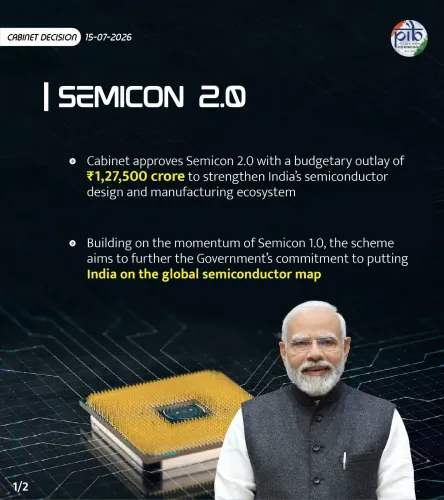
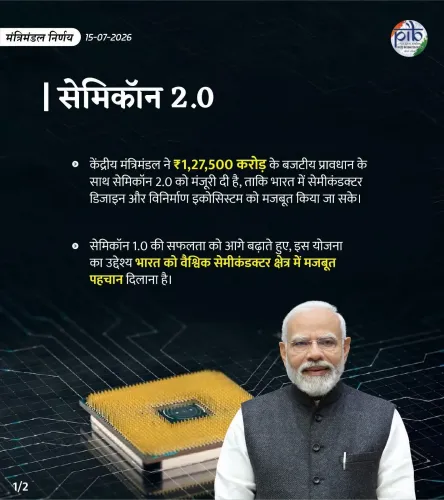
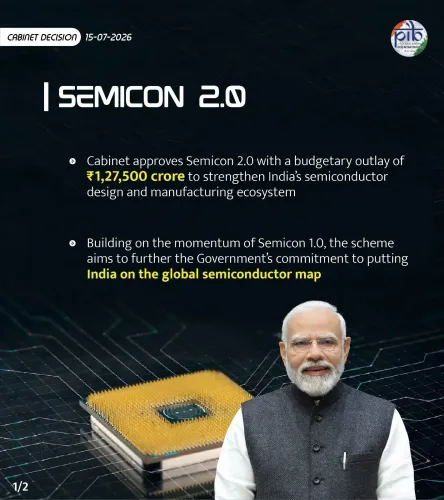
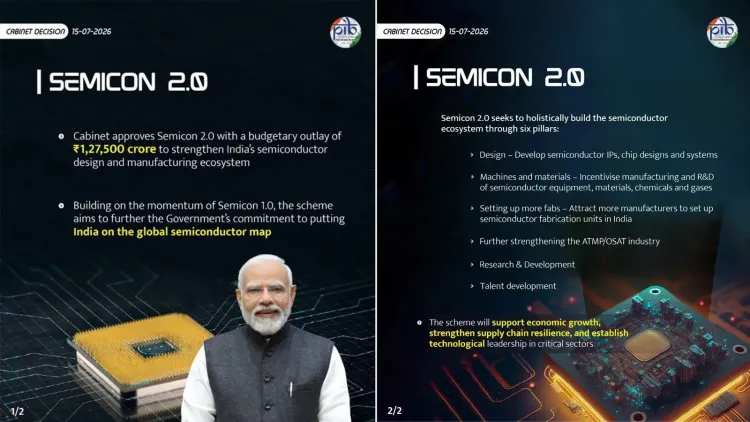
Semicon 2.0 approved with a total budget outlay of ₹1,27,500 crore to build India's semiconductor design and manufacturing ecosystem.
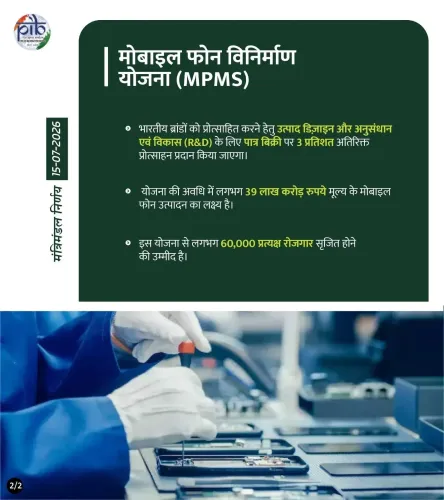
The Mobile Phone Manufacturing Scheme (MPMS) carries an outlay of ₹62,500 crore and runs from FY 2026–27 to FY 2030–31 .
NIPU-2026 aims to attract investment in gas-based urea plants to achieve fertiliser self-sufficiency under Atmanirbhar Bharat .
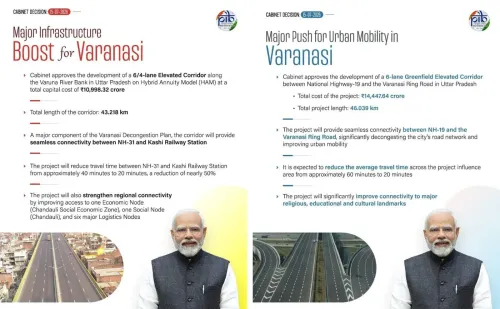
Two elevated corridors in Varanasi worth a combined ₹25,445.96 crore will decongest the city and improve urban mobility.
Railway multitracking projects worth ₹3,907 crore will add approximately 145 km of track across four districts in Odisha and Jharkhand .
Total combined outlay across all six decisions exceeds ₹2.19 lakh crore .
Union External Affairs Minister Dr. S. Jaishankar on Wednesday, 15 July 2026, highlighted six landmark decisions approved by the Union Cabinet under the leadership of Prime Minister Narendra Modi, spanning semiconductor manufacturing, mobile phone production, urea self-sufficiency, urban mobility in Varanasi, and railway expansion in eastern India — with a combined outlay exceeding ₹2.19 lakh crore.
Context
Posting on X, Dr. Jaishankar listed the six approvals under the hashtag #CabinetDecisions, calling them 'landmark decisions taken by the Union Cabinet today, under the leadership of PM @narendramodi.' The announcements span five distinct policy domains — advanced manufacturing, agriculture, urban infrastructure, and rail connectivity — reflecting the breadth of a single cabinet sitting.
The largest single outlay is Semicon 2.0, approved with a total budget of ₹1,27,500 crore, aimed at developing India's semiconductor design and manufacturing ecosystem. It follows the India Semiconductor Mission launched in 2021, which sought to attract fabrication and design investments and laid the institutional groundwork for a domestic chip industry.
Policy Backdrop
The Mobile Phone Manufacturing Scheme (MPMS), approved with a budgetary outlay of ₹62,500 crore, is set to run from FY 2026–27 to FY 2030–31. It builds on the Production Linked Incentive (PLI) framework for mobile manufacturing introduced in 2020, which helped India emerge as the world's second-largest mobile phone producer. MPMS is designed to deepen component-level manufacturing and reduce import dependence.
On the agriculture front, the Cabinet cleared the National Investment Policy for Urea-2026 (NIPU-2026) under the Atmanirbhar Bharat banner. The policy is intended to encourage fresh private investment in gas-based urea manufacturing units across the country, addressing India's structural reliance on urea imports that has persisted for decades. The Atmanirbhar Bharat initiative, announced in 2020, had specifically identified fertilisers and electronics as sectors requiring domestic capacity-building.
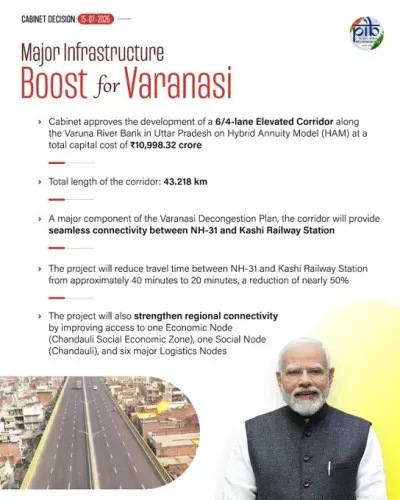
Two elevated corridor projects in Varanasi, Uttar Pradesh — the Prime Minister's parliamentary constituency — were also approved. The first is a 43.2 km, 6/4-lane elevated corridor worth ₹10,998.32 crore, connecting NH-31 and the Varanasi Ring Road along the River Varuna, primarily for city decongestion. The second is a 6-lane Greenfield Elevated Corridor worth ₹14,447.64 crore between NH-19 and the Varanasi Ring Road, to be built on the Hybrid Annuity Model to improve urban mobility.
Stakeholders and Impact
The semiconductor and mobile manufacturing decisions are expected to benefit domestic and global electronics firms looking to establish or expand India-based production. Semicon 2.0's outlay of ₹1,27,500 crore signals a significant step-up in state support for a sector considered critical to national security and economic competitiveness. Farmers and the agricultural sector stand to gain from NIPU-2026, which targets reduction in urea import bills and greater price stability for a key farm input.
Residents of Varanasi — one of India's most congested heritage cities — are direct beneficiaries of the two corridor projects totalling over ₹25,445 crore. The rail component covers two multitracking projects costing ₹3,907 crore across four districts in Odisha and Jharkhand, expanding the Indian Railways network by approximately 145 km and improving freight and passenger connectivity in the eastern region.
What's Next
Implementation of Semicon 2.0 and MPMS is expected to begin from FY 2026–27, with phased disbursements tied to investment and production milestones. Ground-level progress on the Varanasi elevated corridors and the commissioning timeline for the 145 km rail multitracking in Odisha and Jharkhand will be key markers to watch in the coming quarters. Together, the six decisions represent a continuation of India's dual-track strategy: fiscal incentives for strategic manufacturing and direct public investment in physical infrastructure.
Point of View
Simultaneously addressing upstream technology (semiconductors), mid-stream manufacturing (mobile phones), agricultural inputs (urea), urban infrastructure (Varanasi), and rail logistics (eastern India). The clustering of two large Varanasi projects in a single cabinet meeting will draw scrutiny given the city's identity as the Prime Minister's constituency, even as the projects address documented congestion challenges. Semicon 2.0's ₹1,27,500 crore outlay represents the most ambitious state commitment yet to India's chip ambitions, signalling that the government views semiconductor sovereignty as a long-cycle strategic bet rather than a short-term fiscal measure. Cumulatively, the decisions reinforce the Atmanirbhar Bharat framework as the organising logic of industrial and infrastructure policy heading into the second half of the decade.
NationPress
15 Oct 2026
Frequently Asked Questions
What is Semicon 2.0 and what is its budget?
Semicon 2.0 is India's updated semiconductor development programme approved by the Union Cabinet on 15 July 2026 , with a total budget outlay of ₹1,27,500 crore . It is designed to build domestic semiconductor design and manufacturing capacity, succeeding the India Semiconductor Mission launched in 2021.
What is the Mobile Phone Manufacturing Scheme (MPMS)?
The Mobile Phone Manufacturing Scheme (MPMS) is a production incentive programme approved by the Union Cabinet with a budgetary outlay of ₹62,500 crore , to be implemented from FY 2026–27 to FY 2030–31 . It aims to deepen mobile phone and component manufacturing in India, building on earlier PLI initiatives.
What is NIPU-2026 and how does it help farmers?
NIPU-2026 , or the National Investment Policy for Urea-2026, is a cabinet-approved policy to encourage new private investment in gas-based urea manufacturing plants in India. By boosting domestic urea production, it aims to reduce import dependence and improve fertiliser availability and price stability for Indian farmers.
What are the Varanasi elevated corridor projects approved by the Cabinet?
The Cabinet approved two elevated corridor projects in Varanasi, Uttar Pradesh : a 43.2 km, 6/4-lane corridor worth ₹10,998.32 crore connecting NH-31 and the Varanasi Ring Road along the River Varuna for city decongestion, and a 6-lane Greenfield Elevated Corridor worth ₹14,447.64 crore between NH-19 and the Varanasi Ring Road on the Hybrid Annuity Model.
Which states benefit from the new Indian Railways multitracking projects?
The Cabinet approved two railway multitracking projects worth ₹3,907 crore covering four districts across Odisha and Jharkhand . These projects will expand the Indian Railways network by approximately 145 km , improving freight and passenger connectivity in the eastern region.