Smriti Irani Hails India-UK FTA Entry Into Force
Synopsis
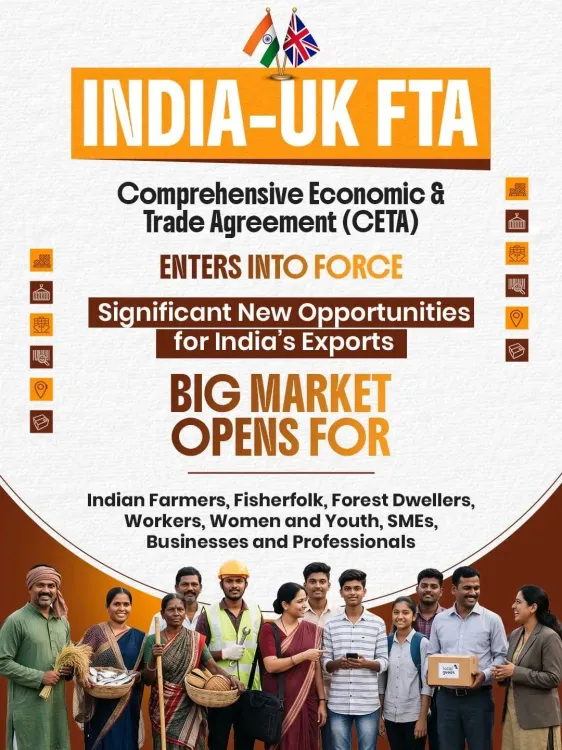
The India-UK Free Trade Agreement entered into force on 15 July 2026, with BJP leader Smriti Irani hailing it as a defining milestone. The pact grants zero-duty access for 99% of Indian exports to the UK, benefiting MSMEs, farmers, and women-led enterprises across textiles, pharma, and services.
Key Takeaways
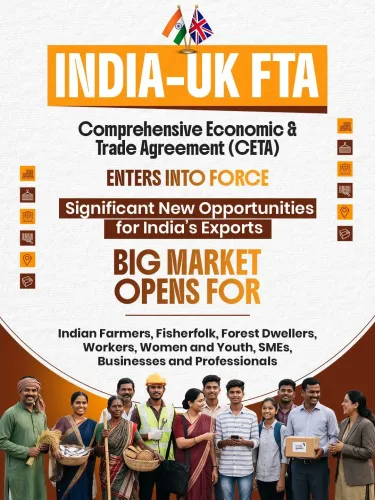
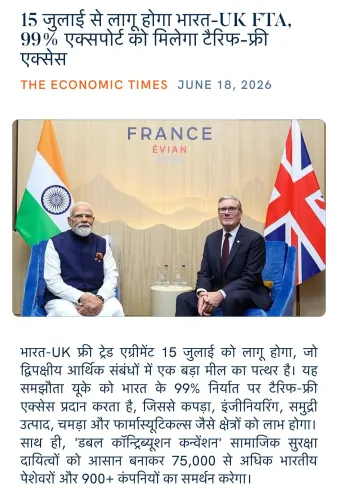
The India-UK Free Trade Agreement came into force on 15 July 2026 , marking a landmark in bilateral economic ties.
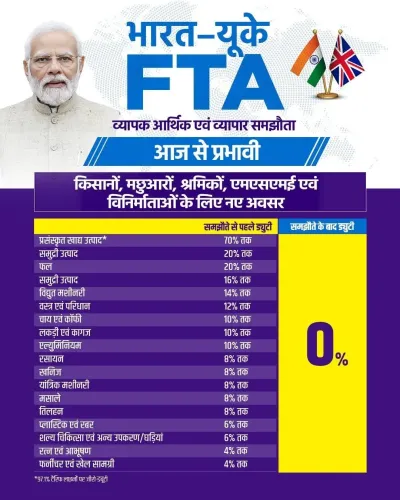
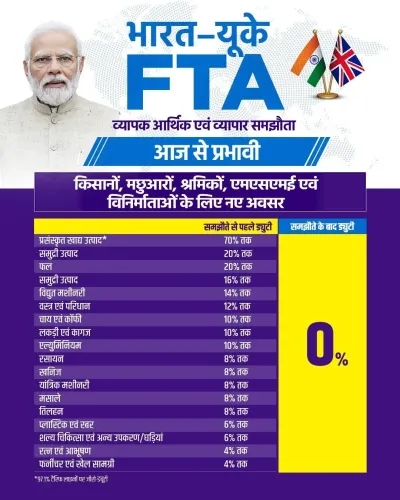
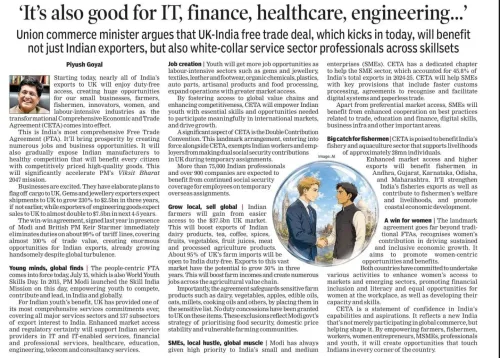
The agreement provides zero-duty market access for 99% of Indian exports to the United Kingdom.
Key beneficiary sectors include textiles, leather, engineering goods, pharmaceuticals, food processing , and services.
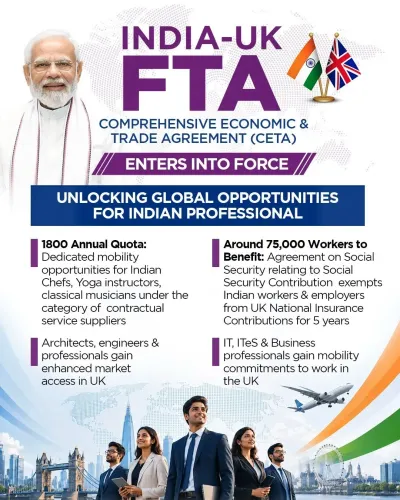
A Social Security Agreement has come into force alongside the FTA, benefiting Indian professionals working in the UK.
MSMEs, farmers, women-led enterprises , and manufacturers are identified as primary stakeholders set to gain from the deal.
The FTA follows a broader Indian trade strategy that has included agreements with the UAE and Australia in 2022 .
Senior BJP leader and former Union Minister Smriti Irani on Wednesday, 15 July 2026, welcomed the coming into force of the India-UK Free Trade Agreement (FTA), calling it a 'defining milestone' in the bilateral partnership and crediting the achievement to the leadership of Prime Minister Narendra Modi.
Context
Irani stated that the agreement secures 'zero-duty market access for 99% of Indian exports' to the United Kingdom, describing the development as unlocking 'transformative opportunities' for MSMEs, farmers, entrepreneurs, manufacturers, and women-led enterprises. The post, shared on her official X account, highlighted sectors including textiles, leather, engineering goods, pharmaceuticals, food processing, and services as key beneficiaries of expanded UK market access.
Alongside the FTA, a Social Security Agreement has also come into force simultaneously, a complementary pact aimed at strengthening the position of Indian professionals working in the UK by addressing social security contribution obligations across borders.
Policy Backdrop
The India-UK FTA has been years in the making. The two countries announced an Enhanced Trade Partnership in May 2021 to deepen bilateral economic cooperation, before formally launching FTA negotiations in January 2022. The United Kingdom's departure from the European Union in 2020 freed it to independently negotiate bilateral trade agreements, and the India deal became one of its most consequential.
India has pursued an active FTA strategy in recent years, concluding agreements with the UAE and Australia in 2022. The India-UK pact fits within this broader pattern of bilateral economic engagement that successive rounds of multilateral trade negotiations had failed to deliver. The UK is among the world's largest economies, making duty-free access to its market significant for Indian export-oriented industries.
Stakeholders and Impact
MSME exporters and women-led enterprises are among the groups Irani specifically identified as beneficiaries, sectors that have historically faced tariff barriers when accessing developed markets. Textile and leather manufacturers, concentrated in states such as Gujarat, Tamil Nadu, Uttar Pradesh, and West Bengal, stand to gain from preferential access, as do pharmaceutical companies and food processing exporters.
The accompanying Social Security Agreement addresses a long-standing concern of Indian IT and services professionals posted to the UK, who previously faced the burden of contributing to both countries' social security systems without always being able to claim full benefits. The agreement is expected to reduce costs for Indian firms deploying talent in the UK and improve competitiveness for Indian service exporters.
What's Next
Attention will now shift to implementation — specifically how quickly Indian exporters can leverage the zero-duty provisions and whether sector-specific rules of origin requirements are met smoothly. Trade volume data in the quarters following entry into force will be closely watched as a measure of the agreement's real-world impact.
Parliamentary reviews in both countries and any future expansion of the framework to cover investment provisions more comprehensively are also expected to be points of follow-up. For India, the FTA adds momentum to its broader ambition of positioning itself as a trusted and competitive global economic partner.
Point of View
And Irani's statement reflects the BJP's effort to frame the agreement as a validation of PM Modi's economic leadership on the global stage. The explicit mention of MSMEs and women-led enterprises signals an attempt to connect a macro trade win to grassroots economic narratives ahead of political cycles. The simultaneous activation of the Social Security Agreement is strategically notable — it addresses the services and professional class, a demographic with considerable political and economic weight. Taken together with earlier FTAs with the UAE and Australia, this deal reinforces India's pivot toward a network of bilateral trade arrangements as its primary instrument of economic integration.
NationPress
14 Oct 2026
Frequently Asked Questions
What is the India-UK FTA and when did it come into force?
The India-UK Free Trade Agreement is a bilateral pact granting preferential market access between India and the United Kingdom. It came into force on 15 July 2026 , following negotiations that began formally in January 2022 .
What does the India-UK FTA mean for Indian exporters?
The agreement provides zero-duty market access for 99% of Indian exports to the UK, benefiting sectors such as textiles, leather, engineering goods, pharmaceuticals, food processing, and services.
How does the Social Security Agreement complement the India-UK FTA?
The Social Security Agreement , which came into force alongside the FTA, protects Indian professionals working in the UK from double social security contributions, reducing costs for Indian firms and improving competitiveness of Indian service exports.
Which Indian industries benefit most from the India-UK FTA?
MSMEs, textile and leather manufacturers, pharmaceutical companies, food processors , and women-led enterprises are among the primary beneficiaries, along with professionals in the services sector.
What is the background of India-UK trade negotiations?
India and the UK announced an Enhanced Trade Partnership in May 2021 and launched formal FTA negotiations in January 2022 , following the UK's departure from the EU in 2020, which allowed it to independently negotiate bilateral trade deals.