Smriti Irani Hails Modi's Economic Transformation
Synopsis
BJP leader Smriti Irani amplified an opinion piece on 10 June 2026 crediting PM Modi with transforming India from a 'Fragile Five' economy into an emerging pole in a multipolar world, linking governance reforms, global standing and national confidence to his extended tenure.
Key Takeaways
BJP leader Smriti Irani shared an opinion piece on 10 June 2026 praising PM Narendra Modi 's economic and governance record.
India was labelled part of the 'Fragile Five' in 2013 due to current-account vulnerabilities; the post frames this as a baseline for measuring transformation.
Post-2014 reforms cited in context include Make in India (2014) and the GST rollout (2017) , building on the 1991 liberalisation .
India's participation in BRICS , the G20 and bilateral trade agreements underpins the 'multipolar world' framing.
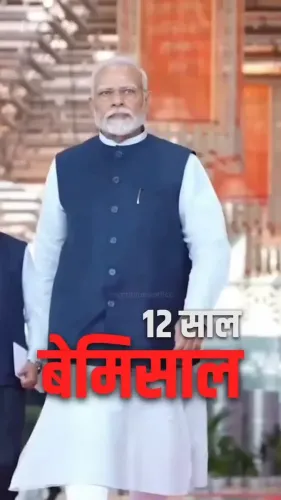
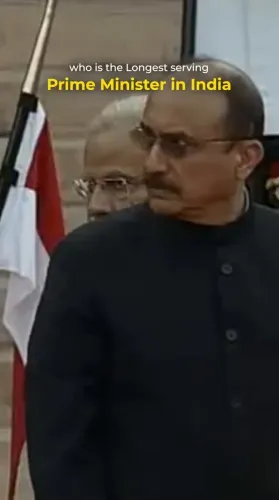
The hashtag #LongestServingElectedPMModi situates the post within a broader BJP communication drive around Modi's tenure milestone.
Upcoming Union Budget and PLI scheme reviews will be key tests of the 'emerging economic pole' narrative.
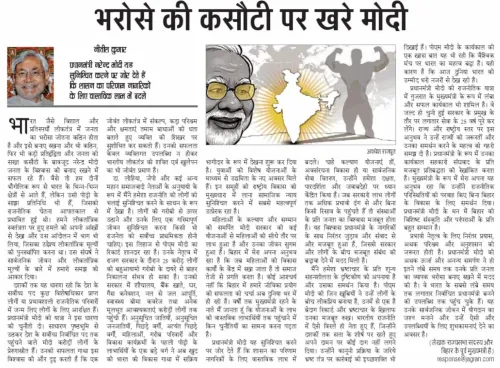
BJP leader Smriti Irani on Wednesday, 10 June 2026 shared an opinion piece praising Prime Minister Narendra Modi's governance record, highlighting India's journey from a 'fragile five' economy to an emerging pole in a multipolar world. Irani described the piece as 'insightful' and tagged it to the hashtag #LongestServingElectedPMModi, framing the post around what she called a 'historic milestone' and 'transformative shifts' in India's economy, governance, global standing and national confidence.
Context
The term 'Fragile Five' was coined in 2013 by a Morgan Stanley analyst to describe emerging-market economies — including India — seen as vulnerable due to high current-account deficits and dependence on foreign capital. India's inclusion in that grouping became a recurring reference point in debates about economic management in the years preceding 2014. Irani's post invokes the label to draw a contrast with India's current positioning as a major growth pole.
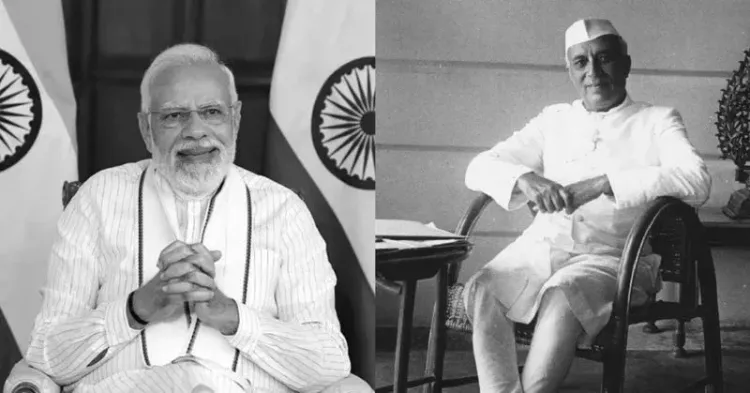
The opinion piece Irani shared draws comparisons between PM Modi and Jawaharlal Nehru, India's first Prime Minister, whose 1947–1964 tenure shaped state-led industrialisation and the non-alignment movement. Such comparisons have become a recurring feature of political and policy commentary as Modi's tenure extends into record territory among elected prime ministers.
Policy Backdrop
India's post-2014 economic policy rested on several structural planks. The Make in India initiative, launched in 2014, sought to attract foreign direct investment and boost domestic manufacturing. The rollout of the Goods and Services Tax (GST) in 2017 replaced a fragmented multi-tier indirect tax regime with a unified national framework, widely regarded as the most significant fiscal reform since the 1991 liberalisation under P.V. Narasimha Rao.
India's engagement with multilateral platforms — BRICS, the G20 (where India held the presidency in 2023), and bilateral trade agreements — has reinforced its claim to a seat at the high table of global economic governance. These threads collectively underpin the 'multipolar world' framing that Irani's post amplifies.
Stakeholders and Impact
Global investors have increasingly treated India as a preferred destination amid supply-chain diversification away from other emerging markets. Domestic industries, particularly in manufacturing, digital services and infrastructure, have been primary beneficiaries of production-linked incentive schemes and capital expenditure drives. The middle class — expanded significantly over the past decade — remains both a consumer base and a political constituency central to the BJP's electoral narrative.
Critics, however, have argued that headline growth figures mask persistent challenges in job creation, rural income and income inequality — debates that the broader policy conversation around Modi's record continues to engage. Irani's post does not address these counter-arguments, focusing instead on the macro-level transformation narrative.
What's Next
Attention will turn to the next Union Budget, reviews of production-linked incentive schemes, and India's positioning at forthcoming multilateral economic forums as tests of whether the 'emerging pole' narrative translates into durable structural gains. The political framing of economic milestones is also expected to intensify as the BJP builds its communication around Modi's extended tenure record.
Point of View
Using the 'Fragile Five' to 'emerging pole' arc to anchor a broader BJP narrative around Modi's extended tenure — a narrative that doubles as both a historical claim and an electoral asset. The Nehru comparison embedded in the cited piece adds a longer civilisational dimension, positioning Modi's record not just against recent predecessors but against the founding era of Indian statecraft. By amplifying an opinion rather than making first-person claims, Irani keeps the messaging at one remove from direct assertion, a familiar technique when milestone data remains contested. The timing, coinciding with what the hashtag frames as a record tenure, suggests a coordinated communication push that will likely intensify across BJP's digital ecosystem.
NationPress
24 Oct 2026
Frequently Asked Questions
What is the 'Fragile Five' and was India part of it?
The 'Fragile Five' was a term coined in 2013 to describe five emerging-market economies — including India — considered vulnerable due to large current-account deficits and reliance on foreign capital inflows. India was subsequently removed from that grouping as its macroeconomic fundamentals improved.
Why did Smriti Irani post about PM Modi's economic record?
Irani shared an opinion piece on 10 June 2026 under the hashtag #LongestServingElectedPMModi, framing it as commentary on a 'historic milestone' in Modi's tenure and highlighting what she described as transformative shifts in India's economy, governance and global standing.
What economic reforms are associated with India's post-2014 transformation?
Key reforms include the Make in India initiative launched in 2014 to boost manufacturing and FDI, the nationwide GST rollout in 2017 that unified India's indirect tax system, and sustained public capital expenditure on infrastructure — all building on the foundational 1991 liberalisation.
How does India's role in BRICS and G20 relate to the 'multipolar world' narrative?
India's active participation in BRICS, its G20 presidency in 2023, and pursuit of bilateral trade agreements have reinforced its claim to influence in a world where power is distributed across multiple poles rather than dominated by a single bloc, lending substance to the 'multipolar' framing.
What does #LongestServingElectedPMModi mean?
The hashtag references the milestone of Narendra Modi becoming India's longest-serving elected Prime Minister, a record that forms the backdrop of the BJP's political communication campaign in mid-2026.