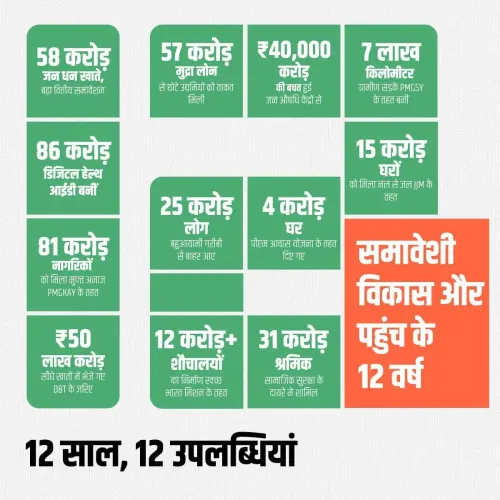
Smriti Irani marks 12 years of Modi govt with tribute post
Synopsis
BJP leader Smriti Irani marked the 12th anniversary of PM Narendra Modi's swearing-in on 26 May 2026, posting a Hindi tribute on X that credits his leadership with decisive governance, self-reliance, women's empowerment, digital transformation, and India's rising global stature.
Key Takeaways
Smriti Irani posted a tribute on X on 26 May 2026 marking 12 years of PM Narendra Modi 's government.
Modi was first sworn in as Prime Minister on 26 May 2014 , beginning a tenure centred on governance reform and self-reliance.
Irani's post highlights women's empowerment , national security , digital revolution , and public welfare as key achievements.
The tribute frames India as emerging on the world stage with new energy and confidence under Modi's leadership.
The anniversary messaging is expected to anchor BJP's political communication ahead of the next general election cycle .
BJP leader and former Union Minister Smriti Irani on Tuesday, 26 May 2026, marked the 12th anniversary of Prime Minister Narendra Modi's first swearing-in with a tribute post on X, crediting his leadership with transforming India's development trajectory, self-reliance agenda, and global standing.
Context
Narendra Modi was sworn in as Prime Minister of India on 26 May 2014, beginning a tenure that his party has consistently framed around the pillars of governance reform, economic self-reliance, and assertive foreign policy. Irani's post, written in Hindi, states: 'aaj hi ke din, 12 varsh poorv' ('on this very day, 12 years ago'), situating the anniversary as a moment of reflection on national transformation.
Irani describes the swearing-in as the laying of a foundation for 'unprecedented change with development, heritage, and trust.' The post highlights what she calls new dimensions of 'decisive leadership, development, self-reliance, and global prestige' achieved over the intervening years.
Policy Backdrop
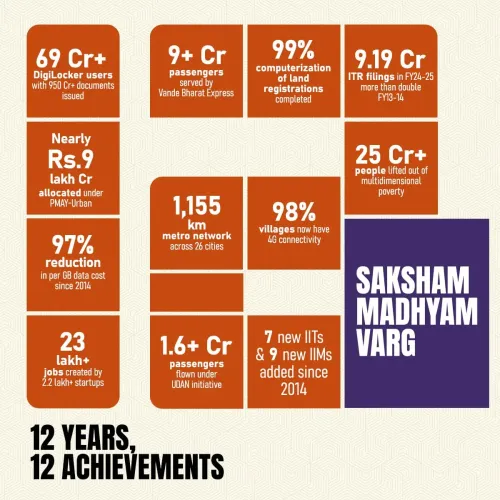
Since 2014, the Modi-led government has linked domestic welfare programmes with a broader self-reliance agenda — branded Atmanirbhar Bharat — alongside significant expansion of digital public infrastructure. Irani's post specifically references women's empowerment and a digital revolution as visible markers of what she terms 'Naya Bharat' (New India).
The tribute also invokes national security and public welfare as twin pillars of the government's record. These themes have been central to BJP's political communication across successive electoral cycles, weaving together infrastructure spending, welfare delivery, and defence modernisation into a unified governance narrative.
Stakeholders and Impact
Irani, who served as Union Minister for Women and Child Development and later Minority Affairs, has been among the senior BJP voices most closely associated with welfare and empowerment messaging. Her post amplifies the party's anniversary narrative at a time when parliamentary debates on updated welfare and digital frameworks are expected to intensify ahead of the next general election cycle.
The post is directed at a broad constituency — citizens, women, and defence personnel — groups that BJP has consistently positioned as primary beneficiaries of the last twelve years of governance. The framing of India 'emerging on the world stage with new energy, confidence, and capability' reflects a deliberate pitch to urban and aspirational voters.
What's Next
The 12-year mark is likely to serve as a reference point for BJP's political messaging in the coming months, with senior leaders expected to catalogue flagship schemes and policy milestones. Parliamentary sessions ahead will test the government's legislative agenda on welfare and technology, providing the opposition an opportunity to contest the anniversary narrative with its own performance metrics.
As India's position in multilateral forums continues to evolve, the Modi government's ability to translate its global profile into domestic economic outcomes will remain the central measure by which both supporters and critics assess the legacy being commemorated today.
Point of View
Security, and digital progress into a single celebratory frame, reinforcing the party's core electoral narrative. By invoking 'Naya Bharat' and global prestige, the tribute is aimed as much at aspirational voters as at the party base. The timing — twelve years to the day — signals a coordinated messaging effort that senior BJP figures are likely echoing across platforms. For political analysts, the post also underscores Irani's continued relevance as a senior party voice despite her 2024 electoral setback in Amethi.
NationPress
23 Sept 2026
Frequently Asked Questions
When did Narendra Modi first become Prime Minister of India?
Narendra Modi was first sworn in as Prime Minister of India on 26 May 2014 , marking the start of his first term focused on governance and economic reform.
Why is Smriti Irani posting about Modi's anniversary?
Smriti Irani is a senior BJP leader and former Union Minister who posted a Hindi tribute on X to mark the 12th anniversary of PM Modi's swearing-in, in line with the party's anniversary communication cycle.
What is Atmanirbhar Bharat?
Atmanirbhar Bharat ('Self-Reliant India') is the Modi government's flagship economic and industrial policy framework launched to reduce import dependence and boost domestic manufacturing and innovation.
What ministries did Smriti Irani head?
Smriti Irani served as Union Minister for Women and Child Development and subsequently as Union Minister for Minority Affairs in the Modi government.
What does BJP mean by 'Naya Bharat'?
' Naya Bharat ' (New India) is a BJP political slogan representing the party's vision of a modernised, self-reliant, and globally respected India shaped by governance reforms since 2014 .