Smriti Irani Hails Modi Govt's 12-Year Security Record
Synopsis
BJP leader Smriti Irani on June 17, 2026, invoked the #12YearsOfSurakshitBharat campaign to highlight the Modi government's security record, citing vigilance, assertive responses and rapid frontier infrastructure modernisation over twelve years since 2014.
Key Takeaways
BJP leader Smriti Irani posted on June 17, 2026 crediting PM Narendra Modi with redefining India's security landscape over twelve years .
The post is part of the BJP campaign #12YearsOfSurakshitBharat , consolidating security, defence and infrastructure achievements into a unified political narrative.
The government has accelerated Border Roads Organisation (BRO) projects along the LAC and LoC since 2014, implementing key Shekatkar Committee recommendations from 2016.
The Atmanirbhar Bharat initiative has driven higher indigenous defence production alongside physical frontier infrastructure expansion.
Border communities in Arunachal Pradesh , Ladakh , Himachal Pradesh and Uttarakhand are among the direct beneficiaries of improved strategic connectivity.
Upcoming Union Defence Budget figures and BRO completion reports in Parliament will be the key data points to assess the twelve-year infrastructure claim.
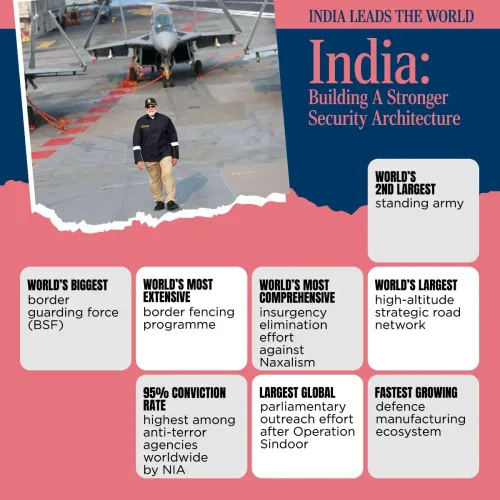
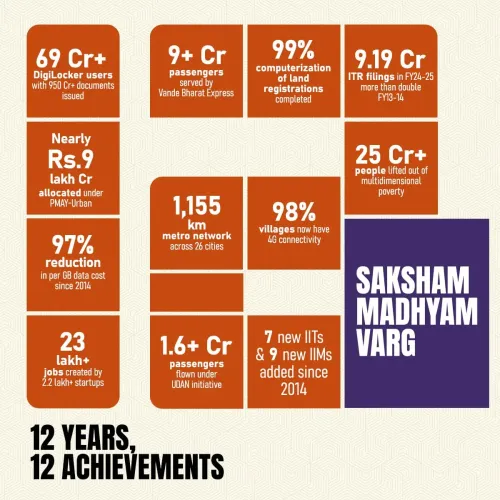
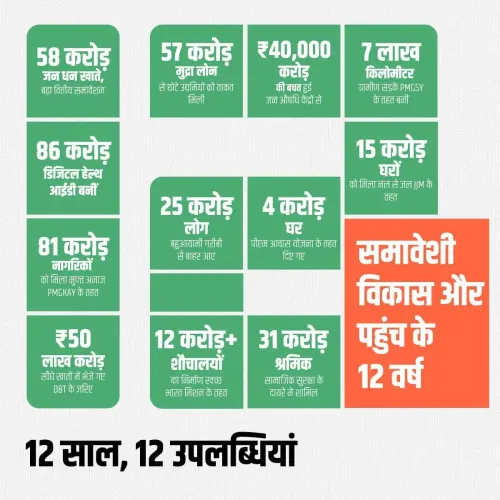
BJP leader and former Union Minister Smriti Irani on Wednesday, June 17, 2026, credited the Narendra Modi government with fundamentally reshaping India's security landscape, citing 'uncompromising vigilance, decisive responses and the rapid modernisation of frontier infrastructure' over twelve years in power. Her post, tagged under the BJP campaign hashtag #12YearsOfSurakshitBharat, was accompanied by three images and drew attention to what the party frames as a transformative security record since 2014.
Context
Irani's post is part of a broader BJP communication drive marking twelve years of the Modi government, with #12YearsOfSurakshitBharat ('12 Years of a Secure India') serving as the campaign anchor. The hashtag consolidates messaging across defence, border management and internal security into a single electoral narrative ahead of future electoral cycles. The framing positions national security — alongside economic and social policy — as a core legacy claim of the ruling dispensation.
The post does not cite specific incidents or statistics, but the language of 'decisive responses' is widely understood in Indian political discourse to reference episodes such as the 2016 surgical strikes across the Line of Control and the 2019 Balakot air strikes, both of which the government has highlighted repeatedly as markers of a more assertive security posture.
Policy Backdrop
Since 2014, the government has significantly increased capital outlay for border roads and accelerated project completion timelines under the Border Roads Organisation (BRO). The Shekatkar Committee, constituted in 2016, had recommended faster border infrastructure development and restructuring of Army support cadres, several of whose recommendations were subsequently implemented.
Frontier infrastructure upgrades along both the Line of Actual Control (LAC) with China and the Line of Control (LoC) with Pakistan have been a stated priority, encompassing roads, bridges, tunnels and advanced landing grounds. Simultaneously, the government's Atmanirbhar Bharat initiative has pushed for greater indigenous defence production, with successive defence budgets raising the domestic procurement share. These twin tracks — physical infrastructure and industrial self-reliance — form the structural backbone of what the BJP now brands as 'Surakshit Bharat.'
Stakeholders and Impact
The most direct beneficiaries of improved frontier infrastructure are armed forces personnel deployed in high-altitude and remote border zones, who gain faster logistical support and better connectivity. Border communities in states such as Arunachal Pradesh, Ladakh, Himachal Pradesh and Uttarakhand have also seen improved road and tunnel connectivity as a by-product of strategic construction drives.
From a political standpoint, the security narrative resonates strongly with a voter base that has consistently ranked national security among its top concerns. The BJP's ability to sustain this messaging across twelve years reflects both genuine policy investment and a deliberate effort to own the security issue in the public imagination.
What's Next
The next Union Defence Budget and BRO project completion reports tabled in Parliament will offer the clearest quantitative picture of how much frontier infrastructure has actually been delivered under the twelve-year arc Irani references. As the campaign hashtag continues to circulate, opposition parties are expected to contest specific claims, making verifiable data from official sources the key battleground for this narrative in the months ahead.
Point of View
Lending continuity to what might otherwise appear as reactive decisions. By pairing 'vigilance' and 'decisive responses' with 'frontier infrastructure,' the messaging bridges the emotive (military assertiveness) with the developmental (roads and bridges), appealing to both nationalist sentiment and local constituency interests in border states. The real test of this narrative will come when Parliament scrutinises BRO delivery timelines and defence capital expenditure data against the sweeping claims being made.
NationPress
19 Sept 2026
Frequently Asked Questions
What is #12YearsOfSurakshitBharat?
#12YearsOfSurakshitBharat is a BJP campaign hashtag meaning '12 Years of a Secure India,' launched to highlight the Modi government's security, defence and border infrastructure record since coming to power in 2014.
What did Smriti Irani say about India's security under PM Modi?
Smriti Irani stated that India's security landscape has been 'redefined through uncompromising vigilance, decisive responses and the rapid modernisation of frontier infrastructure' under PM Narendra Modi's twelve-year tenure.
What is India's border infrastructure modernisation programme?
Since 2014, India has accelerated construction of roads, bridges, tunnels and advanced landing grounds along the LAC and LoC through the Border Roads Organisation, partly guided by recommendations of the 2016 Shekatkar Committee.
What is the Shekatkar Committee and how does it relate to border security?
The Shekatkar Committee, constituted in 2016, recommended faster border infrastructure development and Army restructuring; several of its recommendations have since been implemented to improve frontier connectivity and military logistics.
How does Atmanirbhar Bharat relate to India's defence policy?
Atmanirbhar Bharat, meaning 'self-reliant India,' includes a major push for indigenous defence production, with successive budgets raising the share of domestic procurement to reduce dependence on foreign military equipment.