CM Bhajan Lal hails 12 years of Modi govt's defence record
Synopsis
Rajasthan Chief Minister Bhajan Lal Sharma marked 12 years of the Modi government on 17 June 2026 by highlighting India's zero-tolerance counter-terror strikes, indigenous defence production, and border infrastructure expansion as cornerstones of a secure and self-reliant nation.
Key Takeaways
Rajasthan CM Bhajan Lal Sharma posted on 17 June 2026 crediting PM Modi's 12 years in office with major defence and security gains.
He cited the 2016 Surgical Strike , the 2019 Balakot Air Strike , and Operation Sindoor as evidence of India's zero-tolerance stance on terrorism.
Indigenous defence production under Make in India and the Defence Procurement Procedure 2016 were highlighted as boosting self-reliance.
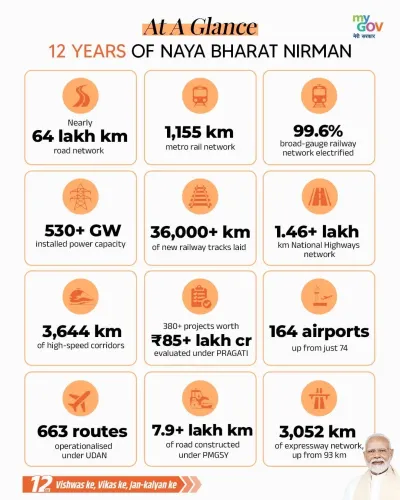
Border infrastructure expansion — roads and airfields in frontier regions — was named as a key pillar of national security.
The post is part of broader BJP messaging under the hashtag #12YearsOfSurakshitBharat marking the Modi government's anniversary.
The gains were linked to the long-term Viksit Bharat ('Developed India') national vision.
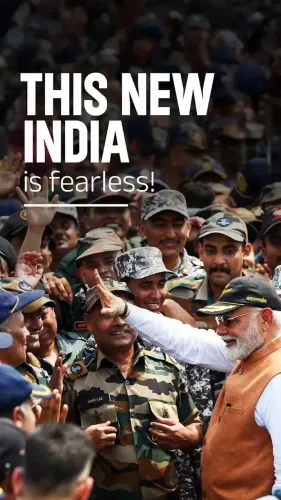
Rajasthan Chief Minister Bhajan Lal Sharma on Wednesday, 17 June 2026, credited Prime Minister Narendra Modi's twelve years in office with transforming India's national security posture, citing military strikes, indigenous defence production, and border infrastructure as pillars of a stronger nation.
Context
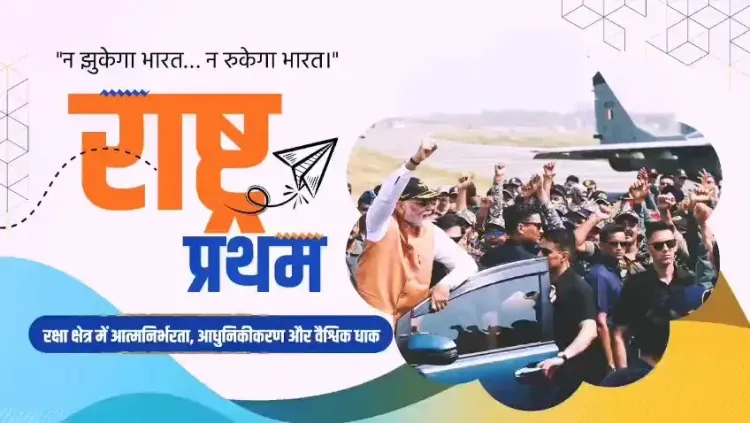
Posting under the hashtag #12YearsOfSurakshitBharat ('12 Years of a Secure India'), Sharma wrote that under Modi's 'visionary leadership', India had achieved 'unprecedented milestones' in national security, defence self-reliance, and strategic empowerment. The post was part of a coordinated BJP messaging effort marking a dozen years since Modi first took office in May 2014.
Sharma specifically invoked the 2016 Surgical Strike across the Line of Control, the 2019 Balakot Air Strike, and a more recent operation referred to as Operation Sindoor, arguing that together they had 'firmly established a zero-tolerance policy against terrorism.'
Policy Backdrop
The 2016 Surgical Strike was conducted by the Indian Army in September 2016 against terrorist launch pads across the Line of Control following the Uri attack. The Balakot Air Strike in February 2019 saw the Indian Air Force strike a Jaish-e-Mohammed facility in Pakistan in retaliation for the Pulwama attack.
On the domestic manufacturing front, the Make in India initiative launched in September 2014 and the Defence Procurement Procedure 2016 both prioritised indigenous systems and technology transfer. Successive BJP-led governments have linked external security policy with the Atmanirbhar Bharat programme, raising capital outlays for domestic procurement and accelerating border road and airfield projects.
Stakeholders and Impact
The Indian Armed Forces and domestic defence manufacturers are the primary beneficiaries of the policy direction Sharma outlined. Increased indigenisation has expanded the role of public-sector undertakings and private firms in supplying platforms, ammunition, and electronics to the military.
Border communities and infrastructure agencies have also seen accelerated investment, with road and airfield projects in frontier regions receiving priority funding under successive Union Budgets. Sharma framed these gains as integral to the broader Viksit Bharat ('Developed India') vision.
What's Next
The Defence Ministry's forthcoming annual acquisition plans will be watched closely for signals on the pace of indigenisation and the scale of capital procurement. Parliamentary discussions on proposed institutional reforms — including a dedicated Indian Defence University and revised offset guidelines — are also on the horizon.
As the BJP continues to highlight its security record ahead of electoral cycles, statements from state leaders like Sharma serve to amplify the Centre's defence narrative at the grassroots level, reinforcing the party's positioning as the steward of a self-reliant and assertive India.
Point of View
Particularly around electoral anniversaries. By linking kinetic military actions — Surgical Strike, Balakot, and now Operation Sindoor — with structural reforms like Atmanirbhar Bharat, the party frames defence policy as both muscular and nation-building. The hashtag campaign signals a coordinated effort to consolidate the BJP's 'strong on security' brand at a time when geopolitical tensions remain elevated. For Sharma, whose Rajasthan government is still in its early years, aligning closely with Modi's national security legacy also serves a domestic political purpose.
NationPress
19 Sept 2026
Frequently Asked Questions
What did Rajasthan CM Bhajan Lal Sharma say about PM Modi's defence record?
Sharma praised PM Modi's 12 years in office for achieving 'unprecedented milestones' in national security, citing the Surgical Strike, Balakot Air Strike, Operation Sindoor, and advances in indigenous defence manufacturing.
What is #12YearsOfSurakshitBharat?
It is a BJP hashtag campaign marking 12 years since Narendra Modi became Prime Minister in May 2014, highlighting the government's claimed achievements in national security and defence self-reliance.
What was the Surgical Strike of 2016?
The 2016 Surgical Strike was an Indian Army cross-LoC operation conducted in September 2016 targeting terrorist launch pads in Pakistan-administered territory, carried out after the Uri attack on an Indian Army base.
What is the Balakot Air Strike?
The Balakot Air Strike was an Indian Air Force precision strike in February 2019 on a Jaish-e-Mohammed facility in Balakot, Pakistan, conducted in retaliation for the Pulwama suicide bombing that killed Indian security personnel.
How has India's defence indigenisation progressed under Modi?
Since 2014, the Make in India initiative and the Defence Procurement Procedure 2016 have prioritised domestic manufacturing, technology transfer, and higher capital outlays for indigenous systems, expanding the role of both public and private defence firms.