CM Bhajan Lal Honours Army on Surgical Strike Anniversary
Synopsis
Rajasthan CM Bhajan Lal Sharma marked the 10th anniversary of India's 2016 surgical strikes with a tribute to the Indian Army's courage and credited PM Narendra Modi's leadership for the country's strengthened strategic posture against terrorism.
Key Takeaways
Rajasthan Chief Minister Bhajan Lal Sharma posted a tribute to the Indian Army on the anniversary of the 2016 surgical strikes .
The 29 September 2016 operation targeted terrorist launchpads in Pakistan-occupied Kashmir, days after the Uri attack killed 19 soldiers .
Sharma credited Prime Minister Narendra Modi's leadership for continuously strengthening India's strategic capabilities.
The tribute aligns with a consistent BJP pattern of marking the surgical strike anniversary with high-profile defence messaging.
Annual commemorations serve as a platform to restate India's counter-terrorism doctrine of proactive, cross-border response.
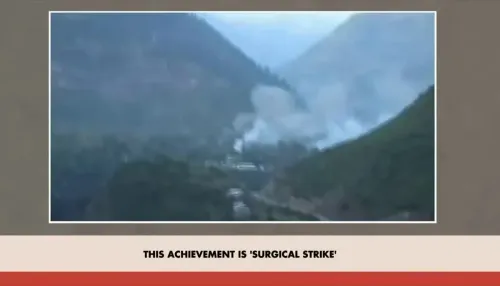
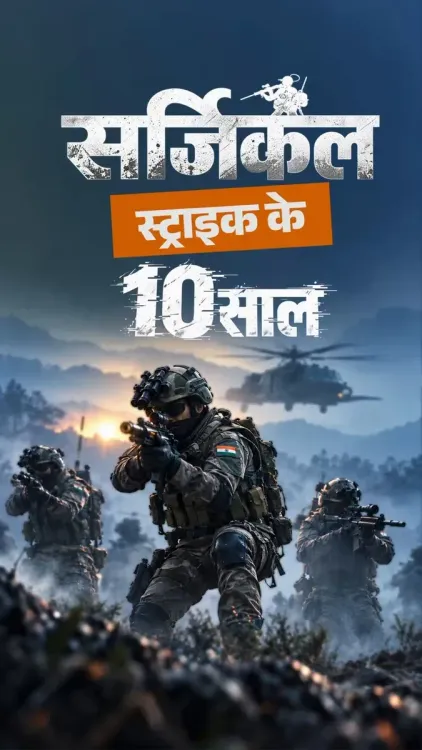
Ten years ago, Indian Army commandos crossed into Pakistan-occupied Kashmir in the dead of night and struck terrorist launchpads — a move that rewrote India's counter-terrorism doctrine in a single operation. On the anniversary of that 29 September 2016 surgical strike, Rajasthan Chief Minister Bhajan Lal Sharma offered a salute to the soldiers who carried it out and credited Prime Minister Narendra Modi's leadership for sustaining India's sharpened strategic posture.
Sharma's post, shared on the morning of 28 September 2026, captured the tribute in full: 'सर्जिकल स्ट्राइक भारतीय सेना के अदम्य साहस और पराक्रम की ऐसी गौरवगाथा है' — 'The surgical strike is a glorious saga of the Indian Army's indomitable courage and valour that made India's firm resolve against terrorism clear to the world.' He went on to say the soldiers had demonstrated 'extraordinary strategic skill' and 'unwavering dedication' to the nation's security, and that under Modi's leadership India continues to 'strengthen its strategic power and give a befitting reply to every security challenge.'What the 2016 Strike Changed
The 2016 surgical strike was India's direct operational response to the 18 September 2016 Uri attack, in which 19 Indian Army soldiers were killed by militants who had crossed from Pakistan-occupied Kashmir. Within eleven days, Indian Special Forces crossed the Line of Control and destroyed multiple terrorist launchpads. The operation broke from decades of strategic restraint and set a new threshold: cross-border terrorism would invite cross-border consequences. That signal — articulated loudly in the years since — has become a fixed pillar of India's public security communication.A Recurring Anniversary, a Consistent Message
Every 29 September, BJP leaders and Union ministers mark the strike's anniversary with tributes to the armed forces and affirmations of political will on counter-terrorism. Sharma's post fits squarely into that pattern — honouring the Indian Army while reinforcing the governing party's core national-security narrative. The framing of Modi as the enabling political force behind operational military decisions is a recurring rhetorical structure on defence anniversaries. For Sharma, who leads a border-state government in Rajasthan, defence readiness and national security carry particular local resonance — the state shares a long international boundary and hosts several key military installations. India's soldiers deserve koti-koti naman — a salute in crores — wrote Sharma. A decade on, the operation they carried out still sets the terms of the conversation.Point of View
Fusing military achievement with the governing party's leadership narrative each September. By invoking Modi's 'firm leadership' alongside Army valour, the post inseparably links electoral brand-building with national pride in a way that is difficult for any opposition to contest directly. For a border-state CM, the messaging also carries local strategic weight, reinforcing Rajasthan's identity as a sentinel state. The ten-year milestone amplifies the resonance: what began as a security event has matured into an annual doctrinal statement about how India intends to respond to future provocations.
NationPress
28 Sept 2026
Frequently Asked Questions
What was the 2016 surgical strike?
The 2016 surgical strike was a covert cross-border operation by Indian Army Special Forces on 29 September 2016 , targeting terrorist launchpads in Pakistan-occupied Kashmir. It was carried out in direct response to the Uri attack of 18 September 2016 , in which 19 Indian soldiers were killed.
Why is 29 September significant in Indian defence history?
29 September is commemorated annually as the anniversary of India's 2016 cross-border surgical strikes — a landmark operation that marked a shift in India's counter-terrorism doctrine from restraint to proactive cross-border response.
What did Rajasthan CM Bhajan Lal Sharma say about the surgical strikes?
Sharma called the surgical strike 'a glorious saga of the Indian Army's indomitable courage and valour,' said the soldiers proved their 'unwavering dedication' to national security, and credited PM Narendra Modi's leadership for continuously strengthening India's strategic power.
What was the Uri attack that triggered the surgical strikes?
The Uri attack on 18 September 2016 was a militant assault on an Indian Army brigade headquarters in Jammu and Kashmir that killed 19 soldiers . India held Pakistan-based terrorist groups responsible and launched the surgical strikes eleven days later.
How does BJP mark the surgical strike anniversary each year?
Each year on or around 29 September , senior BJP leaders — including Union ministers, chief ministers, and party officials — post tributes to the armed forces and issue statements reaffirming India's counter-terrorism resolve, consistently framing the operation within PM Modi's national security legacy.