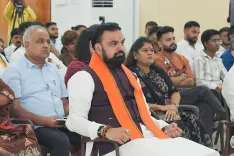
Shivraj invokes Surgical Strike on its 10th anniversary via Mann Ki Baat quote
Synopsis
Marking the 10th anniversary of the 2016 Surgical Strike, Union Minister Shivraj Singh Chouhan shared PM Modi's Mann Ki Baat quote calling the cross-LoC operation India's 'decisive response' to years of terrorist attacks following the Uri assault that killed 19 soldiers.
Key Takeaways
Shivraj Singh Chouhan posted PM Modi's quote from Mann Ki Baat on 27 September 2026 , two days before the 10th anniversary of the surgical strikes.
PM Modi described the 2016 Surgical Strike as India's 'decisive response' to the pain caused by long years of terrorist attacks.
The strikes were conducted on 29 September 2016 , eleven days after the Uri attack killed 19 Indian Army soldiers on 18 September 2016 .
The government's public announcement of the strikes marked a deliberate shift from India's earlier posture of strategic ambiguity on cross-LoC operations.
The 2019 Balakot airstrike followed a similar logic after the Pulwama attack , extending the doctrine of visible, calibrated retaliation.
Mann Ki Baat , running since 2014 , has been a consistent platform for framing national security milestones for a mass audience.
Ten years after Indian Army commandos crossed the Line of Control in the dead of night, Union Agriculture Minister Shivraj Singh Chouhan marked the anniversary of the 2016 Surgical Strike by sharing Prime Minister Narendra Modi's words from Mann Ki Baat — a reminder that 29 September remains a date the ruling establishment wears as a badge of strategic resolve.
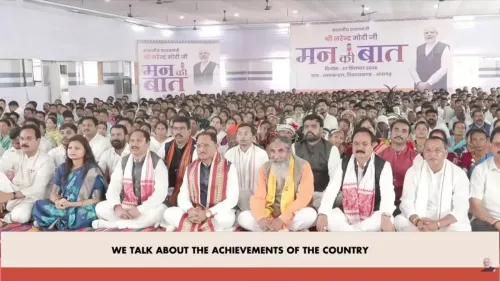
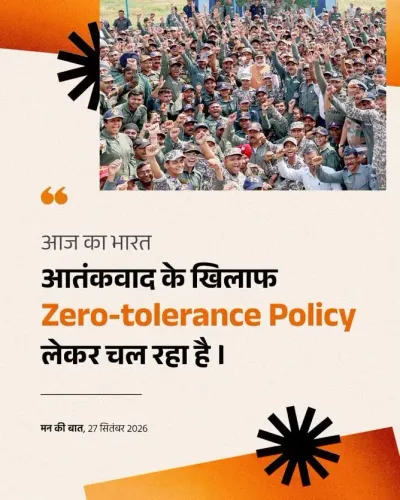
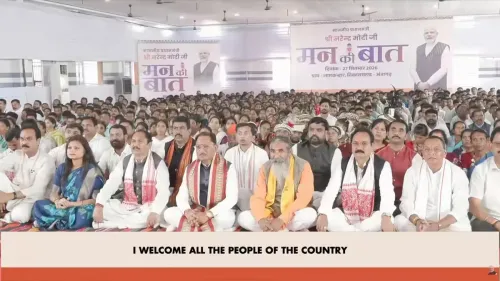
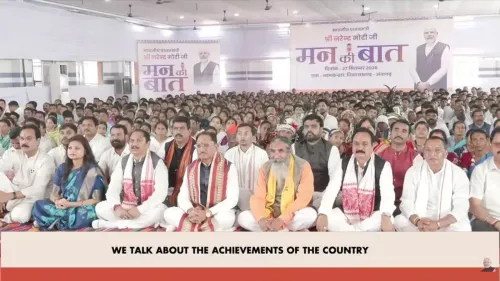
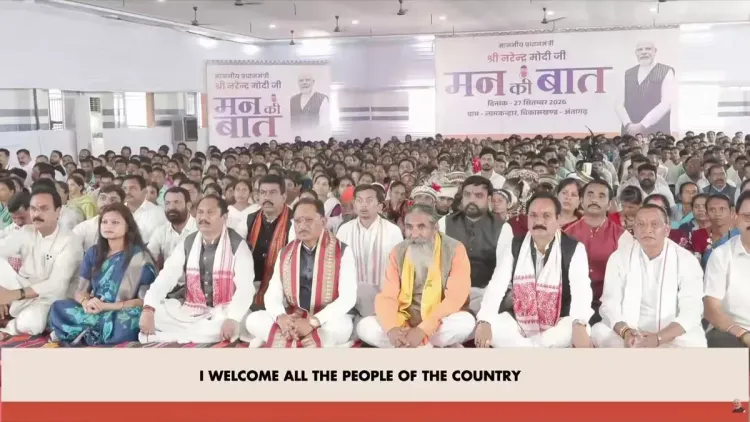
Chouhan quoted Prime Minister Narendra Modi directly: 'Aatankwadi hamlon ke kaaran Bharat ne lambe samay tak jo dard jhela tha, Surgical Strike us kasht ke khilaf hamari nirnayak pratikriya thi' — 'The pain India endured for a long time due to terrorist attacks, the Surgical Strike was our decisive response against that suffering.' The quote was drawn from Modi's monthly radio programme Mann Ki Baat, under whose hashtag Chouhan posted the message.
What the 2016 strikes were — and why they still echo
The context is seared into recent Indian military history. On 18 September 2016, a fedayeen attack on the Indian Army brigade headquarters at Uri, Jammu and Kashmir, killed 19 soldiers — one of the deadliest strikes on Indian security forces in years. Eleven days later, on 29 September 2016, the Indian Army launched cross-LoC special-forces operations targeting terrorist launch pads in Pakistan-administered territory, announcing publicly what had previously been a matter of quiet doctrine.
The government's decision to publicise the strikes — rather than maintain the traditional ambiguity — marked a deliberate shift in how India chose to signal its security posture. That choice has shaped the political vocabulary of national security ever since.
From Surgical Strike to Balakot: a decade of calibrated signalling
The 2016 strikes were the first in a sequence the ruling establishment has since presented as a doctrine of proportionate — but visible — retaliation. The 2019 Balakot airstrike, following the Pulwama attack that killed 40 CRPF personnel, extended that logic into the air domain. Together, they are cited by the government as evidence of a departure from what officials describe as a pre-2014 posture of strategic restraint.
Mann Ki Baat, the monthly radio address Modi has hosted since 2014, has been a recurring platform for framing these events in the public consciousness — reaching a vast rural and semi-urban listenership that may not follow parliamentary debate. Chouhan amplifying a quote from that programme on the anniversary date underlines the deliberate rhythm of official commemoration around September 29.
A decade on, the Surgical Strike is no longer just a military operation — it is a reference point in Indian political discourse about what decisive statecraft looks like. Whether the anniversary sparks fresh policy statements or remains a moment of solemn remembrance, the government has made clear it intends the date to be remembered.
Point of View
Reinforcing the BJP's long-running narrative that 2014 marked a turning point in India's willingness to answer terrorism with force. The choice of Mann Ki Baat as the source is deliberate: the programme lends the message a governance-communication gloss rather than a purely partisan one. As the party heads into an active political calendar, expect the Surgical Strike anniversary to function as a recurring proof-point that national security resolve, not just economic management, defines the current dispensation's identity.
NationPress
27 Sept 2026
Frequently Asked Questions
What was the 2016 Surgical Strike?
The 2016 Surgical Strike was a cross-Line of Control operation carried out by the Indian Army on 29 September 2016 , targeting terrorist launch pads in Pakistan-administered territory in retaliation for the Uri attack of 18 September 2016 that killed 19 soldiers.
What did PM Modi say about the Surgical Strike in Mann Ki Baat?
PM Modi described the Surgical Strike as India's 'decisive response' to the long pain the country endured due to terrorist attacks, a quote shared by Shivraj Singh Chouhan on 27 September 2026 .
Why did Shivraj Singh Chouhan post about the Surgical Strike today?
27 September 2026 falls two days before the 10th anniversary of the surgical strikes on 29 September, making it a significant commemorative moment for the ruling establishment.
What is Mann Ki Baat?
Mann Ki Baat is a monthly radio programme hosted by Prime Minister Narendra Modi since 2014 , used to discuss governance, national achievements, and social issues with a mass audience across India.
What was the Uri attack that triggered the Surgical Strike?
The Uri attack on 18 September 2016 was a fedayeen assault on an Indian Army brigade headquarters in Jammu and Kashmir that killed 19 soldiers , prompting India to launch the surgical strikes 11 days later.