Kishan Reddy marks Surgical Strike's 10th anniversary eve
Synopsis
Union Minister G. Kishan Reddy quotes PM Modi's Mann Ki Baat remarks on the eve of the Surgical Strike's tenth anniversary, situating the 2016 LoC operation within a continuing zero-tolerance counter-terror doctrine stretching from Uri to Balakot.
Key Takeaways
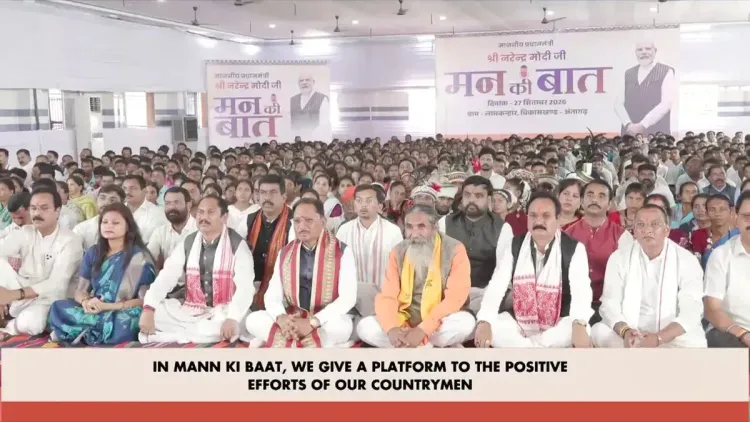
Kishan Reddy shared PM Modi's quote from the 138th Mann Ki Baat episode on 27 September 2026 , a day before the strike's tenth anniversary.
The 2016 Surgical Strike was conducted on 28–29 September 2016 , targeting terrorist launch pads across the Line of Control following the Uri attack.
PM Modi's statement links the Surgical Strike, the Balakot airstrike (2019) , and Operation Sindoor as a sequential escalation of India's counter-terror posture.
India's shift from strategic restraint to calibrated cross-border kinetic action began publicly with the 2016 operation — the first publicly confirmed cross-LoC ground strike.
Official commemorations for the tenth anniversary are expected on 28–29 September 2026 .
On the eve of a decade since India's most consequential cross-border operation, Union Coal and Mines Minister G. Kishan Reddy on Sunday, 27 September 2026 quoted Prime Minister Narendra Modi to frame the 2016 Surgical Strike as the opening chapter of a still-unfolding zero-tolerance doctrine against cross-border terrorism.
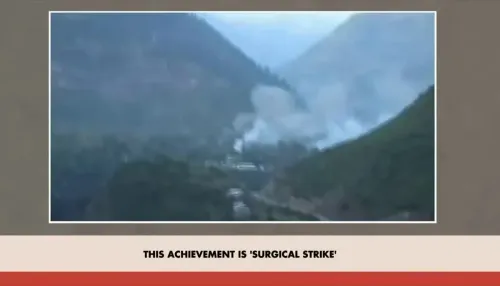
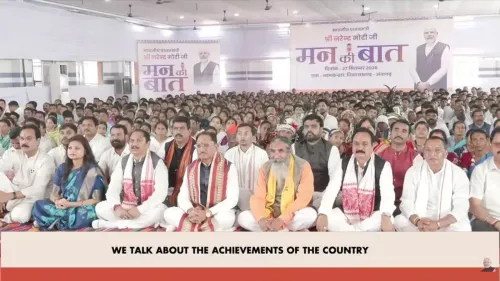
Reddy shared a passage from PM Modi's remarks on the 138th episode of Mann Ki Baat, in which the Prime Minister said: '28-29 September, 2016 ko hamare veer jawanon ne LoC paar kar Pakistan mein aatankwadi thikaanon par nirnayak karyawahi ki' — 'On 28–29 September 2016, our brave soldiers crossed the LoC and carried out decisive action against terrorist camps inside Pakistan.' Modi's quote continued: 'From the Surgical Strike to the Balakot airstrike and Operation Sindoor, India has made it clear, time and again, that if terrorists dare to cast an evil eye on India, they will be given a crushing reply. Today India walks the path of zero tolerance towards terrorism.'
The night that rewrote India's security doctrine
The 2016 Surgical Strike was executed on the nights of 28–29 September 2016, weeks after a Pakistani militant attack on an Indian Army brigade headquarters in Uri, Jammu and Kashmir killed 19 soldiers. Indian Army Special Forces crossed the Line of Control and struck multiple terrorist launch pads. It was the first time India publicly confirmed a cross-LoC ground operation — a sharp departure from the preceding doctrine of strategic restraint.
The strike did more than destroy infrastructure. It signalled a willingness to absorb political risk in exchange for deterrence credibility. The world noticed. India's security establishment had, in effect, redrawn its own red lines.
Balakot and the air dimension
The doctrine was tested again in February 2019, when a suicide bombing in Pulwama killed 40 Central Reserve Police Force personnel. The Indian Air Force responded with strikes on a Jaish-e-Mohammed facility in Balakot, Khyber Pakhtunkhwa — the first Indian aerial strike inside Pakistan since the 1971 war. The Balakot airstrike extended the Surgical Strike's logic from ground Special Forces to air power, cementing a pattern of calibrated kinetic response.
A sequence, not an episode
Modi's Mann Ki Baat formulation — Surgical Strike, Balakot, and now Operation Sindoor referenced alongside them — is designed to present these actions as a coherent, progressive series rather than isolated events. Each operation reinforces the next, building what the government frames as an unambiguous deterrence message: terrorist provocation will draw a military response, at a time and place of India's choosing.
Reddy's post, shared a day before the tenth anniversary, amplifies that framing into the public domain ahead of expected official commemorations on 28–29 September 2026.
Ten years on, the strike that once felt unprecedented has become the baseline — and India's security messaging says the threshold only moves in one direction.
Point of View
He channels governmental authority while amplifying the BJP's broader narrative that the post-2014 era marked a permanent shift in India's counter-terror posture. The sequencing of three operations — Surgical Strike, Balakot, and Operation Sindoor — is politically significant, framing each successor action as proof that the first was doctrine, not exception. With Telangana as a BJP electoral priority, such high-salience national-security posts also serve to reinforce the party's 'strong on defence' identity at the state level. The tenth anniversary provides a natural, credibility-laden hook to re-prosecute that argument without appearing partisan.
NationPress
27 Sept 2026
Frequently Asked Questions
What was the 2016 Surgical Strike?
The 2016 Surgical Strike was an Indian Army Special Forces operation conducted on the nights of 28–29 September 2016, in which troops crossed the Line of Control and destroyed terrorist launch pads inside Pakistan-administered territory in response to the Uri attack.
Why is the Surgical Strike's 10th anniversary significant in 2026?
The 28–29 September 2026 dates mark exactly ten years since the operation, prompting official commemorations and renewed public discourse on India's counter-terror doctrine, which has since expanded to include the 2019 Balakot airstrike and Operation Sindoor.
What did PM Modi say about the Surgical Strike in Mann Ki Baat?
In the 138th episode of Mann Ki Baat, PM Modi said India's brave soldiers crossed the LoC and conducted decisive action against terrorist camps, and that from the Surgical Strike to Balakot to Operation Sindoor, India has consistently promised a crushing reply to any terrorist threat.
How does the Balakot airstrike differ from the 2016 Surgical Strike?
The 2016 Surgical Strike used Army Special Forces in a ground operation across the LoC; the February 2019 Balakot airstrike was an Indian Air Force strike on a militant facility in Pakistan's Khyber Pakhtunkhwa — the first Indian aerial strike inside Pakistan since 1971, extending the same counter-terror logic to air power.
What is India's zero-tolerance policy on terrorism?
India's zero-tolerance policy holds that cross-border terrorist attacks will draw a direct military response targeting the infrastructure behind them, regardless of where that infrastructure is located — a posture India has publicly demonstrated through the Surgical Strike, the Balakot airstrike, and Operation Sindoor.