CM Rekha Gupta marks 10 years of Surgical Strike, salutes Army's courage

Synopsis
On the tenth anniversary of the 2016 cross-LoC Surgical Strike, Delhi Chief Minister Rekha Gupta saluted PM Modi's leadership and the Indian Army's courage, calling the operation a defining message of New India's resolve against terrorism.
Key Takeaways
29 September 2026 marks the tenth anniversary of India's 2016 Surgical Strike across the Line of Control.
The strike was authorised after the Uri attack (18 September 2016) killed 19 Indian soldiers .
Delhi CM Rekha Gupta attributed the operation directly to PM Narendra Modi's leadership and the 'New India' doctrine.
The 2016 Surgical Strike broke India's pattern of restraint and established a proactive cross-border counter-terror posture.
The same doctrine was invoked again in the 2019 Balakot airstrikes following the Pulwama attack.
Annual BJP commemorations of the strike reinforce a national-security narrative central to the party's political identity.
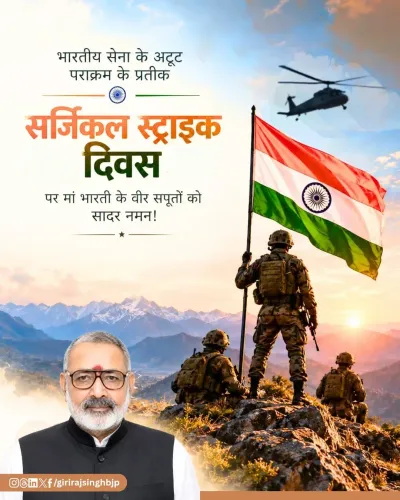
Ten years after Indian Army commandos crossed the Line of Control under cover of darkness and dismantled terror launchpads in Pakistan-occupied Kashmir, Delhi Chief Minister Rekha Gupta invoked that night as proof of what she calls a transformed India. On 29 September 2026 — the tenth anniversary of the 2016 Surgical Strike — she posted a tribute on X that tied the audacious operation directly to Prime Minister Narendra Modi's leadership and to what the BJP frames as the doctrine of 'New India.'
Writing in Hindi, CM Gupta declared: 'ये मोदी जी का नेतृत्व है, ये नए भारत का सामर्थ्य है' — 'This is Modi ji's leadership, this is the strength of New India.' She added that the Surgical Strike sent the world 'a clear message of India's courage, capability, and resolve,' and offered a salute to the 'indomitable bravery and valor of the brave sons of Mother India.'
The night that rewrote India's counter-terror calculus
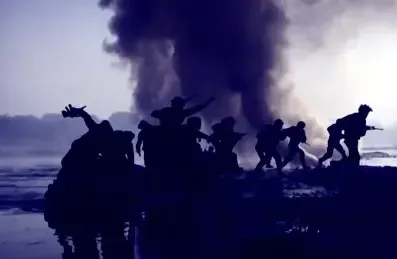
On 29 September 2016, Indian Army Special Forces crossed the Line of Control and struck multiple terrorist launchpads in Pakistan-occupied Kashmir — a surgical operation authorised by the Modi government in direct response to the Uri attack of 18 September 2016, in which 19 Indian soldiers were killed in one of the deadliest strikes on an Army camp in years. The operation was announced publicly by then Director General of Military Operations, marking the first time India formally disclosed a cross-LoC strike.
The significance was not merely tactical. Before 2016, the established pattern had been restraint — absorbing terror attacks and responding through diplomatic channels. The Surgical Strike broke that pattern decisively. It established a signalling architecture: Indian territory attacked, Indian forces will cross the line. That doctrine was reinforced three years later when the 2019 Balakot airstrike — a deep-penetration air campaign into Khyber Pakhtunkhwa, Pakistan — followed the Pulwama attack that killed 40 CRPF personnel.
A decade of commemorations, and the politics of memory
Every September since 2016, the anniversary has drawn tributes from across the political spectrum, but it is the BJP that has most consistently woven the Surgical Strike into its national security narrative. For the party, the operation is emblematic of a muscular foreign and defence policy contrast with what it characterises as the timidity of earlier governments. CM Gupta's post fits squarely in that tradition — naming Modi personally and attributing the strike's boldness to his leadership rather than to institutional military planning alone.
For the soldiers who executed the operation, and for families who lost loved ones at Uri, the anniversary carries a weight that transcends partisan framing. The Indian Army's Special Forces trained for exactly this kind of precision infiltration, and it was their operational readiness — years in the making — that made the order executable when it came.
A decade on, the Surgical Strike sits at the intersection of military history, strategic doctrine, and political identity in India. Whether remembered as a one-night mission or as the opening act of a new security posture, its tenth anniversary reminds us that the decision to cross that line changed the rules of the game — and both sides of the border know it.
Point of View
Linking a single night's military action to a decade-long claim of national security transformation. By personalising the operation around PM Modi, CM Gupta's tribute reflects the party's consistent effort to convert institutional military achievements into a leadership brand asset. The broader pattern — Uri to Surgical Strike, Pulwama to Balakot — suggests a doctrine of graduated but visible retaliation that has become the BJP's defining counter-terrorism identity. Opposition parties have periodically contested the scale and framing of the strikes, meaning the anniversary will always be as much a political flashpoint as a moment of national solemnity.
NationPress
30 Sept 2026
Frequently Asked Questions
What was the 2016 Surgical Strike?
The 2016 Surgical Strike was a cross-Line of Control military operation by the Indian Army on 29 September 2016 , targeting terrorist launchpads in Pakistan-occupied Kashmir. It was ordered by the Modi government after the Uri attack killed 19 Indian soldiers and was the first time India publicly announced such a cross-LoC operation.
Why is the 2026 Surgical Strike anniversary significant?
The 2026 anniversary marks 10 years since the operation, making it a milestone commemoration. It has drawn tributes from political leaders including Delhi CM Rekha Gupta , who highlighted PM Modi's leadership and the strike's role in shaping India's counter-terrorism posture.
What was the Uri attack that triggered the Surgical Strike?
The Uri attack on 18 September 2016 was a terrorist assault on an Indian Army base in Jammu and Kashmir that killed 19 Indian soldiers . It was one of the deadliest attacks on Indian military personnel in years and directly prompted the government to authorise the Surgical Strike.
What is the connection between the Surgical Strike and the Balakot airstrike?
Both operations reflect the same proactive counter-terrorism doctrine adopted under the Modi government . The 2016 Surgical Strike targeted launchpads across the LoC after Uri; the 2019 Balakot airstrike was a deeper air campaign into Pakistan following the Pulwama attack that killed 40 CRPF personnel .
What did Delhi CM Rekha Gupta say about the Surgical Strike?
CM Rekha Gupta posted on X that the strike was proof of 'Modi ji's leadership and the strength of New India,' adding that it sent the world a 'clear message of India's courage, capability, and resolve.' She also paid tribute to the 'indomitable bravery and valor' of the Indian soldiers involved.