Maharashtra CMO Unveils ₹22,000 Cr Urban Mobility Push for Pune
Synopsis
The Chief Minister's Office of Maharashtra announced a ₹22,000 crore urban mobility investment for Pune on 3 November 2026, tagging PM Narendra Modi and CM Devendra Fadnavis in a post framing the outlay as a landmark step for residents of the fast-growing city.
Key Takeaways
The Chief Minister's Office of Maharashtra announced approximately ₹22,000 crore in urban mobility investment for Pune .
The announcement was made on Tuesday, 3 November 2026 and tagged both PM Narendra Modi and CM Devendra Fadnavis .
Pune has been a Smart Cities Mission city since 2015 and received central Pune Metro approval in 2018 .
Maharashtra has a consistent pattern of pairing state budgets with central scheme funding for urban mobility pipelines.
Specific project components, tendering timelines and funding tranches are yet to be officially released.
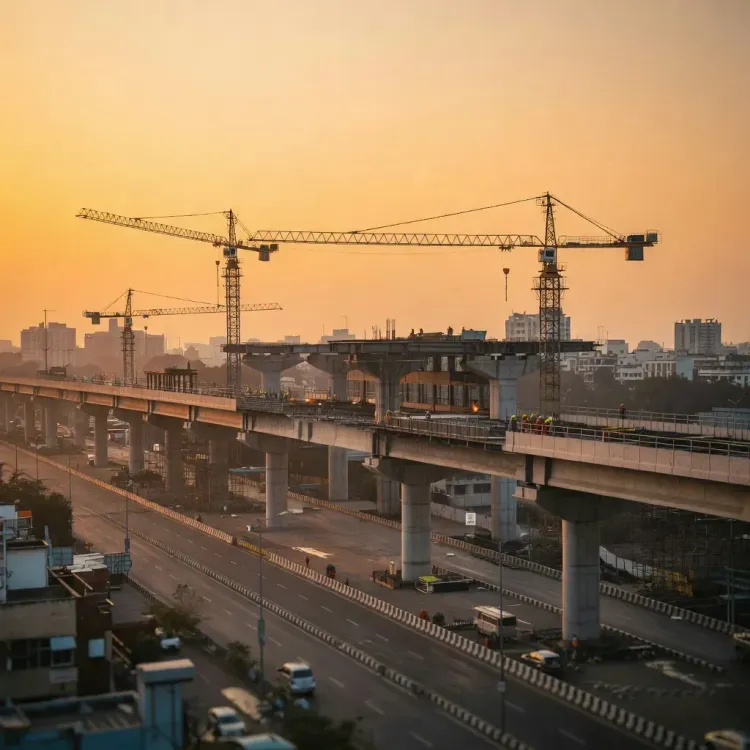
A city that never stops growing is about to get a serious infrastructure upgrade. The Chief Minister's Office of Maharashtra announced on Tuesday, 3 November 2026 that an investment of approximately ₹22,000 crore is being directed at transforming urban mobility in Pune — a move framed as a landmark step toward making daily life easier for the city's residents.
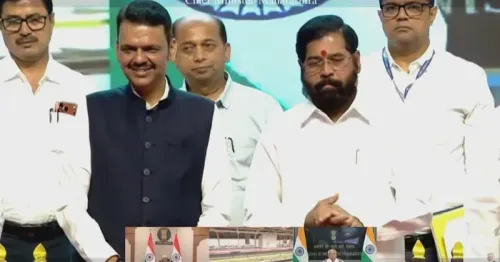
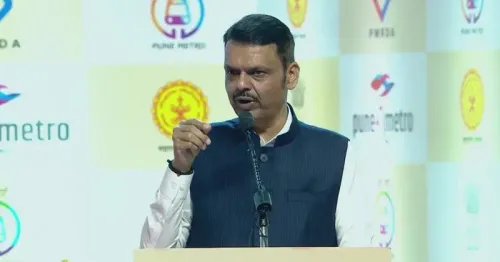
The post, tagging both Prime Minister Narendra Modi and Chief Minister Devendra Fadnavis, described the outlay as a 'progress festival of urban mobility' (शहरी गतिशीलतेचं प्रगती पर्व), signalling that this is being positioned as a signature governance milestone — not just a budget line.
Pune's Long Road to Urban Mobility Reform
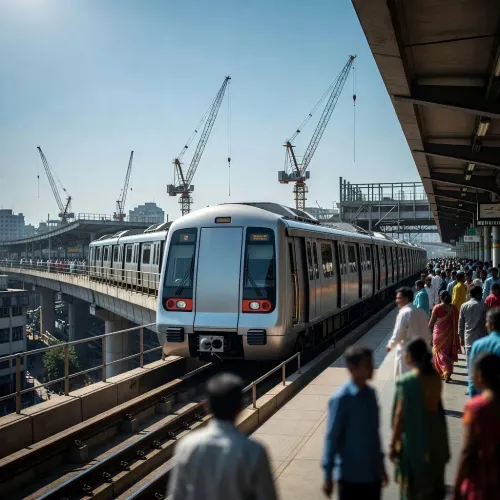
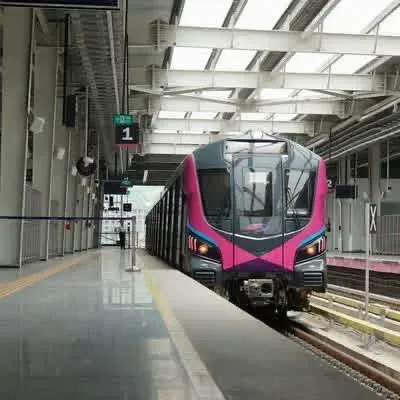
This announcement lands on a city already deep in transformation. Pune was selected under the Smart Cities Mission in 2015, unlocking a decade of integrated urban planning that has spanned metro expansion, bus rapid transit systems and road network upgrades. The Pune Metro received central government approval in 2018, and subsequent phases have been built out year by year as the city's population — and its traffic — have surged.
The ₹22,000 crore figure, if deployed, would represent one of the largest single-tranche urban mobility commitments for any Maharashtra city in recent memory. Maharashtra governments have consistently paired state budgets with central scheme funding to push multi-year mobility pipelines, and the tagging of PM Modi in the post strongly implies central co-funding is part of the package.
Fadnavis and the Infrastructure Mandate
Chief Minister Devendra Fadnavis has made urban infrastructure a defining pillar of his tenure, treating mobility investments in tier-1 cities as both a quality-of-life issue and an economic multiplier. Pune — Maharashtra's second-largest city and a fast-expanding IT and manufacturing hub — sits at the centre of that agenda.
The state's approach has been to layer central scheme funding (Smart Cities, metro grants, national highway corridors) on top of state capital, spreading financial risk while accelerating project timelines. What remains to be released are the specific project components, tendering schedules and funding tranches that will determine whether this ₹22,000 crore headline translates into steel and concrete on deadline.
What Pune Commuters Are Watching For
For the city's millions of daily commuters — battling some of Maharashtra's worst congestion on the Pune-Pimpri-Chinchwad corridor and the ring roads feeding the IT parks of Hinjewadi and Kharadi — the real test is execution speed. Announcements of this scale have preceded Pune's existing metro network, its BRTS corridors and its ring road expansions; the gap between sanction and service has historically been wide.
Detailed project lists, environmental clearances and tendering timelines are the next milestones that will give this ₹22,000 crore figure its full meaning. Until then, Pune has a promise — and a very big number to hold the government to.
Point of View
000 crore announcement fits a well-established Maharashtra playbook of using high-visibility infrastructure commitments in Pune to signal state-centre coordination ahead of urban-vote consolidation. The tagging of PM Modi is more than a courtesy — it positions the investment as a joint federal-state achievement, distributing political credit across both the BJP's state and national leadership. Fadnavis has consistently used infrastructure milestones to reinforce a governance-over-politics image, and Pune — with its large, aspirational middle-class and IT workforce — is precisely the audience that responds to concrete urban improvement promises. The credibility question, as always, lies in the gap between announcement and actual tendering speed.
NationPress
3 Nov 2026
Frequently Asked Questions
What is the ₹22,000 crore Pune urban mobility project?
The Chief Minister's Office of Maharashtra announced an investment of approximately ₹22,000 crore aimed at improving urban mobility and making daily life easier for Pune residents, as posted on 3 November 2026.
What projects are included in Pune's ₹22,000 crore mobility investment?
The specific project components have not yet been officially detailed. The announcement is expected to encompass metro expansion, road upgrades and public transport improvements; tendering timelines and project lists are awaited.
Is the Pune metro part of this ₹22,000 crore announcement?
Pune's metro network, which received central government approval in 2018 under the national urban transport framework, is likely to be a component, but the government has not yet published a project-by-project breakdown.
Who is funding Pune's urban mobility upgrade?
The tagging of PM Narendra Modi in the CMO's post suggests a central-state co-funding structure, consistent with Maharashtra's established approach of pairing state budgets with central scheme money for urban mobility projects.
How does this relate to Pune's Smart Cities Mission?
Pune was selected under the Smart Cities Mission in 2015 for integrated urban mobility and infrastructure upgrades. The ₹22,000 crore announcement builds on that decade-long framework of layered central and state investments in the city.