India-Europe trade ties deepen: EFTA deal live, EU FTA talks target Dec 2026

Synopsis
With the EFTA deal already live and the EU-India FTA potentially weeks from conclusion, India is on the cusp of locking in its most consequential set of European trade agreements ever — covering €118 billion in annual merchandise trade, €132.8 billion in European investment stock, and three million jobs, all at a moment when US-China tariff wars are redrawing global supply chains.
Key Takeaways
The EFTA–India Trade and Economic Partnership Agreement entered into force on 1 October 2025 , covering Switzerland, Norway, Iceland, and Liechtenstein .
At the second India-EFTA Prosperity Summit on 7 October 2026 , 53 Swiss companies announced investment plans across 20 sectors ; roughly 160 Norwegian companies are already operating in India.
Swiss investment in India rose by $202 million between September 2025 and March 2026 , though no consolidated disbursement figure has been officially published.
The EU-India FTA could be concluded in December 2026 during PM Modi's visit to Brussels , covering tariff relief on 96.6% of European goods exports and potentially saving exporters €4 billion annually .
Merchandise trade between India and the EU-27 reached €118 billion in 2025 ; European direct investment stock in India stands at €132.8 billion , supporting around 3 million jobs .
The EU is now India's second-largest goods trading partner , behind the United States and ahead of China.
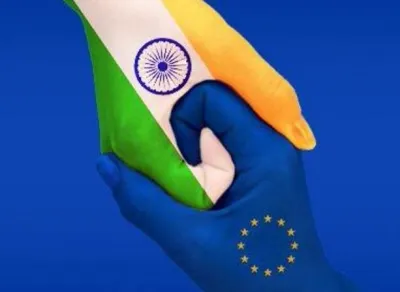
India's economic partnerships with Europe are gaining significant momentum, with the European Free Trade Association (EFTA)–India Trade and Economic Partnership Agreement already in force since 1 October 2025 and a broader EU-India Free Trade Agreement (FTA) potentially on the verge of conclusion, according to an analysis published by the Brussels Signal news portal. The developments reflect a strategic reorientation of European trade priorities amid a shifting global order.
EFTA Summit Signals Early Traction
The four EFTA nations — Switzerland, Norway, Iceland, and Liechtenstein — participated in the second India-EFTA Prosperity Summit held in New Delhi on 7 October 2026. Both sides announced new business projects and reviewed progress under the still-fresh agreement. Swiss President Guy Parmelin noted that 53 Swiss companies had active investment plans spanning 20 economic sectors, while Norway highlighted approximately 160 Norwegian companies already operating across India. Priority areas identified jointly include advanced manufacturing, medical technologies, maritime transport, and energy.
On the investment front, the Indian government put the increase in Swiss investment at $202 million (approximately 181 million euros) between September 2025 and March 2026. However, the Brussels Signal analysis flags a notable gap: the official documentation marking the agreement's first anniversary does not include a consolidated figure for new investment actually disbursed or jobs directly attributable to the deal, making a full assessment of early outcomes difficult.
EU-India FTA: A December Deadline in Sight
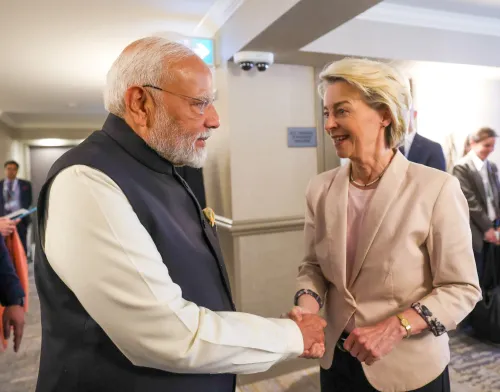
Separately, the European Union — which is not a member of EFTA — has accelerated its own trade negotiations with India, with the goal of concluding a comprehensive FTA by December 2026 during Prime Minister Narendra Modi's planned visit to Brussels. The proposed agreement covers substantial ground: it provides for tariff reductions or eliminations on 96.6% of European goods exports to India, according to the European Commission. The Commission estimates that full implementation could save European exporters approximately 4 billion euros annually in customs duties — a significant prize for European industry, particularly as the ongoing tariff confrontation between Washington and Beijing disrupts established trade corridors.
The Scale of India-Europe Trade
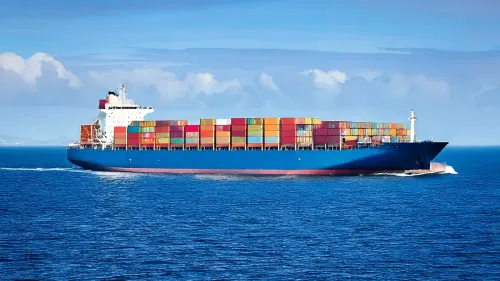
The economic backdrop underscores why both sides are pressing forward. Merchandise trade between India and the EU-27 reached 118 billion euros in 2025. Europe imported 69.5 billion euros worth of Indian goods and exported 48.9 billion euros, producing a trade deficit of 20.6 billion euros in India's favour. That positions the EU as India's second-largest trading partner in goods, behind only the United States and ahead of China — a ranking that underlines the strategic depth of the relationship.
On the investment side, the stock of European direct investment in India stood at 132.8 billion euros in 2024, with more than 6,000 European companies operating in the country and directly providing around three million jobs.
Why This Matters Now
This comes amid a period of pronounced global trade uncertainty, with US-China tariff escalation reshaping supply chains and prompting major economies to diversify partnerships. For India, deepening ties with Europe offers both market access and a counterweight to dependence on any single trade relationship. For European exporters, the potential savings of 4 billion euros annually in customs duties represent a tangible competitive advantage. Notably, if the EU-India FTA is concluded in December as planned, it would mark one of the most significant bilateral trade agreements India has signed in recent years. The coming months — and Modi's Brussels visit in particular — will be a critical test of whether diplomatic momentum translates into a signed deal.
Point of View
But the absence of verified disbursement data from the EFTA agreement's first year is a warning sign: announcements and actual capital flows are different things, and India has seen this gap before. The EU-India FTA, if concluded in December, would be transformative on paper — but 96.6% tariff coverage means little if non-tariff barriers in areas like data localisation, product standards, and government procurement remain unresolved. The deeper story is geopolitical: both India and Europe are diversifying away from exposure to the US-China binary, and this convergence of interests is the real engine behind the acceleration. Whether Modi's Brussels visit delivers a signed deal or another 'substantial conclusion' communiqué will signal how serious both sides truly are.
NationPress
3 Nov 2026
Frequently Asked Questions
What is the EFTA-India trade agreement and when did it come into force?
The European Free Trade Association (EFTA)–India Trade and Economic Partnership Agreement is a trade deal between India and the four EFTA nations — Switzerland, Norway, Iceland, and Liechtenstein — that entered into force on 1 October 2025. It covers tariff reductions and economic cooperation across multiple sectors.
When is the EU-India Free Trade Agreement expected to be concluded?
The EU-India FTA is targeted for conclusion in December 2026, reportedly timed to coincide with Prime Minister Narendra Modi's planned visit to Brussels. The proposed deal covers tariff elimination on 96.6% of European goods exports to India.
How large is the trade relationship between India and the European Union?
Merchandise trade between India and the EU-27 reached €118 billion in 2025, making the EU India's second-largest goods trading partner after the United States. Europe ran a trade deficit of €20.6 billion with India that year.
How much European investment is there in India, and how many jobs does it support?
The stock of European direct investment in India stood at €132.8 billion in 2024, with more than 6,000 European companies operating in the country and directly supporting around three million jobs.
How much could European exporters save under the EU-India FTA?
The European Commission estimates that once fully implemented, the EU-India FTA could save European exporters approximately €4 billion annually in customs duties, given the 96.6% tariff reduction coverage.