CM Sai's Mahtari Vandan Yojana fuels women's economic rise in CG
Synopsis
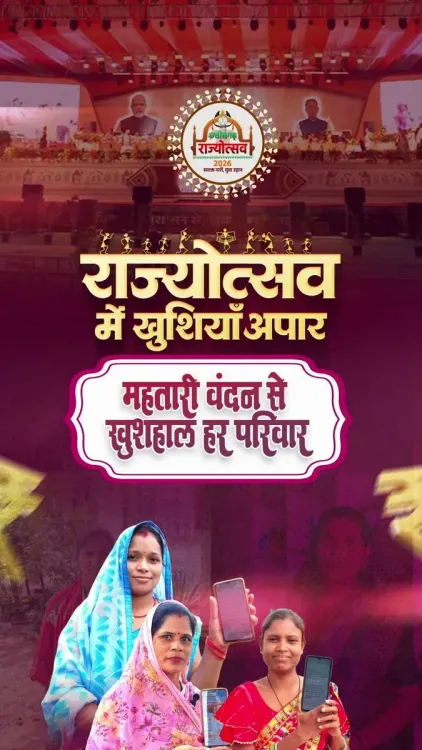
On Chhattisgarh Rajyotsav 2026, the state's CMO spotlighted the Mahtari Vandan Yojana as a cornerstone of CM Vishnu Deo Sai's governance, crediting the direct-benefit scheme with fuelling financial independence and confidence among the state's women.
Key Takeaways
The Chief Minister's Office of Chhattisgarh promoted the Mahtari Vandan Yojana on November 3, 2026 , during Chhattisgarh Rajyotsav 2026 .
Chief Minister Vishnu Deo Sai , known as 'Vishnu Bhaiya', is credited as the driving force behind the women's welfare scheme.
The scheme provides direct financial assistance to mothers and sisters in Chhattisgarh to promote economic self-reliance.
The initiative aligns with the national Viksit Bharat framework and follows similar BJP-governed state models like Madhya Pradesh's Ladli Behna.
The scheme was introduced after the 2023 Chhattisgarh assembly elections as part of a broader women-empowerment policy push.
Disbursement figures, beneficiary coverage, and 2026-27 budget integration remain key metrics to watch.
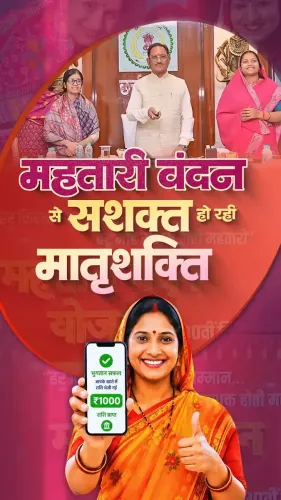
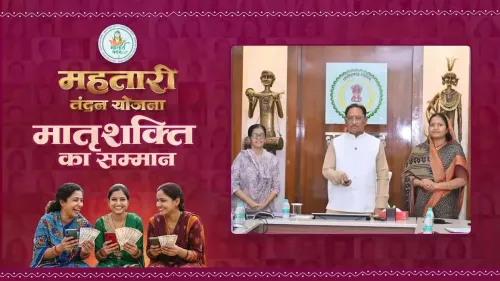
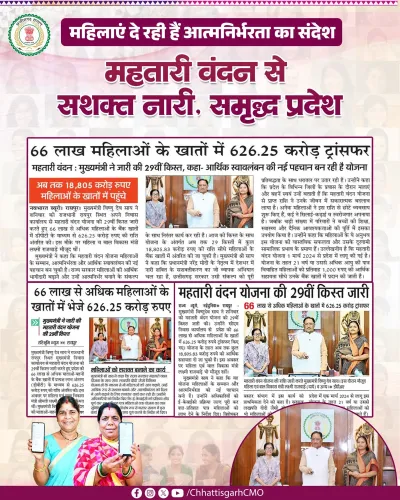
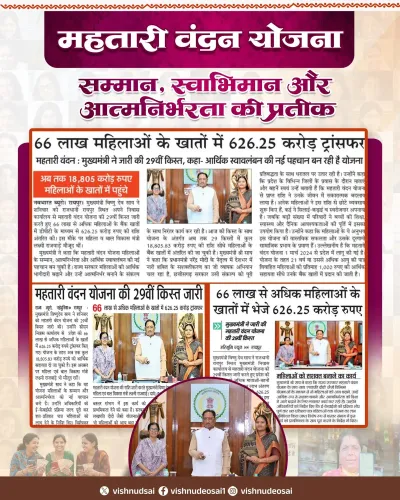
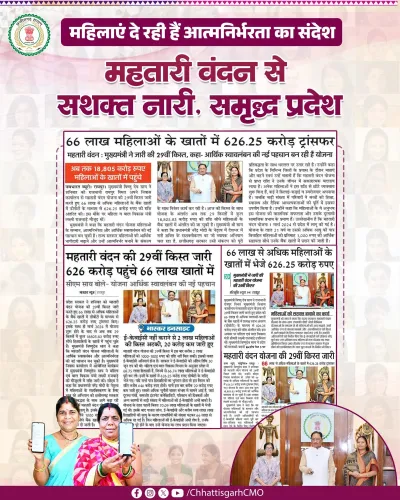
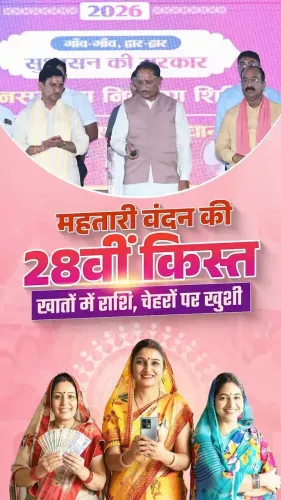
Smiles are spreading across Chhattisgarh — and the state government says a flagship welfare scheme is behind them. On Tuesday, November 3, 2026, the Chief Minister's Office of Chhattisgarh marked Chhattisgarh Rajyotsav 2026 by highlighting the transformative impact of the Mahtari Vandan Yojana, a direct-benefit scheme designed to strengthen the financial footing of mothers and sisters across the state.
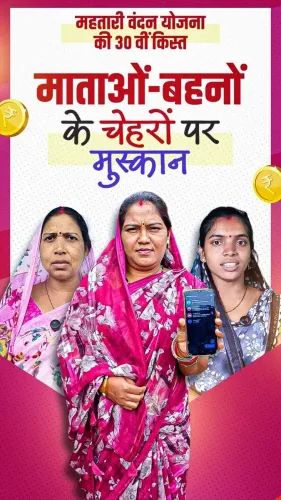
The post declared, 'Mahtari Vandan Yojana se mataon-bahnon ke chehre par khil rahi khushiyon ki muskaan' — 'The smiles of happiness are blooming on the faces of mothers and sisters through the Mahtari Vandan Yojana.' It credited Chief Minister Vishnu Deo Sai — affectionately called 'Vishnu Bhaiya' — as the driving force behind the scheme, framing his leadership as the bedrock of 'matrishakti ki aarthik mazbooti,' or the economic empowerment of maternal power.
What Mahtari Vandan Yojana promises Chhattisgarh's women
Introduced by the BJP government following the 2023 Chhattisgarh assembly elections, the Mahtari Vandan Yojana channels financial assistance directly to eligible women beneficiaries — mothers and sisters — across the state. The scheme sits within a broader post-election push to deliver tangible, recurring economic support to women, drawing from a playbook that has gained traction in several BJP-governed states, including Madhya Pradesh.
The government's framing is deliberate: financial independence is positioned not merely as policy delivery, but as a gateway to self-confidence and dream fulfilment. 'Mothers and sisters of the state are now moving forward with confidence and realising their dreams,' the CMO stated. It is an aspirational register — welfare wrapped in the language of agency.
Rajyotsav 2026: a milestone moment for the messaging
Chhattisgarh Rajyotsav, the annual celebration of the state's founding on November 1, 2000, provides the political backdrop for this announcement. Highlighting a women's welfare scheme during the state's foundation-day week is a calculated choice — it ties governance delivery to state pride at a moment of peak public attention.
The post's hashtag trail — #ViksitChhattisgarh, #Sushasansarkar, #WomenEmpowerment — echoes the national Viksit Bharat vocabulary, anchoring a state scheme within the Union government's inclusive-growth architecture. The alignment is not accidental; it signals that Raipur views women-led welfare as a pillar of its own development story.
The wider pattern: monthly transfers as political and economic currency
Across India, targeted monthly cash-transfer schemes for women have become one of the most contested and closely watched instruments of state policy. From Madhya Pradesh's Ladli Behna to similar programmes in other states, direct benefit transfers to women have demonstrated measurable impact on household consumption and female autonomy — while simultaneously functioning as powerful electoral signals.
Chhattisgarh's iteration follows this arc closely. The state's disbursement data, integration with the 2026-27 budget, and coverage expansion figures will be the real test of scale — numbers the government is yet to detail publicly.
For now, the message from Raipur on Rajyotsav week is unambiguous: Vishnu Deo Sai's government is betting big on women's economic empowerment as both a governance priority and a political identity. Whether the smiles the CMO describes translate into verified, measurable financial gains for lakhs of beneficiaries is the question that will define this scheme's legacy.
Point of View
' the CMO humanises governance delivery and builds personalised political capital ahead of the next election cycle. The convergence of state-level branding with the Viksit Bharat vocabulary signals Raipur's effort to embed local welfare wins within a national development narrative. The real test, however, lies in auditable disbursement data — without which the celebratory framing remains aspirational.
NationPress
3 Nov 2026
Frequently Asked Questions
What is Mahtari Vandan Yojana in Chhattisgarh?
Mahtari Vandan Yojana is a Chhattisgarh government welfare scheme that provides direct financial assistance to eligible women — mothers and sisters — in the state to promote economic independence and self-reliance. It was introduced after the 2023 state assembly elections under Chief Minister Vishnu Deo Sai.
Who is Vishnu Bhaiya and why is he associated with this scheme?
'Vishnu Bhaiya' is the popular name for Vishnu Deo Sai , the Chief Minister of Chhattisgarh from the BJP. His government launched and champions the Mahtari Vandan Yojana as a flagship women's empowerment initiative.
What is Chhattisgarh Rajyotsav and why was this announced during it?
Chhattisgarh Rajyotsav is the annual celebration of the state's formation on November 1, 2000. The government chose this high-visibility occasion to highlight the Mahtari Vandan Yojana's impact, tying welfare delivery to state pride.
How does Mahtari Vandan Yojana compare to similar schemes in other states?
The scheme follows a pattern seen in other BJP-governed states, most notably Madhya Pradesh's Ladli Behna Yojana, where monthly direct cash transfers to women have been used to promote financial independence and have served as significant electoral tools.
What does Viksit Chhattisgarh mean in the context of this scheme?
'Viksit Chhattisgarh' means 'Developed Chhattisgarh' and is the state government's development vision, aligned with the national Viksit Bharat goal. The Mahtari Vandan Yojana is positioned as a key pillar of this vision through women's economic empowerment.